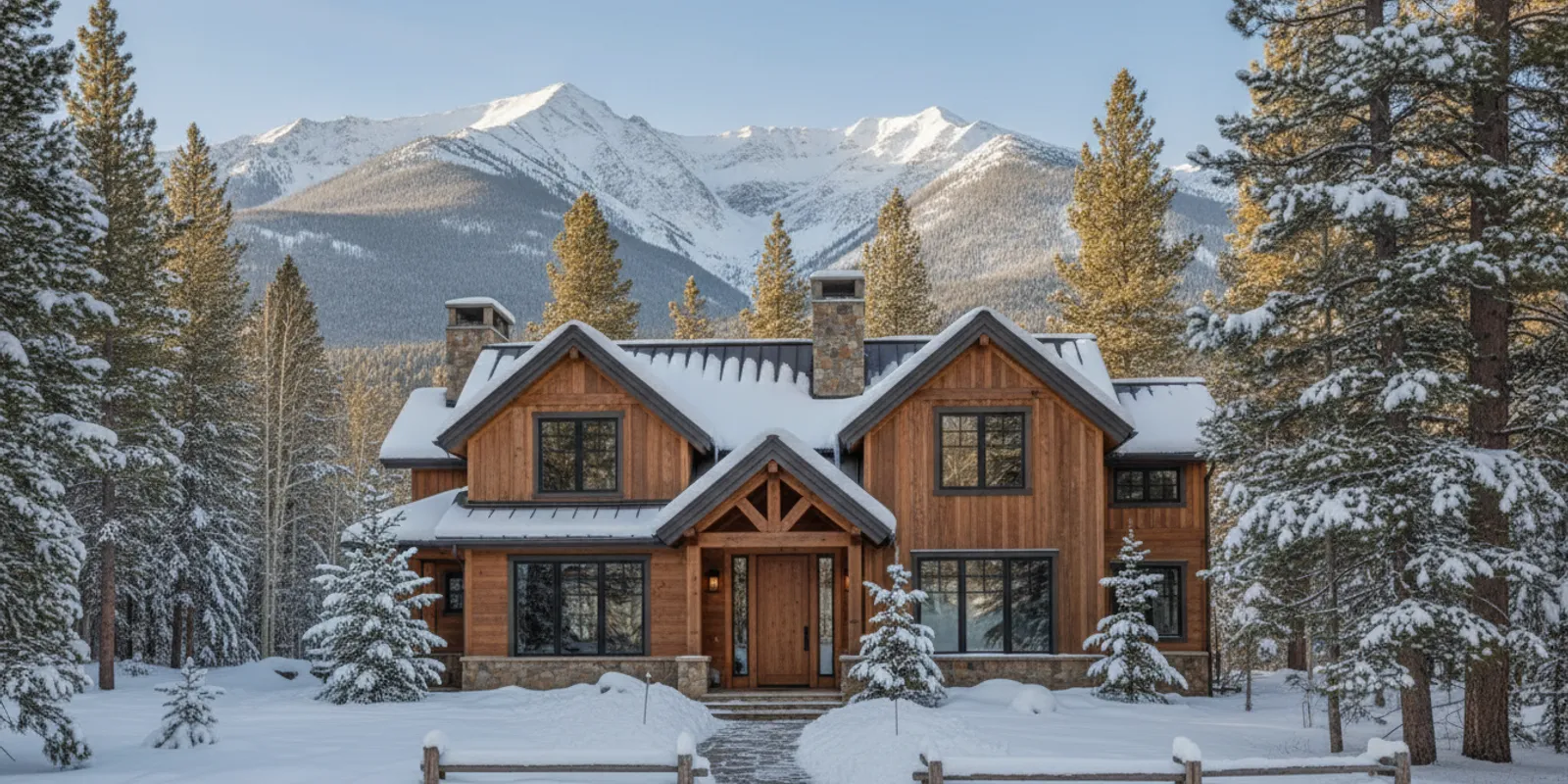


Securing a luxury home in Park City often means competing with cash buyers who close in days. A bridge loan gives you the cash to make a strong offer while your current house is still listed.
A bridge loan luxury home Park City strategy uses your current home equity to fund a down payment on a new property before your existing home sells. This short-term tool provides quick capital while you secure long-term jumbo financing for the purchase.
Schedule Your Bridge Loan Consultation
Understanding how these two loan types work together is the first step toward a successful upgrade in Utah's luxury market. Utah's Mortgage Pro, led by Rodrigo Ballon at CrossCountry Mortgage (NMLS #3029), helps high-net-worth buyers navigate bridge loans, jumbo financing, and the strategies that combine them.
A bridge loan is a short-term lending tool for buyers who need to purchase a new home before selling their current one. For buyers pursuing a bridge loan luxury home Park City plan, this product fills the gap in cash flow by converting home equity into immediate purchasing power. Most bridge loans last six to twelve months, giving you time to sell your existing property at favorable terms while already settled in your new home. The loan is secured by your current property. And the funds are typically released as a lump sum that can be used for the down payment on your next purchase.
Unlike a home equity line of credit (HELOC), which allows you to draw funds as needed, a bridge loan delivers the full amount upfront. This structure appeals to sellers who want certainty that the buyer has the funds to close. In a market where desirable properties receive multiple offers within days, the ability to present a clean offer with confirmed financing makes a significant difference.
High-end markets like Summit County move fast. Homes in Deer Valley, Old Town, or Promontory often attract multiple offers within days of listing. Waiting to sell your current home before making an offer means risking the perfect property. A bridge loan eliminates that risk by providing the funds needed to make a competitive, cash-like offer immediately.
Bridge loans carry higher rates and fees than standard mortgages because lenders assume greater short-term risk. As the Federal Reserve notes, lenders require a clear exit plan demonstrating how the loan will be repaid. Most borrowers satisfy this through the sale of their current home or by transitioning to long-term jumbo mortgage solutions once the sale closes. Your lender will review comparable sales in your neighborhood, assess current market conditions, and evaluate your overall financial picture before approving the loan.

In Summit County, home prices routinely exceed conforming loan limits. For 2024, the standard limit is $1,149,825. Any mortgage above this threshold qualifies as a jumbo loan, subject to stricter underwriting but offering access to high-value properties without requiring an all-cash purchase. Luxury homes in Deer Valley, Old Town, and Promontory typically require jumbo financing. Qualifying involves demonstrating strong credit, significant liquid reserves, and a debt-to-income profile that supports the larger loan amount. Lenders also evaluate the property itself, often requiring a second appraisal for high-value transactions.
Jumbo loans offer competitive rates that, despite being slightly higher than conforming loan rates, remain attractive in the current lending environment. Borrowers typically need a down payment of 10 to 20 percent, though some programs require more depending on the loan amount and property type. For luxury buyers, the ability to finance a multi-million dollar purchase while keeping investment portfolios intact is one of the primary advantages of jumbo lending.
Buyers can choose between fixed-rate jumbo loans, which lock in a consistent payment for 15 or 30 years. And adjustable-rate mortgages (ARMs) that offer lower initial rates for a set period before adjusting to market conditions. ARMs may suit buyers planning to sell or refinance within five to seven years, while fixed rates provide decades of payment stability. Utah's Mortgage Pro evaluates each buyer's timeline to recommend the appropriate structure. Considering factors such as how long you plan to own the property and whether your income is expected to change over time.
Many Park City luxury buyers have non-traditional income: business owners, tech executives with stock compensation, and finance professionals with variable earnings. Standard documentation requirements can create hurdles, which is why Utah's Mortgage Pro offers bank statement loan programs for Park City buyers. These programs evaluate cash flow through bank deposits rather than tax returns alone, providing a smoother path for high-net-worth borrowers whose wealth is not captured by a W-2. Asset depletion programs are also available for buyers with substantial retirement accounts or investment portfolios. Allowing a portion of those assets to be counted as income for qualification purposes.
Choosing between a bridge loan and a jumbo loan depends on your timeline and liquidity. A jumbo loan provides stable, long-term financing for a luxury home over 15 to 30 years. A bridge loan serves a distinct purpose: short-term capital to buy before selling. The right strategy often involves both tools working in sequence rather than choosing one over the other.
| Factor | Bridge Loan | Jumbo Loan |
|---|---|---|
| Loan Term | 6 to 12 months | 15 to 30 years |
| Interest Rate | Higher (short-term risk premium) | Market-based, typically lower |
| Primary Purpose | Buy new home before selling current one | Finance the primary purchase long-term |
| Approval Basis | Current home equity plus exit plan | Income, assets, and debt-to-income ratio |
| Ideal Scenario | Fast-moving markets, competitive bidding | Long-term ownership of a high-value property |
| Typical Closing Time | 2 to 4 weeks | 30 to 45 days |
Bridge loans carry higher rates but solve a specific timing challenge. Jumbo loans offer better long-term economics. For many Utah's Mortgage Pro clients, the two products are complementary: a bridge loan secures the new home. And a jumbo loan replaces it as the permanent financing once the previous home sells. Your personal timeline and capital position determine which sequence fits best. Fees and qualification rules vary by lender, property, and market conditions, so a personalized consultation provides the clearest picture of available options.
In Park City's competitive market, the strongest upgrade strategy often layers both loan types. You may find your next home before your current property sells. Using a bridge loan for the down payment while securing a jumbo loan for the long-term purchase allows you to act immediately without waiting for a sale to close. This combined approach gives you the best of both tools: the speed and flexibility of a bridge loan with the stability and favorable terms of long-term jumbo financing.
High-net-worth buyers frequently keep significant wealth in stocks, business equity, or deferred compensation. Selling those assets to fund a down payment can trigger substantial tax liabilities. A bridge loan lets you use home equity instead, preserving your investment portfolio while unlocking the cash needed to close on a new property. Per the Office of the Comptroller of the Currency, bridge loans provide quick equity access for buyers navigating tight housing markets. For tech executives and entrepreneurs who hold concentrated stock positions, this approach avoids the tax consequences of selling shares while maintaining the ability to compete for premium properties.

Many Park City homeowners eventually seek to move from a condo in Deer Valley to a larger estate in Promontory. Or from an Old Town property to a ski-in, ski-out residence at Canyons Village. A bridge loan makes this transition seamless: you buy the new home first, move once, and sell your previous property on your timeline. This approach eliminates bridge housing costs, reduces moving stress, and allows you to wait for the optimal offer on your current home. For investment property upgrades, Utah's Mortgage Pro also provides specialized financing for Park City investment properties and vacation homes that align with your broader portfolio strategy.
Qualifying for a bridge loan requires a comprehensive review of your financial profile. Lenders evaluate not just your income but your total asset picture, current home equity, and detailed exit strategy. Here is what most lenders look for when underwriting bridge loan luxury home Park City financing:
Fees, rates, and program availability vary by borrower profile, property type, and current market conditions. No single qualification checklist applies to every buyer. A consultation with a knowledgeable lender provides clarity on your specific path forward.
Yes. Many Park City buyers use a bridge loan to fund the down payment on a new home while simultaneously securing jumbo financing for the long-term mortgage on that property. The bridge loan is paid off when the previous home sells, leaving the jumbo loan as the permanent financing solution.
Most lenders require at least 20 to 30 percent equity in your current home to qualify. The exact amount depends on the purchase price of the new property, your credit profile, and the lender's specific underwriting guidelines for high-value transactions in Summit County.
Bridge loans typically include options for extensions, though they may involve additional fees. Lenders evaluate your exit plan carefully before approving the loan, factoring in local market conditions and comparable property sales. Having sufficient liquid reserves is critical to managing this risk effectively.
Bridge loans are most commonly structured for primary residence upgrades. But options exist for second homes and investment properties depending on the lender and the equity position in the existing property. Utah's Mortgage Pro evaluates each scenario to determine available programs.
Bridge loan closings typically take two to four weeks, significantly faster than standard jumbo loans. The speed depends on the lender's processing timeline, the complexity of the borrower's financial profile, and how quickly your current home's value can be assessed.
Every luxury upgrade in Park City starts with a clear understanding of your options. Whether a bridge loan provides the short-term capital you need or a jumbo loan serves as your long-term foundation. The right strategy depends on your unique financial profile, timeline, and property goals. Contact Utah's Mortgage Pro for a personalized consultation.
Schedule Your Luxury Loan Consultation
Rodrigo Ballon, Branch Manager. CrossCountry Mortgage, LLC NMLS #3029. Equal Housing Lender. Rates, terms, and availability are subject to change without notice. Not all products are available in all states. This is not a commitment to lend. Loan approval is subject to credit approval and program guidelines.