

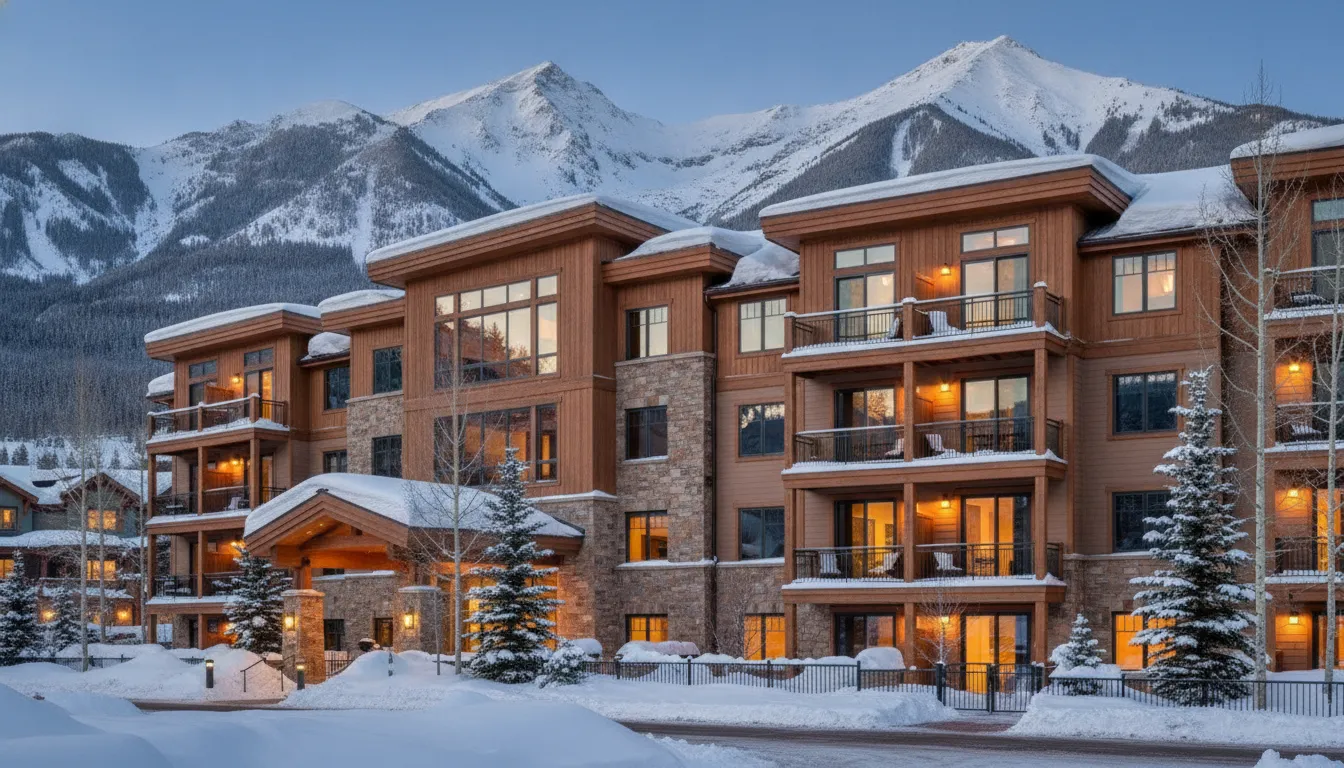
A Park City condo-hotel can look like a conventional condominium, yet its front desk. Hotel amenities, nightly rental program, and transient guest use can change how lenders evaluate the property. That distinction matters before you make an offer, especially when the unit is in a resort development near Deer Valley or Park City Mountain.
Condotel financing park city typically requires a lender and loan program prepared to evaluate a non-warrantable, hospitality-oriented property rather than a standard primary residence. Many buyers should expect closer review of the building, rental structure, intended use, down payment, reserves, and overall financial profile. Portfolio, non-QM, or specialized jumbo options may be available, but guidelines vary by lender, borrower, and project.
The right starting point is understanding why the property classification can place it outside ordinary agency financing. Once that distinction is clear, you can evaluate the unit's ownership structure, financing options, and long-term fit with more confidence.
Discuss your Park City condotel financing options with a mortgage specialist. Sharing the building and your financial profile early can help you plan the right documentation and program path.
A condotel is legally a condominium unit, but it operates more like a hotel. The building may have a front desk, daily housekeeping, concierge services, centralized reservations, and a nightly rental program. Owners typically hold title to an individual unit while the property uses shared hospitality operations to serve guests and manage stays.
That hybrid structure distinguishes a condotel from a traditional residence-first condominium. A conventional condo is generally evaluated as a residential project, even when an owner occasionally rents the unit. A condotel is designed around transient occupancy and hotel-style management from the outset. Depending on the building, owners may also face a mandatory rental program, limits on personal use, or project rules governing how and when units can be occupied.
The answer is that underwriting follows the property's actual operation, not only the deed's legal description. A condotel can look residential on paper while presenting a hospitality-oriented risk profile in practice. Lenders may review the rental-management agreement, the homeowners association budget, the percentage of units participating in the hotel program, and the project's operating history. They may also consider how transient use affects occupancy and potential rental income.
Because of these characteristics, lenders often treat condotels more like hospitality assets than standard homes. Many projects do not fit ordinary agency guidelines and may be considered non-warrantable or non-conforming. That does not mean financing is unavailable, but it does mean a buyer may need a portfolio, non-QM, or specialized jumbo structure rather than a typical residential mortgage. Down-payment, reserve, documentation, and property-review requirements can differ materially from those for a single-family home or traditional condo.
This distinction is especially relevant in Park City, where buyers may be evaluating a unit as a luxury retreat, a rental property, or both. The intended use, building rules, rental program, borrower profile, and available assets all need to be considered together. A lender who understands the specific resort building can identify which details require attention before an offer is finalized. For a broader view of the investment side, review financing for Park City investment properties.
In practical terms, condotel financing begins with classifying the property correctly. That early determination helps set realistic expectations about documentation and available loan paths before the buyer commits to a transaction.
A condotel may have an individual deed, but its operating model can look more like hospitality than a conventional residence. Front-desk services, hotel amenities, centralized management, short-term rentals, and owner-use restrictions all affect how a lender evaluates the project. Those features are part of the appeal for many Park City buyers, but they also place the property outside the assumptions built into many standard residential mortgage programs.
Traditional agency financing generally depends on a condominium project meeting established eligibility requirements for delivery to Fannie Mae or Freddie Mac. Transient use and hotel-style characteristics can prevent a condotel from satisfying those requirements. A mandatory rental pool, a high percentage of units operated through the hotel program, or restrictions on an owner's occupancy may create additional concerns during project review. Specialized lending guidance describes how these characteristics can cause a project to be evaluated more like a commercial hospitality asset than a typical condominium.
That is why a building may be classified as non-warrantable, and the resulting loan may be described as non-conforming. In practical terms, the unit does not fit the standard agency box. Standard FHA or conventional financing may therefore be unavailable for that building, regardless of the buyer's otherwise strong income, assets, or credit profile. The issue is often the property structure rather than a simple flaw in the borrower's application.
Many traditional lenders will not consider a condotel once that classification appears. Their underwriting systems are designed to screen for standard residential projects, not to interpret a rental-management agreement. Operating budget, hotel affiliation, or the balance between owner occupancy and transient use. A quick denial from a conventional lender does not necessarily answer whether the purchase is financeable. It may only indicate that the lender does not offer a program for that type of collateral.
This is where local knowledge can materially improve the review. A Park City lender familiar with the area's condo-hotel buildings can examine the specific project. Its governing documents, management structure, and intended use instead of relying only on a black-and-white project label. Buyers considering investment property mortgages in Park City should also understand that program availability, documentation, down payment expectations, reserves, and other terms vary by lender, borrower, property, and current guidelines. The right next step is a property-specific review before assuming that a conventional decline means the opportunity ends there.
Once a Park City unit is classified as a condotel, the financing conversation usually moves away from a standard agency mortgage and toward lenders with more flexible underwriting. The property may have a hotel management structure, transient occupancy, a rental pool, or owner-use rules that do not fit conventional condo guidelines. That does not make financing impossible, but it does make the building, its operating documents, and your overall financial profile central to the review.
For many buyers, the practical starting point is a portfolio or jumbo program designed to evaluate the specific property rather than apply a one-size-fits-all project test. You can review related jumbo loan options in Park City before comparing scenarios with a lender.
| Financing Route | Typical Characteristics | Who It Often Fits |
|---|---|---|
| Portfolio / jumbo loan programs | These loans are held or evaluated within a lender's portfolio and may allow more flexible underwriting for luxury, non-warrantable, or hotel-style properties. When a lender considers a condotel, portfolio or manually underwritten programs may support approximately 50% to 75% loan-to-value. Meaning a down payment of 25% or more may be needed. Actual parameters depend on the borrower, building, and lender guidelines. | Buyers purchasing a high-value Park City unit who have substantial liquidity, strong overall finances, and a property that falls outside conventional project standards. |
| Non-QM / alternative-documentation loans | Non-QM programs can consider income profiles that are difficult to document through a standard agency process, such as self-employment, business ownership, or other complex compensation. Documentation requirements, reserves, debt calculations, and property eligibility vary significantly by program. | Self-employed borrowers, business owners, and other financially strong buyers whose income does not present cleanly on conventional tax-return documentation. |
| Adjustable-rate mortgage products | Adjustable-rate products have historically been used for condo-hotels in resort markets because their structure can differ from the fixed-rate options commonly associated with primary residences. The initial terms, adjustment provisions, caps, qualification method, and refinance or payoff considerations must be reviewed carefully. No particular rate or term should be assumed before current underwriting. | Buyers who understand the risks of payment changes and are evaluating a resort property with a broader financing strategy, subject to the lender's current program availability. |

The strongest route is not determined by the property alone. A lender may review the declaration, budget, insurance, rental-management agreement, percentage of units in the hotel program, and the building's operating history. Your assets, reserves, credit, income documentation, intended use, and experience with investment property can matter just as much. Rental income may also be evaluated cautiously because Park City's seasonal demand can produce uneven results.
For buyers considering cash-flow planning alongside a resort purchase, these interest-only jumbo loan strategies may be worth discussing, although suitability depends on the complete scenario and available guidelines. A consultation before making an offer can help identify which documents and financing routes deserve attention without promising approval, pricing, or a particular loan structure.
Plan for a larger equity contribution than you might expect on a conventional Park City condo. Condotels often require a down payment of 25% or more because the property combines residential ownership with hotel-style operations and transient rental use. That is a planning range, not a universal requirement. The final amount can vary by lender, the building, your intended use, your financial profile, and the structure of the available portfolio or manually underwritten program.
Some lenders evaluate condo-hotel loans at approximately 50% to 75% loan-to-value, which may translate into 25% to 50% equity. A lender may also distinguish between a unit used primarily as a personal second home and one placed in a rental program. Do not assume projected rental income will reduce the cash you need to close or satisfy reserve requirements. Rental income can be seasonal, and the lender may apply its own documentation and underwriting standards.
Reserves are separate from the down payment and closing funds. They provide liquidity after closing for housing expenses and unexpected costs. The amount a lender requests can vary. But the review often considers whether you can carry the property through slower rental periods without relying entirely on occupancy or future bookings.
Build your planning model around the full cost of ownership, including property taxes, insurance, HOA assessments, utilities, management fees, maintenance, and any required rental-program charges. Ask for the current HOA budget and review the rental management agreement early. Those documents can reveal recurring obligations, restrictions on owner use, management deductions, and special assessments that affect both your cash-flow analysis and the lender's view of the project.
Prepare financial documentation before you make an offer when possible. Recent statements, income records, evidence of liquid assets, and a clear explanation of variable or business income can help demonstrate stability and available reserves. A specialized review can also identify whether the building's operating model creates additional documentation needs. For broader planning, compare this structure with financing for Park City investment properties.
Because condotel financing criteria can change with lender guidelines and market conditions. Confirm the likely equity and reserve requirements for the specific Park City building before relying on a purchase budget.
Usually, not in the same way you would occupy a traditional condominium. Many condotel buildings are designed and operated as transient lodging, with front-desk services, hotel amenities, and a nightly rental program. Because the building's operating model depends on short-term guests, its governing documents may restrict permanent residency or limit the number of nights an owner can use the unit.
Some properties give owners a defined allotment of personal-use days. Others require owners to place the unit in a mandatory rental program when it is not being used. The details can affect both your lifestyle plans and the way a lender evaluates the property. A condotel may be well suited to a buyer seeking a Park City retreat with managed rental potential. But it may be a poor fit if your primary goal is to establish a year-round residence.
Start with the building's declaration, bylaws, house rules, and rental management agreement. Look for provisions addressing owner occupancy, blackout periods, minimum or maximum stays, advance booking requirements, and whether the rental manager controls availability. Do not rely solely on a listing description or an informal explanation from a sales representative. Usage rules can vary substantially from one Park City building to another.
Also confirm how the building defines owner use. A unit may permit extended personal stays but still prohibit using it as your legal primary residence. In another building, owner occupancy may be limited because the project is marketed and managed as a hotel. Local zoning and project-specific operating arrangements can add another layer of review, so legal and property-management professionals should address questions that go beyond the loan analysis.
From a financing perspective, the rental management agreement and HOA materials may be part of the lender's project review. They can help clarify whether the unit functions primarily as a residence, an investment property, or a commercial-residential hybrid. If you want a permanent Park City home, compare these restrictions with a conventional condominium or residential property before committing. Understanding the permitted use early can help you choose a property and financing strategy that align with your actual plans.
A Park City condotel can combine convenient resort access with professional management, but the ownership model is not the same as owning a conventional vacation condo. The tradeoff is often a hospitality-style operating structure, with expenses and usage rules that deserve careful review before you make an offer.
Condotel HOA fees may be higher than buyers expect because they help finance premium amenities and shared services. Depending on the building, those services can include front-desk operations, common-area maintenance, concierge functions, security, and resort-oriented facilities. The fee is not simply a routine condo expense. It supports an operating model designed to serve short-term guests as well as owners.
The purchase price is only one part of the budget. Taxes, insurance, HOA fees, maintenance costs, and management fees all affect the unit's total cost of ownership and potential net profitability. Ask for the current HOA budget, recent assessments, insurance details, and rental-management agreement. Condotel financing may require a lender to review those documents, along with the financial health of the project.
Many condotels limit owner usage because the building operates partly as transient lodging. You may have to reserve stays in advance, observe blackout periods, or participate in a rental program that controls when the unit is available. Some properties may require owners to participate in that program. Review the declaration, house rules, and management agreement carefully rather than assuming the unit can serve as a full-time residence or unrestricted second home.
Rental income can also vary significantly with tourist demand and Park City's seasonal patterns. Winter ski demand, summer travel, event calendars, and broader market conditions can influence occupancy and revenue. A projected rental statement is not a guaranteed result. Build your analysis around conservative assumptions, and understand how management fees, cleaning costs, maintenance, and owner-use days affect the amount you may actually retain.
Traditional lenders may view a condotel as a commercial and residential hybrid rather than a standard condo. Hotel-style operations, transient use, the percentage of units in the rental program, and the project's governing documents can make conventional financing unavailable or unsuitable. Buyers may need a portfolio, non-QM, or specialized jumbo structure, with underwriting based on both the property and the borrower's financial profile.
That does not make the purchase impractical, but it does make early due diligence important. A lender familiar with Park City jumbo lending can help you evaluate the building, identify required documentation, and compare the financing structure with your intended personal-use and rental goals. Program availability, terms, reserves, and eligibility vary by borrower, property, market conditions, and lender guidelines.
Condotel financing requires more than a review of the borrower's income, assets, and credit profile. The property itself has a lending story. A specialist needs to understand how the building operates, whether units participate in a hotel rental program. How transient use is classified, and what the homeowners association budget says about the project's financial health.
Rodrigo Ballon at CrossCountry Mortgage, NMLS #3029, helps Park City and Summit County buyers evaluate that full picture. His work is centered on luxury financing for buyers seeking a second home, a professionally managed retreat, or a property with rental potential. That local perspective can be particularly valuable when a condotel does not fit a conventional residential lending model. As customer guidance explains, financing these units is often more difficult because their operations have commercial-like characteristics: condotels operate as residential units with hotel-style management.
The review may include the building's declaration and governing documents, hotel management agreement, rental-program requirements. Percentage of units operated through the hotel, owner-use limitations, HOA budget, insurance, and planned assessments. A lender may also need to understand how rental income is generated and whether seasonal fluctuations in Park City's tourism affect the property's financial profile. These details are not administrative footnotes. They can influence how the property is classified and which portfolio, jumbo, or other specialized programs may be appropriate to examine.
This is why a specialist looks beyond black-and-white labels. A non-warrantable or transient-use classification may prevent a project from fitting standard agency guidelines, but it does not by itself answer whether financing is possible. The relevant question is how the specific building, transaction, borrower, and available program fit together. Guidelines can change with investor requirements and market conditions, so any preliminary discussion must be confirmed through current underwriting.
Rodrigo's approach is consultative and transparent. Early conversations can clarify the intended use, liquidity, income documentation, reserves, ownership structure, and timing before a buyer becomes committed to a property. That proactive review helps identify the documents needed for the building and borrower, while reducing avoidable surprises later in the process. It also allows the buyer to weigh personal-use goals against rental-program rules and the property's total cost of ownership.
CrossCountry Mortgage provides institutional lending resources, while Rodrigo adds personal service and local knowledge of Park City and Summit County's luxury market. If you are comparing a condo-hotel opportunity with other resort properties, you can also review financing for Park City investment properties as part of your planning. Program availability, rates, terms, down-payment requirements, reserves, approval, and closing timing vary by borrower, property, lender guidelines, and market conditions. A consultation is the appropriate next step for evaluating your specific condotel financing needs, not a promise of eligibility or a guaranteed outcome.
Request a consultation about condotel financing before you make an offer, so you understand the building's requirements and your financing path with confidence.
Start with a lender that understands condo-hotel projects, transient use, rental-program structures, and non-warrantable properties. Because many condotels do not fit standard agency guidelines, the financing may need to come through a portfolio, non-QM, or specialized jumbo program. The lender will review the building, your intended use, income, assets, reserves, and the property's operating documents before identifying an appropriate structure.
Not necessarily. Many condotels are designed and operated as transient lodging, so the declaration, hotel operator, rental agreement, or local rules may restrict permanent occupancy. Confirm owner-use limits, required participation in a rental program, and any minimum or maximum stay rules before making an offer. Your intended occupancy should also be disclosed during the mortgage review.
Common considerations include higher or more complex HOA expenses, limits on personal use, reliance on a rental-management structure, and fewer available mortgage programs than for a conventional condominium. Rental income and occupancy can also vary with seasonality and market conditions. Review the governing documents, operating budget, rental terms, insurance, and projected ownership costs before evaluating the purchase.
They can be, because the property may present additional operational and collateral risk compared with a standard owner-occupied condominium. Pricing and terms vary significantly by lender, program, borrower profile, leverage, reserves, and project characteristics. A qualified review of the specific Park City building is more useful than relying on a general rate assumption.
Every condo-hotel has its own property structure, rental arrangements, and lending considerations. A focused review of the building and your financial profile can help clarify which financing paths may be worth exploring before you make a decision. Request a consultation to discuss condotel financing for a Park City property with Rodrigo Ballon. Program availability, rates, terms, documentation, and approval requirements vary by borrower, property, market conditions, and lender guidelines. CrossCountry Mortgage, NMLS #3029. Equal Housing Opportunity.