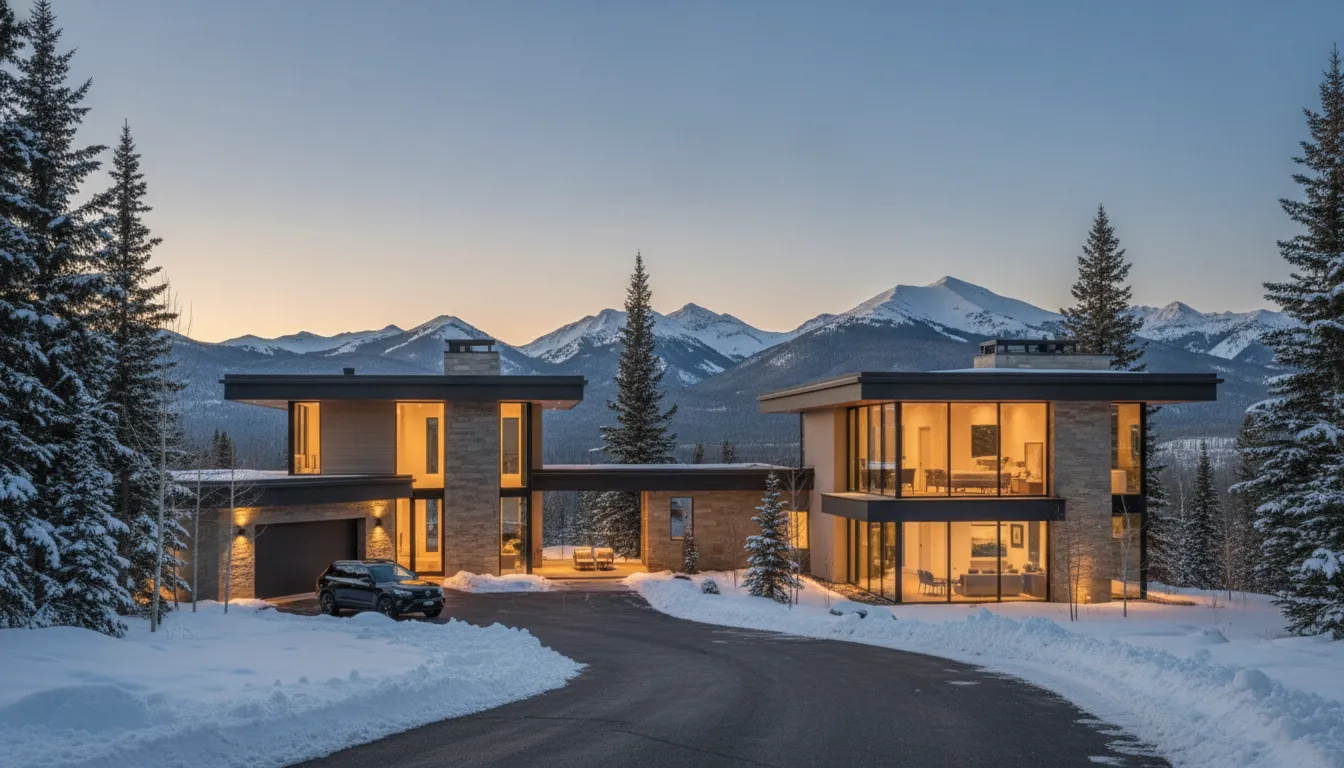


For savvy investors looking to expand their real estate portfolio, speed and simplicity are key. Traditional loan processes can be slow and cumbersome, often getting bogged down in personal income verification. A DSCR loan for investment property offers a more direct and efficient path forward. By focusing on the asset’s financial performance rather than your personal tax returns, it allows you to move quickly on promising opportunities. This is the perfect tool for investors who want to scale their holdings in Park City without getting tangled in red tape. This guide will show you how to leverage this loan to your advantage.
If you’re looking to buy an investment property in Park City, a DSCR loan might be the perfect tool for you. A Debt Service Coverage Ratio (DSCR) loan is a type of mortgage designed specifically for real estate investors. Instead of focusing on your personal income from pay stubs or tax returns, lenders use the property's rental income to determine if you qualify. The core question a DSCR loan answers is simple: does the investment property generate enough cash flow to cover its own mortgage payments?
This approach is a game-changer for many investors. If you're self-employed, have a non-traditional income structure, or simply want to keep your personal finances separate from your real estate investments, a DSCR loan offers a more direct path to financing. It allows you to secure a loan for a promising rental property, like a ski condo in Deer Valley or a luxury home in Old Town, based on its own financial merit. Our team at Utah's Mortgage Pro specializes in finding the right financing for your unique situation, and our process is designed to be transparent and efficient from start to finish.
The main difference between a DSCR loan and a traditional mortgage lies in the qualification criteria. When you apply for a conventional loan, lenders conduct a deep review of your personal finances. They’ll ask for W-2s, tax returns, and bank statements to verify your income and calculate your personal debt-to-income ratio.
A DSCR loan flips the script. The property is the applicant, not you. Lenders focus almost entirely on the property’s cash flow. This means you generally don’t need to provide extensive personal income documentation, which is why these are often called “low-doc” loans. This streamlined approach is ideal for experienced investors looking to expand their portfolio quickly or for borrowers whose income is solid but complex to document. You can explore our FAQs for more details on different loan types.
So, what exactly is the "ratio" in a DSCR loan? The Debt Service Coverage Ratio is a simple calculation lenders use to assess an investment property's financial health. It’s found by dividing the property’s Net Operating Income (NOI) by its total debt payments. Your NOI is the annual rental income minus essential operating expenses like property taxes, insurance, and maintenance. The total debt is your complete annual mortgage payment, including principal, interest, taxes, and insurance (PITI).
Most lenders want to see a DSCR of at least 1.0, with many preferring 1.25 or higher. A ratio of 1.0 means the property’s income exactly covers its expenses. A ratio of 1.25 means it generates 25% more income than required to cover the debt, creating a healthy cash flow buffer. This cushion gives lenders confidence that the property can perform well, which can influence the rates you receive.
At its core, the Debt Service Coverage Ratio is a simple calculation that lenders use to gauge a property's financial health. It answers one critical question: does this property generate enough income to pay for its own mortgage and expenses? The entire loan approval process hinges on this number, so understanding how it’s calculated is key to your success as an investor.
The formula itself is straightforward: DSCR equals the property's Net Operating Income (NOI) divided by its Total Debt Payments. Think of it as a financial stress test for your investment. Lenders want to see a healthy cushion, ensuring the property can handle its obligations even with unexpected vacancies or repairs. Let's break down each part of that equation.
Your property's Net Operating Income, or NOI, is the total income it generates minus all its operating expenses. First, you’ll add up all sources of income, which is primarily the gross rental income. Then, you'll subtract the costs of running the property, like property taxes, insurance, HOA fees, property management costs, and a budget for maintenance.
It’s important to note what isn't included in operating expenses: the mortgage payment itself. That’s because the mortgage is the "debt" part of the equation, so we keep it separate to avoid counting it twice. Calculating an accurate NOI gives you a clear picture of the property's profitability before debt is factored in, which is exactly what lenders need to see.
Once you have your NOI and your total annual mortgage payments, you can calculate the ratio. So, what number are lenders looking for? Generally, a good DSCR ratio is 1.25x or higher. This means that for every dollar the property owes in mortgage payments, it brings in $1.25 of income.
This 25% buffer gives the lender confidence that the property can comfortably cover its debt service with room to spare. A higher DSCR indicates a healthier cash flow and a lower-risk investment, which can lead to more favorable loan terms. For competitive properties in a place like Park City, aiming for a DSCR of 1.25x or more puts you in a strong position for approval.
A DSCR below 1.0 is a major red flag for lenders. It means the property’s net operating income is not enough to cover its mortgage payments, resulting in negative cash flow. From a lender's perspective, this signals that the investment is not self-sustaining and is likely to default. Because of this, it can be very difficult to secure financing for a property with a DSCR under 1.0.
Even a DSCR of exactly 1.0, which represents a breakeven point, is usually insufficient. Lenders need to see a cushion for unexpected costs, like a furnace repair or a month of vacancy. If your initial calculation comes in low, it doesn't mean the deal is dead, but it does mean you'll need to adjust your strategy.
One of the best things about DSCR loans is their versatility. Unlike some traditional mortgages that have strict rules about property types,
This is the bread and butter for many real estate investors, and DSCR loans are perfectly suited for them. You can use this type of financing for single-family homes, duplexes, triplexes, and fourplexes. These 1-4 unit properties are often the easiest to manage and have a steady supply of potential tenants. Whether you’re looking at a classic single-family home in a quiet neighborhood or a duplex closer to the ski resorts, a DSCR loan allows you to qualify based on the property's rental income potential rather than your personal W-2. It’s a straightforward way to add a reliable, income-producing asset to your portfolio.
For a market like Park City, this is where DSCR loans truly shine. These loans are ideal for financing short-term and vacation rentals, including luxury ski-in/ski-out condos and Airbnb properties. Lenders who offer DSCR loans understand the seasonal and high-yield nature of vacation markets. They will analyze projected income from platforms like Airbnb or VRBO to determine the property's DSCR. This is a game-changer, as traditional loans often struggle with the variable income of short-term rentals. A DSCR loan empowers you to invest in a prime vacation property and have its own success pay for the mortgage.
Ready to diversify beyond residential rentals? DSCR loans can also open the door to commercial and mixed-use properties. Think of a building in Old Town with a boutique on the ground floor and apartments upstairs, or a small office building. These mixed-use properties can offer multiple streams of income from a single investment. While financing for commercial real estate can sometimes be more complex, a DSCR loan simplifies the process by keeping the focus on the property’s income. It’s an excellent tool for seasoned investors looking to expand their footprint into the commercial side of Park City’s vibrant market.
Because DSCR loans focus on the property’s income potential instead of your personal salary, the qualification process looks a little different. Lenders are mainly concerned with whether the investment can pay for itself. That said, they still want to see that you’re a reliable borrower who is financially prepared for property ownership. Think of it less like a personal loan application and more like pitching a business plan where you and the property are both part of the deal. Here’s a look at what lenders, including our team at Utah's Mortgage Pro, typically review.
While your personal income isn't the main event, your credit history still plays a key role. Most lenders look for a minimum credit score of around 680 to consider you for a DSCR loan. A stronger credit score doesn't just help you get approved; it shows you have a solid track record of managing your finances. This can make you a more attractive borrower and often gives you access to more favorable interest rates. It’s always a good idea to check your credit report beforehand so you know exactly where you stand and can address any potential issues.
For a DSCR loan, you should plan on making a down payment of at least 20% to 25% of the property's purchase price. Because the loan is secured by the property's income, lenders want to see that you are significantly invested in the property's success. In addition to the down payment, you’ll likely need to show you have cash reserves on hand. This isn't just a formality; it’s a safety net. Having a few months of mortgage payments set aside proves you can cover costs during a potential vacancy or handle an unexpected repair, ensuring the investment stays on track even if rental income temporarily dips.
One of the great features of a DSCR loan is the flexibility to purchase the property through a business entity, like an LLC (Limited Liability Company). In fact, many lenders prefer it. This structure can provide a layer of personal liability protection, separating your personal assets from your investment properties. For investors planning to build a portfolio of homes in Park City or Deer Valley, using an LLC also simplifies management and can be a smart move for estate planning. Our loan process is designed to support investors using this strategy, ensuring a smooth transaction from start to finish.
Like any financial tool, DSCR loans come with their own set of benefits and drawbacks. Understanding both sides helps you decide if this is the right path for your Park City investment strategy. These loans offer incredible flexibility for investors, but they aren’t a one-size-fits-all solution. The trade-off for qualifying based on property performance rather than personal income is often stricter terms in other areas. Weighing these factors carefully is the key to making a smart financing decision that aligns with your long-term goals.
The biggest advantage of a DSCR loan is that it qualifies you based on the property's income potential, not your personal salary. Lenders focus on the investment's cash flow, which means they typically don't ask for your personal tax returns or pay stubs. This is a huge benefit if you're self-employed, a seasoned investor with a complex portfolio, or have income that's difficult to document traditionally. Because there's less personal financial paperwork to review, the loan approval process is often much faster than a conventional mortgage. This speed can give you a competitive edge in a fast-moving market. DSCR loans are also versatile and can be used for long-term rentals, short-term vacation properties like an Airbnb, and even small multifamily homes.
The flexibility of DSCR loans comes with a few trade-offs. First, you can generally expect higher interest rates compared to traditional home loans. Lenders view these loans as slightly riskier because they don't verify your personal income, and the higher rate reflects that. You will also need a larger down payment, typically 20–25% or more, as lenders want to see that you have significant equity in the property from the start. Some DSCR loans include prepayment penalties, which are fees you might have to pay if you sell or refinance the property within the first few years. Finally, the loan's approval depends entirely on the property's ability to generate income. If it's vacant or doesn't produce enough rent to meet the lender's DSCR requirement, you won't qualify.
Getting approved for a DSCR loan is often more straightforward than a traditional mortgage, but you can still take steps to make your application as strong as possible. Think of it as setting yourself up for success from the very beginning. By being strategic with your finances and property choice, you can present yourself as a low-risk, high-potential borrower. These simple actions can make a significant difference, helping you secure better terms and get you closer to owning that perfect Park City investment property.
A strong application goes beyond just meeting the minimum requirements. It tells a story of a savvy investor who understands the market and is prepared for the responsibilities of property ownership. Lenders look for borrowers who have done their homework. This means having your financial ducks in a row, identifying a property with excellent income potential, and understanding the loan process itself. In a competitive real estate market like Park City, being a prepared and desirable applicant can give you a significant edge. It not only improves your chances of approval but can also lead to more favorable interest rates and terms, saving you money over the life of the loan. Taking the time to strengthen your position before you apply is one of the smartest moves you can make as a real estate investor.
One of the most direct ways to strengthen your loan application is to increase your down payment. While DSCR loans typically require 20-25% down, offering more can really set you apart. A larger down payment lowers the amount you need to borrow, which reduces the lender's risk. It shows you’re financially stable and seriously invested in the property’s success. In some cases, if you have excellent credit and a solid history as an investor, a lender might be flexible. However, putting more money down upfront almost always works in your favor. It demonstrates your financial capacity and commitment, which can lead to a smoother approval process and potentially better loan terms.
Since a DSCR loan hinges on the property's income potential, your choice of property is critical. A home that can generate substantial rental income will naturally have a better DSCR, making you a much more attractive borrower. When you’re looking at properties in areas like Deer Valley or Old Town, focus on the ones with a proven history of high rental demand, whether for long-term tenants or short-term vacationers. A property that easily covers its own mortgage payment and expenses with a healthy margin of profit is the ideal candidate for this type of financing. Doing your research on comparable rental rates and occupancy will give you the data needed to prove the property’s value to a lender.
You wouldn't climb a mountain without an experienced guide, and you shouldn't apply for a specialized loan without an expert in your corner. Working with a mortgage professional who truly understands DSCR loans and the Park City market is a game-changer. We know the specific requirements and can help you prepare an application that highlights your strengths. A specialist can also connect you with the right lenders and help you understand all your options. Our team at Utah's Mortgage Pro has deep expertise in this area and can guide you through the entire loan process from start to finish, ensuring you avoid common pitfalls and present the strongest case possible.
Before you even start seriously searching for properties, getting pre-approved is a crucial first step. A pre-approval gives you a clear and realistic budget, so you know exactly what you can afford. It also shows sellers and real estate agents that you are a serious, qualified buyer, which gives you a major advantage in a competitive market like Park City. Starting the pre-approval process early streamlines everything, allowing you to move quickly and confidently when you find the right investment. It removes the guesswork, confirms your eligibility for a DSCR loan, and puts you in a powerful negotiating position when it comes time to make an offer.
Deciding on the right financing for your Park City investment property is a big step. A DSCR loan can be a fantastic tool, especially for investors, but it isn't a one-size-fits-all solution. The key is to match the loan type to your specific financial situation and investment goals. Whether you're eyeing a ski-in/ski-out condo in Deer Valley or a rental in Old Town, understanding if a DSCR loan fits your strategy is the first move toward building your real estate portfolio. Let's walk through when this loan makes sense, what other options you have, and how to get started.
A DSCR loan is often the perfect fit if you're an investor whose personal income doesn't tell the whole story. Maybe you're self-employed, have a non-traditional income stream, or already own multiple properties. With a DSCR loan, lenders focus on the property's rental income potential instead of your personal tax returns. This is a game-changer. If the property you want to buy can generate enough rent to cover its mortgage payments and expenses, you have a strong case for approval. This approach works especially well for investment properties like multi-family homes, vacation rentals, and mixed-use buildings that are expected to produce consistent cash flow right away.
If a DSCR loan doesn’t feel quite right, you still have excellent financing options. A traditional jumbo loan is a common alternative, but it requires you to qualify based on your personal income and debt-to-income ratio. This can be a great path if you have straightforward W-2 income and a low DTI. For seasoned investors with several properties, a blanket mortgage could be more efficient. This type of loan covers multiple properties under a single mortgage, simplifying your finances. The best choice depends entirely on your portfolio and financial picture. Exploring different loan rates and structures will help you find the most strategic fit for your Park City investment.
Ready to see if a DSCR loan can work for you? The process is more direct than you might think. The main requirement is finding a property that generates enough income to meet the lender's DSCR threshold. You will also typically need a down payment of at least 20% to 25% and have some cash reserves on hand. The best way to begin is by partnering with a mortgage professional who understands the Park City market inside and out. Our team can help you analyze a property's income potential and guide you through the application. You can learn more about how it works and take the first step toward securing your investment today.
How do lenders determine the rental income for a Park City vacation property that doesn't have a rental history? That's a great question, and it's a common scenario in a market like Park City. Lenders don't just guess. They will order a special type of appraisal that includes a market rent analysis. An appraiser will research comparable short-term rental properties in the area, looking at their nightly rates, occupancy, and overall performance on platforms like Airbnb and VRBO. This data allows them to create a reliable income projection for your property, which is then used to calculate the DSCR.
Is a DSCR loan a good option for a first-time investor? It absolutely can be. Since the loan approval is based on the property's income potential rather than your personal salary, it can be an excellent way for new investors to enter the market. The most important factors for a first-time buyer using a DSCR loan are choosing a property with very strong cash flow projections and being financially prepared for the larger down payment, which is typically 20% or more.
Are the interest rates for DSCR loans always higher than for traditional loans? Generally, you can expect the interest rates on DSCR loans to be slightly higher than those for a conventional mortgage. This is because the lender is taking on a different kind of risk by not verifying your personal income. However, the rate you receive isn't set in stone. You can secure a more competitive rate by presenting a strong application, which includes having a high credit score, making a larger down payment, and choosing a property with a very healthy DSCR.
Can I use a DSCR loan to buy a property I plan to live in for part of the year? DSCR loans are designed exclusively for non-owner-occupied investment properties. The entire premise is that the property is a business asset that generates rental income to pay for itself. If you intend to live in the home, even for part of the year as a second home, you would need to explore other financing options, such as a traditional jumbo loan, which is structured for personal use.
What happens if the property's rental income drops after I get the loan? Once your loan is finalized, you are responsible for making the full mortgage payment every month, regardless of whether the property is rented or vacant. This is precisely why lenders require you to have significant cash reserves before they approve the loan. That financial cushion is your safety net, ensuring you can cover the mortgage and other expenses during a slow season or an unexpected vacancy without financial stress.