


Buying a Park City rental through an LLC can create a cleaner framework for managing ownership, expenses, and multiple investment properties. It also introduces an important distinction: the entity that holds title is not necessarily the same thing as the borrower's underwriting profile.
Discuss your Park City DSCR loan for LLC financing options
A DSCR loan for LLC financing typically evaluates the property's projected or documented cash flow. It does not rely primarily on the investor's personal income or tax returns. The LLC may still need entity documents, and lenders may require personal guarantees or review member credit.
That structure can be relevant for luxury rentals in Park City, Deer Valley, and surrounding Summit County. Seasonality, property operations, rental rules, and appraisal support all affect the financing analysis. Utah's Mortgage Pro helps investors examine the property economics and entity setup together, with guidance tailored to the transaction rather than a generic checklist. The first step is understanding what the ratio measures and what it does not change about LLC borrowing.
A DSCR loan for an LLC is investment-property financing evaluated primarily through the rental property's ability to support its debt. The LLC serves as the ownership or borrowing entity. The structure can be useful when a Park City or Summit County rental is held for investment and the borrower's personal income does not fully reflect the property's operating potential.
DSCR stands for Debt Service Coverage Ratio. In practical terms, the calculation compares rental income available from the property with its debt obligations. A common mortgage-focused version uses rental income divided by PITIA, meaning principal, interest, taxes, and insurance. A ratio of 1.0 indicates that the income and those obligations are equal. A ratio above 1.0 indicates more income than the measured debt service, although each lender may define eligible income, expenses, and required thresholds differently.
That property-centered approach is the distinguishing feature of DSCR underwriting. Instead of relying primarily on personal tax returns and a conventional debt-to-income analysis, the lender reviews the subject property's rent potential or documented rental performance. Supporting information may include an appraisal, lease or rent analysis, operating expenses, and the property's intended use. For a seasonal luxury rental near Deer Valley or Canyons Village, seasonality and the reliability of the rental assumptions deserve careful review. Rental income should be treated as an underwriting input, not a promise of future performance.
The LLC and the DSCR analysis answer different questions. The DSCR analysis asks whether the property can support the proposed debt. The entity structure addresses who owns the property, who signs the loan documents, and how title and closing documents should be coordinated. Depending on the program, a lender may request the LLC's formation records, operating agreement, good-standing documentation, and information about its members. A personal guarantee may also be required, particularly for a newly formed entity or one without an operating history. An LLC does not automatically remove personal obligations or replace lender requirements.
Utah's Mortgage Pro approaches this as an entity-level transaction-planning question, not merely a generic DSCR calculation. Rodrigo Ballon can help an investor evaluate how the property, rental strategy, ownership structure, and available financing options fit together. Legal and tax consequences of an LLC should be reviewed with the borrower's qualified attorneys and tax professionals. Program availability, documentation, underwriting, and terms vary by lender, borrower, property, and market.
CrossCountry Mortgage, LLC, NMLS #3029, is an Equal Housing Lender. This is not a commitment to lend. All loans are subject to underwriting guidelines and applicable disclosures.
Answer: An LLC can be the borrowing entity and hold title to the investment property. While the lender may still evaluate one or more individual members and require a personal guaranty. The entity structure changes the paperwork and closing coordination, but it does not eliminate lender underwriting or personal responsibility where a guaranty applies.
For an investor considering a DSCR loan for LLC ownership, the first distinction is between the property borrower and the people behind the entity. The LLC may sign the note, mortgage, and other loan documents. The lender then reviews whether the entity is properly formed, authorized to borrow, and able to take title under the proposed transaction. Some programs may also prefer or require a single-purpose entity that owns no unrelated assets or liabilities. Requirements vary by lender and loan program.
Newly formed LLCs may have little operating history for an underwriter to assess. In that situation, the lender may request a personal guaranty from the members or principals. A guaranty can create personal obligations even though the property is titled in the LLC. So the exact scope should be reviewed with qualified legal and tax professionals before signing. An LLC's liability protections and its loan obligations are separate issues.
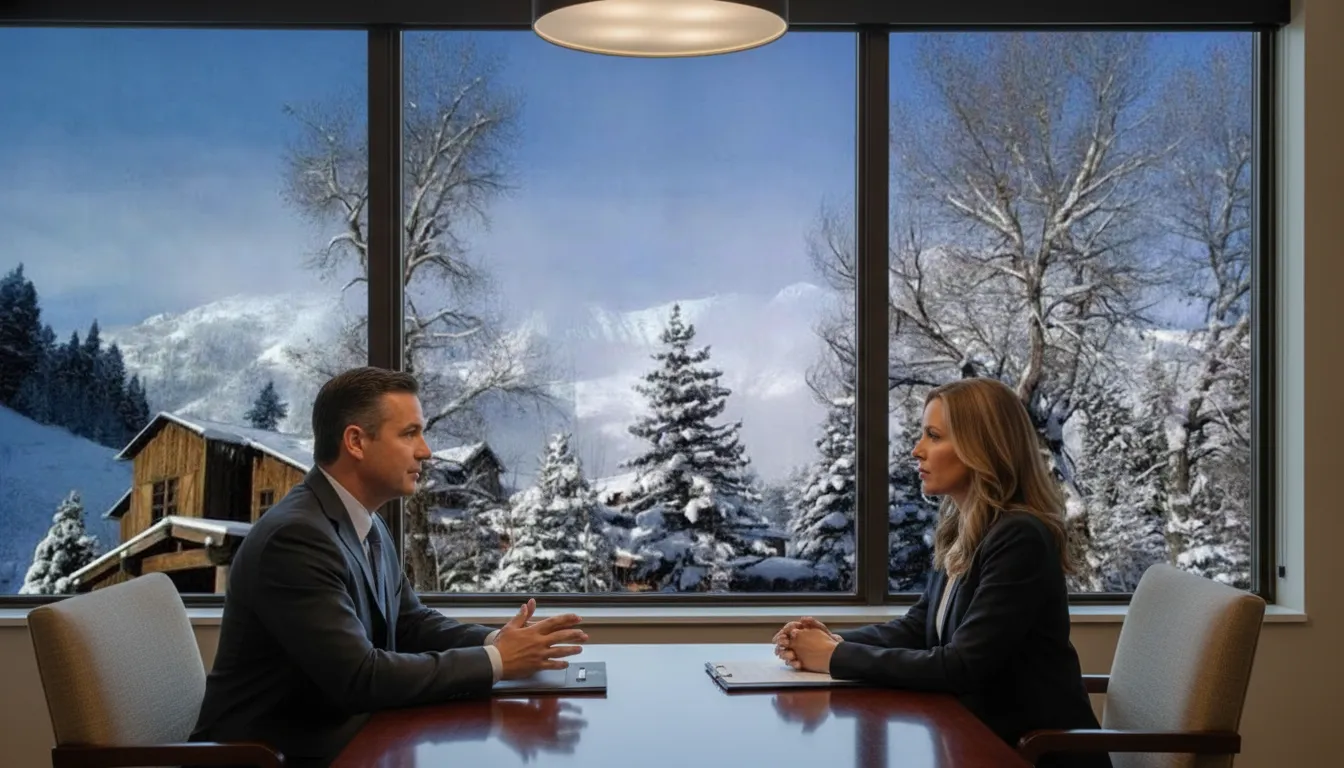
For an additional perspective, investors can review this consultation scene while considering how entity documentation and rental operations fit together.

A lender commonly asks for the LLC's articles of organization, operating agreement. Certificate or evidence of good standing, EIN confirmation, ownership records, and resolutions authorizing the purchase or refinance. Identification and financial information for significant members or guarantors may also be required. The lender may compare the ownership structure across the entity records, loan application, purchase contract, and title commitment.
That makes early coordination valuable. Your lender can explain program-specific requirements, while your attorney and CPA can advise on entity formation, ownership, liability, and tax treatment. The title professional then helps ensure the vesting and closing documents match the approved borrower structure. For a Park City or Summit County rental, the team may also need to understand the intended rental operation and property-specific income support. Utah's Mortgage Pro can help organize the financing conversation, but legal and tax advice should come from your licensed advisors.
Direct answer: A DSCR loan for an LLC is typically evaluated through the property's rental economics, the LLC's legal documentation, and the responsible principals' overall credit and financial strength. Exact requirements vary by lender, property, occupancy, and program.
| Requirement | What the lender may review |
|---|---|
| Rental-income analysis | Current leases, a rent roll, or a market-rent analysis. The lender may calculate DSCR using net operating income and annual debt service. A 1.0 ratio is a common reference point. Some programs use different minimums. |
| Personal income and DTI | Personal tax returns and debt-to-income may receive less emphasis than with conventional financing. The lender can still review the guarantor's liabilities, liquidity, and repayment capacity. |
| Credit | Personal credit history and scores for the members or guarantors may affect eligibility, leverage, and other available terms. There is no universal minimum. |
| LTV and down payment | Maximum LTV depends on property type, DSCR, credit, market, and program. Illustrative down-payment ranges sometimes appear in the market, but they are not a promise for any transaction. |
| Reserves | Liquid assets may be required for mortgage payments, taxes, insurance, repairs, and periods of vacancy. The amount varies with the loan and property. |
| Property | Appraisal, condition, marketability, occupancy plan, and rental history or projections. Seasonal Park City rentals require careful review of occupancy assumptions and local operating considerations. |
| Documents | Articles of organization, operating agreement, good-standing evidence, ownership information, leases or rent support, appraisal materials, asset statements, and requested guarantor documents. |
| Purpose | Purchase, rate-and-term refinance, or another permitted investment purpose. Some lenders may prefer a single-purpose entity for the subject property. |
The ratio is only as reliable as the income and expense assumptions behind it. Underwriters may account for taxes, insurance, utilities, management costs, and vacancy rather than treating gross rent as spendable cash flow. For a ski-area or luxury property, seasonality can materially change the analysis. A strong peak season does not by itself establish sustainable annual income.
LLC ownership also does not remove every personal requirement. A newly formed entity may have little operating history, and a lender may request a personal guarantee from one or more principals. Entity documents should match the vesting and borrowing structure before closing, with legal and tax advisors involved where appropriate.
For a Park City or Summit County acquisition, organize the rental strategy, property information, and entity records early. Utah's Mortgage Pro can help you evaluate the property and structure together, without assuming that one lender's checklist applies universally.
Sources: DSCR rental-investment reference and DSCR underwriting overview.
Direct answer: A DSCR loan generally emphasizes the subject property's rental cash flow. While a conventional investment loan typically gives greater weight to the borrower's personal income, tax returns, debt-to-income ratio, and overall financial profile. For an LLC-owned property, the right comparison also includes entity documents, title structure, guarantees, reserves, and the total cost of financing.
With a DSCR loan, the lender evaluates whether projected or documented property income can support the debt. The ratio generally compares net operating income with annual debt service, so taxes, insurance, and other operating expenses can affect the analysis. A ratio of 1.0 is a common reference point, but program standards vary by lender, property, and transaction. Review the broader DSCR loan requirements before assuming a property will qualify.
Conventional investment financing often requires detailed personal-income documentation and calculates the borrower's debt-to-income ratio. That approach can work well for an investor with straightforward, well-documented income and a strong personal balance sheet. It may require more explanation when income comes from multiple businesses, substantial equity compensation, or irregular distributions.
DSCR underwriting shifts more attention to the asset. Rental analysis, an appraisal, lease or rent documentation, operating expenses, credit, leverage, and reserves may all influence the decision. This is not an easier-approval promise. It is a different risk assessment, and a lender may still review the guarantor's credit and financial strength.
An LLC can be the borrowing entity or hold title when the lender and program permit that structure. However, an LLC does not automatically remove personal obligations. The lender may request formation documents, an operating agreement, proof of good standing, ownership information, and a personal guarantee, particularly for a newly formed entity. Conventional lenders may also have entity, title, or occupancy requirements, but they should not be described as categorically prohibiting LLC ownership. The transaction needs to be coordinated before closing.
Compare documentation demands, reserve expectations, leverage, prepayment provisions, loan structure, and all lender and third-party costs. DSCR products are commonly non-QM and may carry higher costs than conventional financing, reflecting their property-focused underwriting. Actual terms depend on current guidelines and the complete application, so a side-by-side review matters more than a broad rule of thumb.
For a high-value rental or vacation property, include seasonality, property operations, local requirements, and appraisal support in the discussion. Investors evaluating Park City investment property financing can benefit from reviewing both the LLC structure and the property's long-term rental strategy before selecting a loan path.
Direct answer: Before applying, align the property's intended use, realistic rental cash flow, entity documents, liquidity, and professional team. A DSCR loan for an LLC is evaluated around the property and transaction. The LLC structure does not remove the need for clear documentation or careful financial review.
Decide whether the property will be operated as a short-term rental, a longer-term rental, a second home, or a combination of uses. Explain how often the owners expect to occupy it and who will manage bookings, maintenance, and guest communication. For a Park City property, this distinction can affect the income analysis and the lender's view of the transaction. Review DSCR financing for Park City short-term rentals for additional context on vacation-rental underwriting.
Build a conservative operating view using supportable rent, vacancy, management, utilities, insurance, taxes, maintenance, and other relevant expenses. Park City's rental demand can vary by season, so do not rely only on peak-period projections. Ask how the property performs during slower months and whether the proposed income supports the total debt service after operating costs. A rent roll, lease agreements, management records, or a credible rental analysis may help support the figures, depending on the program.
Confirm that the planned rental activity is consistent with the property's governing documents, HOA requirements, and applicable local rules. Also review property type, access, amenities, and any operational restrictions that could affect occupancy or management. This is a diligence item, not a substitute for advice from a qualified local professional.
Gather the operating agreement, formation records, evidence of good standing, ownership details, and authorization for the borrowing entity. Lenders may also request information from members or guarantors, particularly when an LLC is newly formed or has limited operating history. Coordinate the proposed vesting and loan structure with the lender before closing documents are prepared.
Separate the funds needed for the down payment and closing from post-closing reserves and the property's operating cushion. Include a plan for repairs, furnishing, seasonal vacancies, insurance changes, and unexpected operating costs. High-value Summit County properties may need specialized or jumbo review, so clarify documentation and liquidity expectations early without assuming a universal loan limit.
Bring the lender, real estate attorney, accountant, insurance professional, and property manager into the conversation as appropriate. They can help keep the entity, title, rental plan, insurance, and financial records aligned. If cash-flow flexibility is part of the strategy, discuss whether an interest-only jumbo loan strategy is relevant under currently available guidelines, rather than treating it as a default recommendation.
Talk with Utah's Mortgage Pro about a DSCR loan for LLC financing
It may, depending on the lender and the transaction. A newly formed LLC may need to provide formation documents, proof of good standing, and information about its members. The lender may also evaluate the property, guarantor, credit profile, equity, and projected rental income rather than relying on an established business history.
Often, yes, particularly when the entity is newly formed or has limited operating history. A personal guarantee can remain part of the lender's risk requirements even when the property title and loan borrower are held by the LLC. Confirm the exact guaranty terms before signing.
Expect to provide the LLC's operating agreement, formation records, and proof of good standing, along with purchase and property details. The lender may also request an appraisal, lease agreements or a rent roll, rental analysis, asset and reserve information, credit details, and guarantor documentation.
Underwriting may review documented or projected rent, the property's operating expenses, and the payment used to calculate the ratio. Park City vacation rentals can be seasonal, so the analysis should account for occupancy fluctuations rather than assume peak-season income continues year-round.
There is no universal down-payment requirement. The amount can vary with the lender, property type, loan-to-value target, credit profile, reserves, rental performance, and overall transaction structure. Ask for a current scenario review before relying on any illustrative percentage.
Choosing an ownership structure is only one part of the financing decision. The property, projected rental performance, reserves, entity documents, occupancy plan, and available loan programs all need to fit together. Utah's Mortgage Pro can help you prepare a focused conversation about a Park City or Summit County investment property. Including whether a DSCR loan for an LLC fits the scenario. Bring your purchase details, rental plan, entity information, and questions about the next step.
Discuss a DSCR loan for LLC investment-property financing
CrossCountry Mortgage, LLC, NMLS #3029, is an Equal Housing Lender and Equal Credit Opportunity Lender. Rates, terms, and availability are subject to change without notice. This is not a commitment to lend. All loans are subject to underwriting guidelines and applicable disclosures. State licensing and other legal or tax requirements may apply. Consult qualified legal and tax professionals regarding your LLC.