
For a 2026 purchase in Park City, Deer Valley, or another high-value area, the county attached to the property can change the financing conversation before underwriting begins. Summit and Wasatch Counties are Utah's designated high-cost counties, so their conforming threshold is higher than the standard limit used across most of the state. That difference is exactly why the same loan amount can be conventional in one county and jumbo in another.
For 2026, the jumbo loan limit utah question has a clear county-level answer: Summit County and Wasatch County each have a one-unit conforming limit of $1,150,000. A loan amount above that threshold is generally considered jumbo, subject to the lender's program and underwriting guidelines.
That number is a starting point, not a complete qualification decision. Property type, occupancy, down payment, reserves, income documentation. And the structure of the purchase can all affect the available options, particularly for second-home buyers and borrowers with complex income. First, it helps to separate Utah's statewide baseline from the high-cost county limits that apply locally, then look at what financing above $1,150,000 typically involves.
Talk to a jumbo loan limit Utah specialist about your Summit or Wasatch property.
For 2026, the standard one-unit conforming loan limit in most Utah counties is $832,750. Summit County and Wasatch County receive a higher high-cost conforming limit of $1,150,000 for a one-unit property. That distinction matters for buyers in Park City, Deer Valley, Heber. And other high-value communities because the same loan amount may be conforming in one county but jumbo in another.
A jumbo loan is generally any mortgage amount above the conforming loan limit that applies to the property and county. In Summit and Wasatch counties, a one-unit loan above $1,150,000 falls into jumbo territory. In most other Utah counties, the threshold is lower because the applicable conforming limit remains $832,750.
These limits apply to the loan amount, not the home's purchase price. For example. A buyer could purchase a property priced above the county limit and remain within conforming guidelines if the requested mortgage amount is at or below the applicable threshold. Conversely, a borrower seeking a loan above $1,150,000 in Summit or Wasatch County would need a jumbo program. Even if the property itself is eligible for a standard one-unit loan.
The national baseline for 2026 is $832,750. Federal rules allow high-cost areas to receive a limit as high as $1,249,125, which is 150% of that baseline. Summit and Wasatch counties are designated high-cost Utah counties, but their 2026 one-unit limit is $1,150,000 rather than the maximum national ceiling. Most Utah counties remain at the $832,750 baseline.
The county-specific figure is therefore the number to use when evaluating a purchase or refinance. A national headline about the baseline or maximum high-cost ceiling does not replace the limit assigned to the county where the property is located. Property type and other loan characteristics can also affect the applicable limit, so confirm the details before structuring an offer or financing strategy.
For buyers whose financing needs exceed the local conforming threshold, specialized jumbo loan programs may provide options suited to luxury properties and more complex financial profiles. Program availability, underwriting requirements, down payment expectations, reserves, and documentation vary by borrower, property, market conditions, and lender guidelines.
Summit and Wasatch Counties are designated high-cost areas because home prices in these markets are substantially higher than in much of Utah. That local pricing environment affects the conforming-loan threshold, which determines when a mortgage moves from conventional financing into jumbo territory. For a borrower researching the jumbo loan limit Utah lenders use, the key point is that the threshold is county-specific, not a single statewide number.
The Federal Housing Finance Agency, or FHFA, establishes the annual conforming loan limits for loans eligible for purchase or guarantee by Fannie Mae and Freddie Mac. Under the Housing and Economic Recovery Act, FHFA adjusts the baseline each year to reflect the change in average U.S. home prices. For 2026, the reported average increase was 3.26 percent. That adjustment raised the national one-unit baseline to $832,750, while higher-cost counties can receive a larger conforming limit.
Those higher limits are intended to account for markets where a standard national threshold would cover a much smaller share of typical home prices. FHFA also publishes a ceiling for high-cost areas. In 2026, that ceiling is $1,249,125, or 150 percent of the $832,750 baseline. The ceiling is a maximum framework, not an automatic limit for every expensive county. Each county's actual limit depends on the applicable housing-cost calculation and FHFA's published county data.
For 2026, both Summit County and Wasatch County have a one-unit conforming loan limit of $1,150,000. A mortgage amount above $1,150,000 is generally classified as jumbo financing for a one-unit property in either county. Most other Utah counties use the $832,750 baseline, making the local distinction especially important when comparing a Park City. Deer Valley, Heber City, or other Wasatch-area purchase with a property elsewhere in the state. These figures are for the stated property category, and loan limits can differ when property type, occupancy, or other eligibility factors change.
The year-over-year movement was modest in dollar terms. The 2025 one-unit conforming limit for both Summit and Wasatch Counties was $1,149,825, compared with $1,150,000 in 2026. That change does not mean every borrower will qualify for the higher amount. Or that a loan just above the threshold will have the same structure as a conforming mortgage. Underwriting, documentation, reserves, property details, and lender guidelines still matter. The limit simply identifies the point at which the loan is no longer conforming.
Understanding that distinction can help you evaluate financing before making an offer. Review the jumbo versus conventional threshold alongside your anticipated loan amount, then confirm which county and property classification apply to your transaction.
Once a loan exceeds the 2026 conforming threshold in Summit or Wasatch County, it is generally treated as a jumbo mortgage. The $1,150,000 figure is a conforming limit for a qualifying one-unit property, not a guaranteed jumbo loan amount or a promise of approval. Jumbo underwriting is typically more individualized because the lender is evaluating a larger exposure, the property, the occupancy plan, and the strength and consistency of the borrower's finances.
Requirements vary by lender and borrower. A strong application often includes credit in the 700 range or higher, substantial post-closing liquidity, and documentation that clearly supports the income used to qualify. Borrowers with business income, commission income, restricted stock, or other complex compensation may need a more detailed review than a salaried borrower.
| Consideration | Primary residence | Second home | Investment property |
|---|---|---|---|
| Typical down payment | Often around 10%, subject to the program and borrower profile | Often around 20% or more | Often around 20% or more |
| Occupancy | Borrower occupies the home as a principal residence | Borrower uses the property for personal stays, not primary occupancy | Property is intended to produce rental or investment income |
| Rates | Pricing varies by market conditions, lender, loan structure, property, and borrower qualifications. No rate is guaranteed. | ||
| Typical reserves | Often 6 to 12 months of housing payments after closing | Often 6 to 12 months, with requirements that may be more conservative | Often 6 to 12 months, potentially including property-related obligations |
Debt-to-income requirements also matter. Many jumbo programs look for a ratio below approximately 45%, while some underwriting scenarios may allow a ratio closer to 50% when the complete application supports it. That is not a universal ceiling. The lender may weigh reserves, credit history, assets, income stability, property type, and the total loan structure together.
Expect stronger income documentation than a basic conforming application may require. Depending on the situation, that can include tax returns, business records, asset statements, employment verification, and explanations for material deposits or variable compensation. Self-employed borrowers may also need documentation that helps the lender understand business cash flow and the income available for personal obligations.
For a closer look at how equity can be structured, review these jumbo down payment options for Park City. The appropriate structure depends on the property, occupancy, assets, income, and applicable lender guidelines, so an individualized review is essential.

The applicable conforming limit is tied to the property, not the buyer's current residence or mailing address. A buyer relocating from another state, for example, evaluates the Utah county where the home is located. The limit also changes with the property's characteristics, so a one-unit primary residence is not evaluated exactly like a four-unit investment property.
Use the following process as a starting point, then confirm the figure with your lender before relying on it in an offer or financing strategy.
Because county, unit count, property type, and occupancy all matter, do not rely on a general online estimate alone. Confirm the exact limit for the specific address and transaction with a qualified mortgage professional. That review is especially important for luxury condos, second homes, multi-unit properties, and purchases involving complex income or substantial assets.
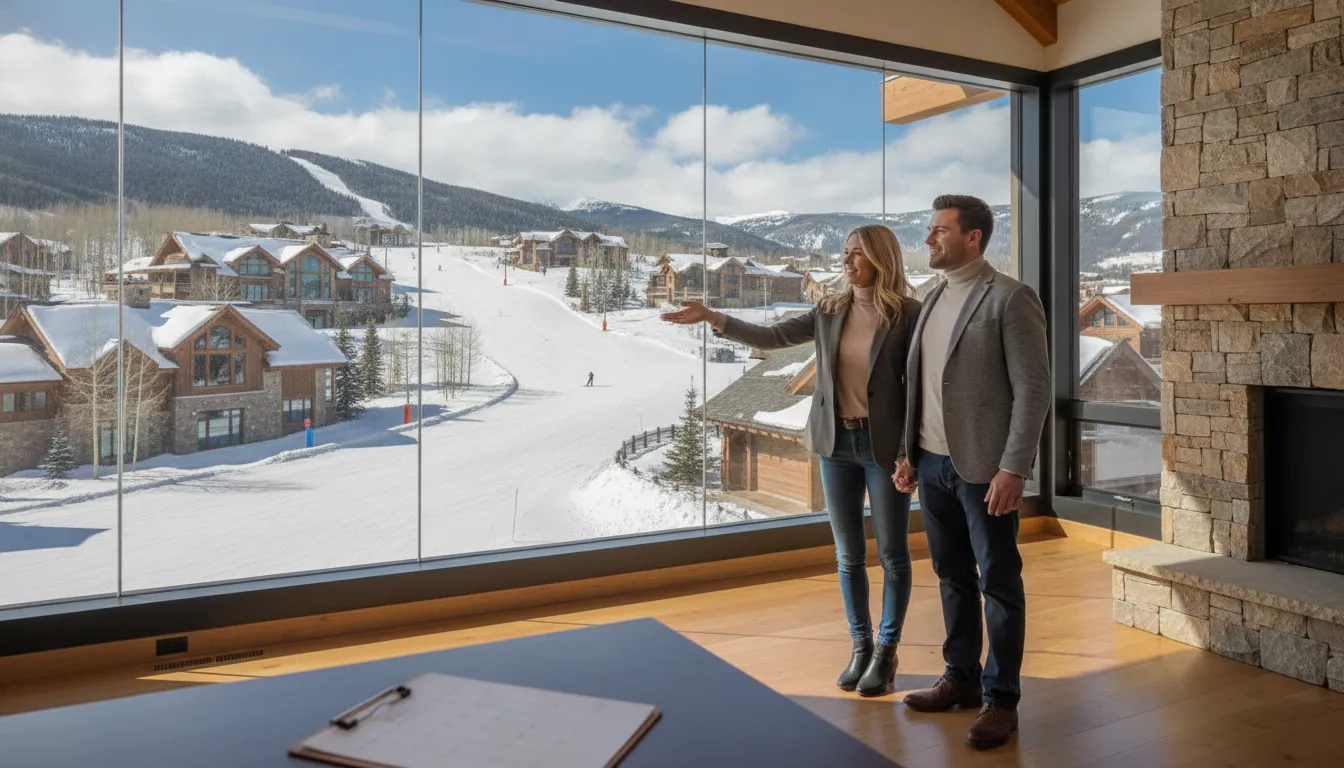
Financing a luxury property above the local conforming threshold is not simply a matter of requesting a larger mortgage. In Park City, Deer Valley, and surrounding Summit County communities, the property, occupancy, income profile, assets, and loan structure all shape the review. A specialist who works regularly in this market can help connect those details before an offer or financing strategy is finalized.
That local perspective matters because Summit and Wasatch Counties have a 2026 one-unit conforming limit of $1,150,000. A loan above that amount is generally considered jumbo, while most Utah counties use the $832,750 baseline. You can review the broader distinction in how much a jumbo loan is in Utah, then discuss how the county and property details affect your situation.
Luxury and second-home purchases often involve considerations that differ from a primary residence. A lender may need to understand the property's intended use, its location, condominium or association structure, and the strength of the borrower's reserves. Park City neighborhoods also include a range of property types, from ski-in/ski-out residences to homes in Promontory and other resort communities. Familiarity with those patterns can support a more informed conversation about documentation, down payment strategy, and program fit.
Self-employed borrowers, 1099 earners, and technology executives with stock compensation may have substantial financial strength without a simple W-2 income profile. Depending on lender guidelines and the complete application, the available analysis may include business financials, commission or contract income, vested assets, or documented investment resources. Specialized options can sometimes include bank statement programs, asset-depletion approaches, alternative documentation, or interest-only structures. These are not automatic solutions, and eligibility, terms, reserves, and documentation requirements vary by borrower and property.
A consultative review is especially valuable when compensation includes restricted stock, bonuses, partnership income, or multiple businesses. The goal is to identify which income and assets can be documented appropriately, rather than assuming that a conventional calculation tells the entire story. A specialist can also help distinguish a useful structure from one that creates unnecessary complexity later in the process.
Local expertise can also improve coordination among the people involved in a transaction. The buyer, real estate agent, title team, insurance professionals, and lender may each need a clear understanding of the intended use and financing structure. Early discussion of those variables can surface questions about reserves, documentation, or property eligibility while there is still time to evaluate options thoughtfully.
Rodrigo Ballon serves Park City and Summit County borrowers through CrossCountry Mortgage, NMLS #3029, with a focus on tailored jumbo financing for complex luxury-property scenarios. Program availability and underwriting decisions remain subject to current lender guidelines, property review, and individual qualifications. No rate, approval, or outcome is guaranteed. Equal Housing Lender.
Contact us to discuss your jumbo loan limit Utah options and financing strategy.
For a one-unit property, the 2026 conforming loan limit is $1,150,000 in both Summit County and Wasatch County. A loan amount above that county-specific threshold is generally considered jumbo. Most other Utah counties use the $832,750 baseline limit. Utah Mortgage Resource lists these 2026 county figures.
A jumbo mortgage is a loan that exceeds the applicable conforming loan limit for the property and county. The relevant threshold is based on the loan amount, not simply the home's purchase price. Because jumbo financing falls outside standard conforming limits, the lender may apply different underwriting requirements, documentation standards, and pricing.
No. For 2026, most Utah counties have the $832,750 one-unit conforming limit, while Summit and Wasatch counties are set at $1,150,000. The Federal Housing Finance Agency adjusts baseline limits annually based on changes in average U.S. home prices. See the FHFA announcement for the national limits and methodology.
Jumbo underwriting typically reviews credit history, down payment, debt-to-income ratio, liquid reserves, and income documentation more closely than a conforming application. Requirements vary by lender, property type, occupancy, and borrower profile. Self-employed borrowers, 1099 earners, and buyers using variable compensation should discuss documentation options before making an offer.
County limits are only one part of choosing a financing strategy. A focused conversation can help you discuss your Summit or Wasatch County property, borrower profile, and the exact jumbo loan limit that may apply. Contact us to discuss your jumbo loan limit Utah options and identify the questions to address before moving forward. Loan guidelines, documentation, and program availability vary by borrower and property.