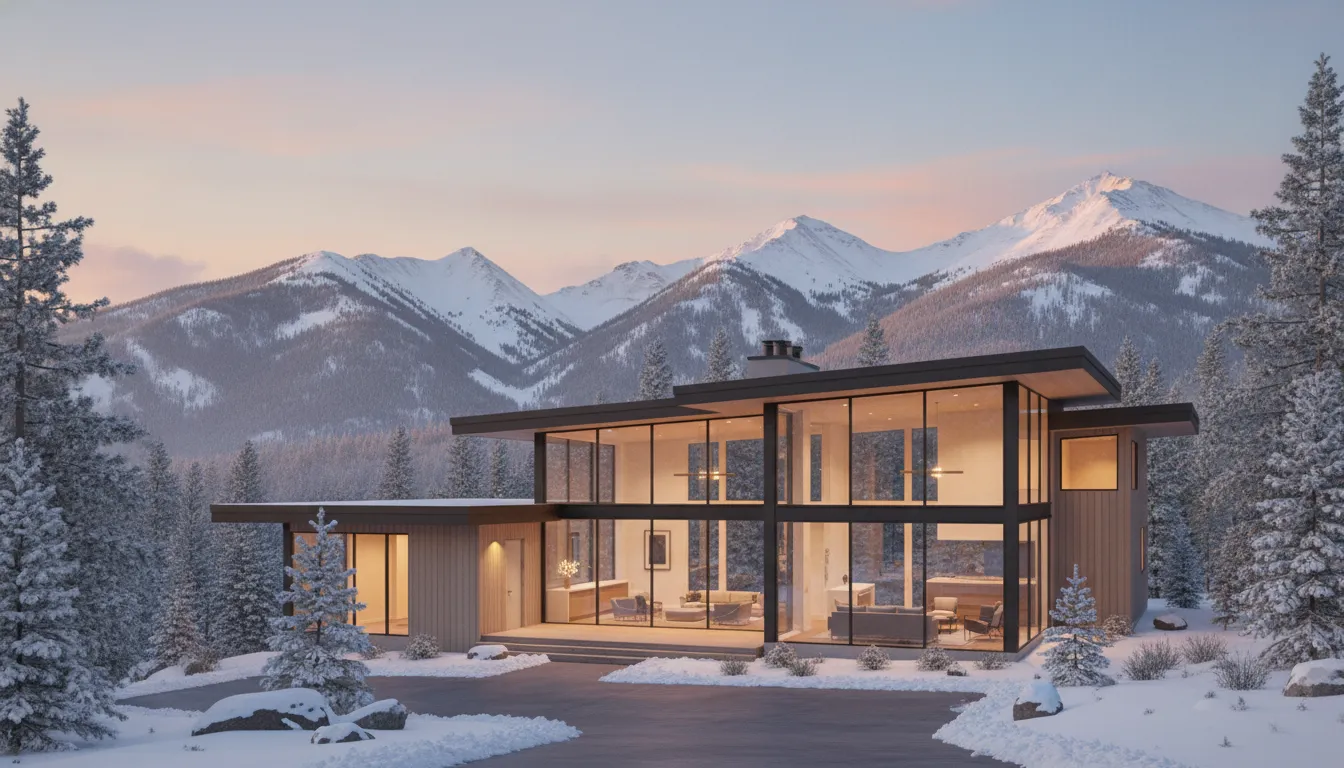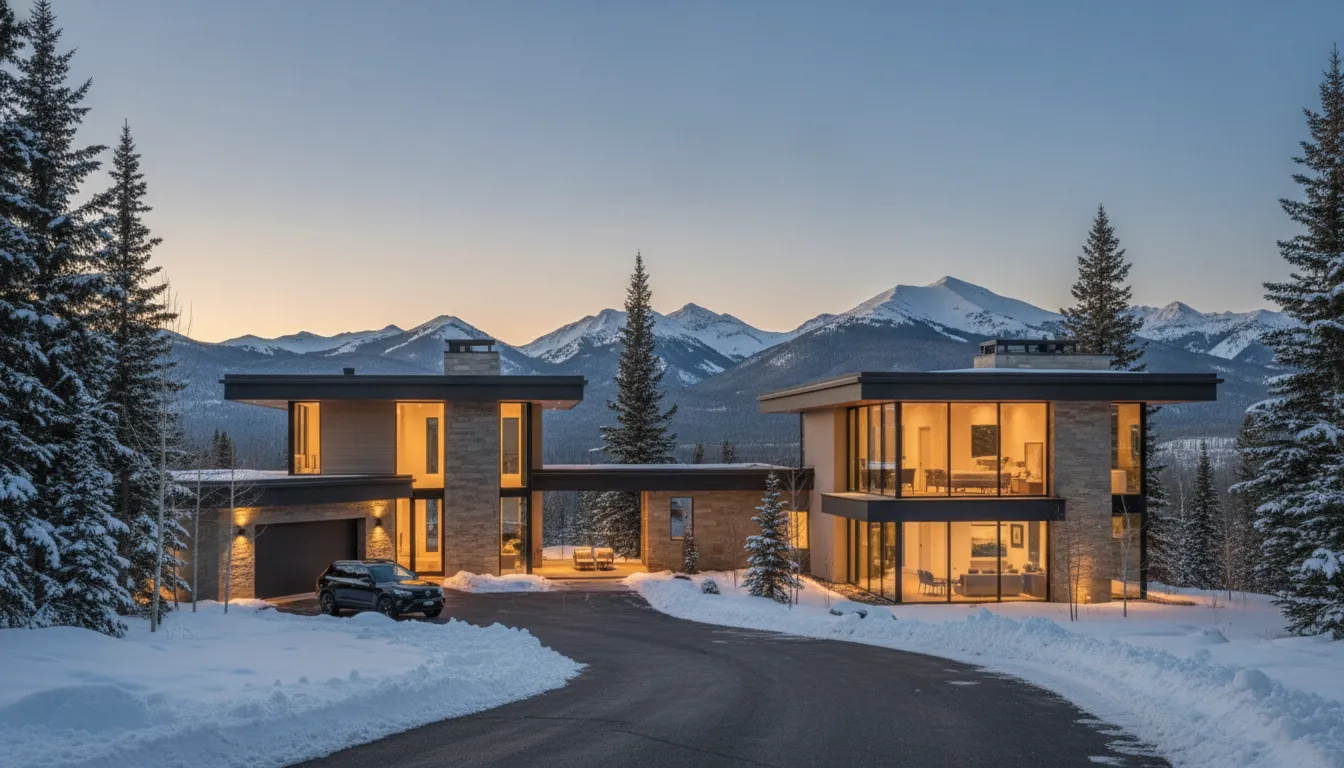

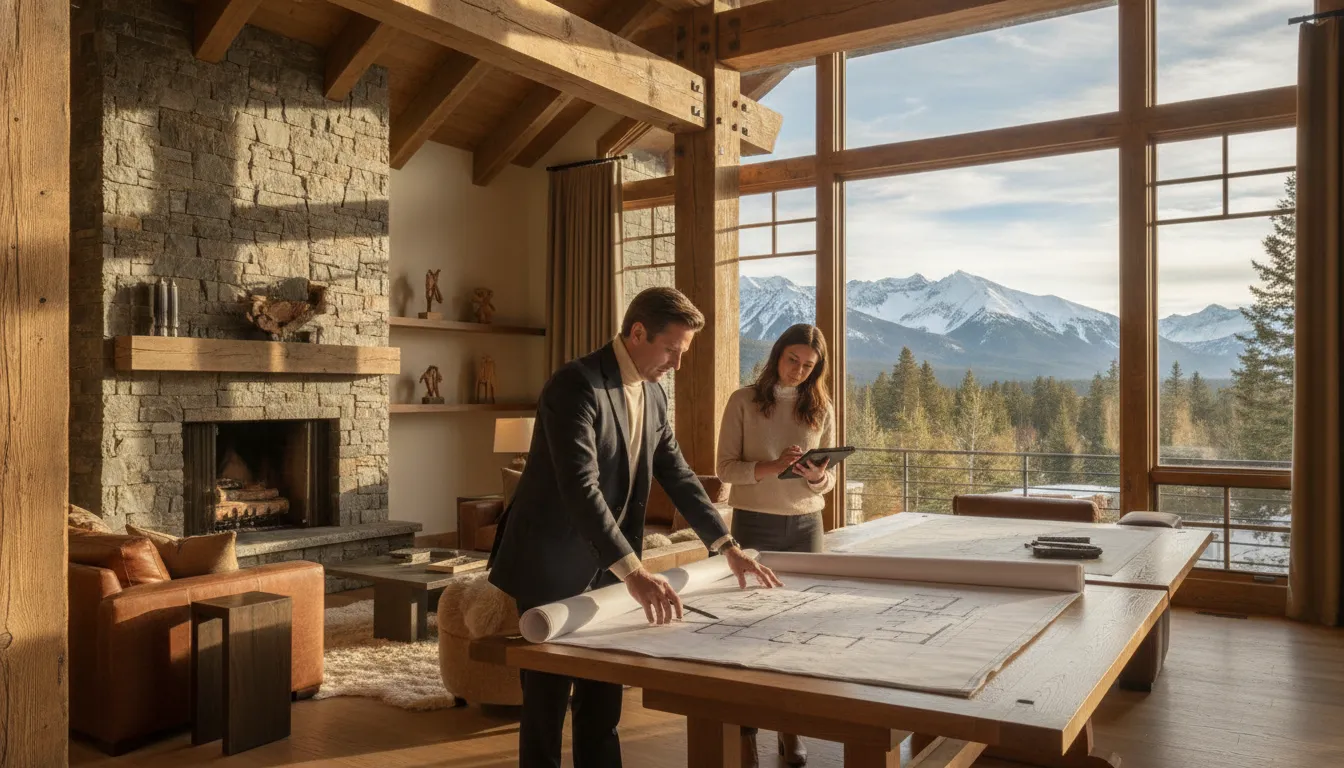
Building a custom home in Park City or Deer Valley involves more than estimating construction costs. The financing must account for the lot, architectural plans, builder contract, draw schedule, reserves, and the point at which the completed home becomes a permanent mortgage. For an out-of-state buyer, business owner, or executive with complex compensation, the lending structure deserves attention as early as the land search.
Schedule a consultation to discuss your luxury new construction financing options in Park City.
Luxury new construction financing Park City typically combines jumbo lending with a construction-to-permanent structure. This approach allows eligible borrowers to fund a custom build and transition to long-term financing through a coordinated process. Loan size, down payment, reserves, documentation, and program availability depend on the borrower, property, plans, and lender guidelines.
Standard home financing may not address the timing and risk of a high-value custom project. Understanding how construction-to-permanent jumbo loans handle funding milestones, interest costs, and conversion can help you evaluate the right path before committing to a lot or builder.
For a custom residence in Park City, financing must account for more than the finished home's appraised value. Construction-to-permanent jumbo financing combines the building phase and the long-term mortgage into one coordinated structure, helping you plan the capital required for land, construction, and the eventual residence.
With a one-time close loan, the lender establishes the construction financing before work begins. Funds are then released as the project reaches defined milestones. After construction is complete and the required conditions are satisfied, the loan converts to permanent financing without requiring a second mortgage closing. Depending on the approved program and your objectives, the permanent phase may use a fixed-rate or adjustable-rate structure.
This approach can be useful for a luxury custom build because the financing plan is designed around the construction budget and the long-term property from the outset. Loan amounts may reach up to $10 million for qualified borrowers and properties, subject to lender guidelines, appraisal support, documentation, and the overall project structure.
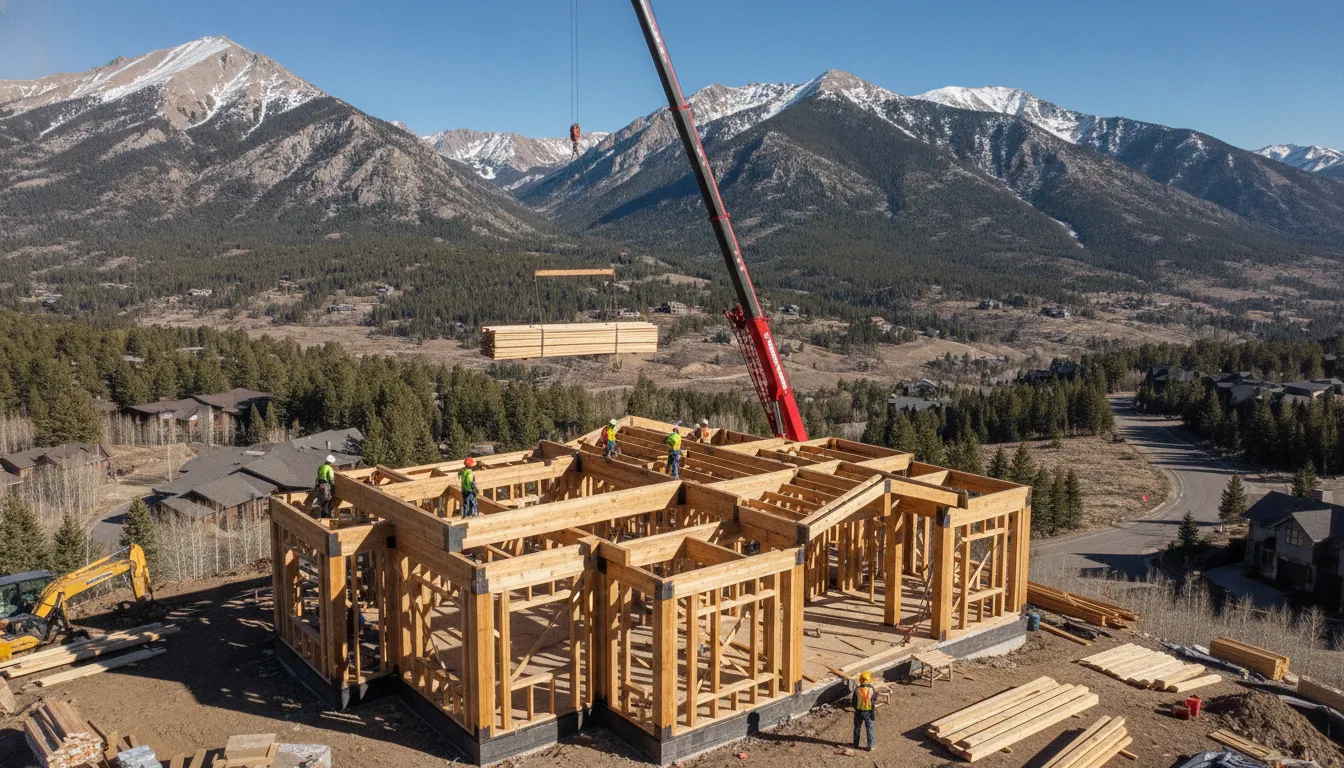
Construction funds are typically advanced through a draw schedule rather than delivered in a single payment. Before each draw is released, an inspection helps confirm that the relevant stage of work has been completed and that the requested payment aligns with the approved budget. Clear communication among the borrower, builder, inspector, and lender helps keep those milestones organized.
Interest reserves may also be included in the loan amount for an eligible luxury construction project. That reserve is intended to cover interest during the building period, although the amount and treatment depend on the approved underwriting and construction budget. Planning for it early can provide a more accurate view of the cash needed outside the loan.
Some construction-to-permanent jumbo structures allow a construction period of up to 24 months. That window can give a builder time to manage a complex mountain home project, but it is not a promise that every build will receive the same timeline. Construction schedules, weather, permits, change orders, inspections, and lender requirements all matter.
Most jumbo products do not require private mortgage insurance, though program terms vary. To compare jumbo loan programs in Park City, review the proposed budget, draw process, reserve strategy, property use, and permanent financing options with a lender familiar with Summit County custom construction.
Lenders evaluate a luxury construction application as both a real estate transaction and a complex financial plan. The review typically considers the property, building budget, builder qualifications, projected value, income documentation, assets, liabilities, credit history, and the liquidity available throughout construction. Because loan structures and guidelines vary, early planning is important before finalizing a lot purchase or construction contract.
Cash reserves are a central part of the qualification analysis. A lender may require approximately 6 to 12 months of principal, interest, taxes, and insurance, or PITI, for loans below $1.5 million. Requirements may increase to 9 to 12 months for loans from $1.5 million to $2 million and 12 or more months for loans above $2 million. A second home or investment property can require additional reserves, sometimes 12 to 18 or more months of PITI, depending on the borrower, property, and program.
Those reserves are separate from the down payment and closing costs. For jumbo financing, buyers should generally plan for a down payment in the range of 10% to 30%. With custom construction often requiring more equity than a completed or spec home. Most jumbo products do not require private mortgage insurance, although the absence of PMI does not eliminate the lender's requirements for assets, reserves, or documented repayment capacity.
Self-employed borrowers, business owners, and buyers with substantial deductions may not fit a standard income calculation. Specialized bank-statement jumbo programs may review 12 to 24 months of personal or business bank statements. With down payments commonly ranging from 10% to 20% when the borrower and property meet program guidelines. These programs remain subject to underwriting, asset verification, credit review, and documentation requirements.
A strong credit profile supports the application, but credit score is only one part of the decision. Lenders also assess payment history, debt obligations, liquidity after closing, income stability, and the relationship between the requested loan and the property's value. The construction plans, budget, builder experience, and appraisal must also support the proposed project. For a more detailed overview, review qualifying for new construction jumbo loans, then discuss your specific Park City property and financial profile with a qualified lending professional.
CrossCountry Mortgage, LLC, NMLS #3029. Equal Housing Opportunity. Program availability, underwriting requirements, down payments, reserves, and terms vary by borrower, property, market conditions, and lender guidelines.
The right structure depends on how far your project has progressed. How quickly you want to control the land, and whether your plans and builder are ready for underwriting. Both paths can support a high-value custom build, but they organize the land, construction, and permanent mortgage phases differently.
| Feature | Lot Loan | Construction-to-Permanent |
|---|---|---|
| Best fit | Buyers who want to acquire land before selecting a builder or finalizing plans. | Borrowers with a defined project, qualified builder, plans, budget, and construction timeline. |
| Closing structure | Land is financed first. Construction and permanent financing are arranged later, which may mean additional closing costs and underwriting. | Land acquisition and construction funding can be coordinated in one transaction, simplifying the custom-build process when the project is ready. HUD guidance describes construction-to-permanent financing for these phases. |
| Flexibility | Provides time to refine architecture, choose a builder, and determine the eventual financing strategy. | Offers a more defined path, with construction draws and conversion to permanent financing governed by the approved plans and loan terms. |
| Key consideration | You must qualify again for construction or permanent financing, and land value or equity treatment depends on lender guidelines. | Changes to scope, costs, or timing may require lender approval during construction. |
A standalone lot loan can be practical when you have identified an exceptional parcel in Park City. Deer Valley, or another Summit County community but are not ready to submit a complete construction package. It can preserve control of the land while you evaluate design, builder availability, and budget. The tradeoff is that the later construction loan and permanent mortgage must be planned as separate milestones.
A construction-to-permanent loan is generally better suited to a turnkey project with finalized documentation and a reliable execution plan. It can reduce the number of financing transitions, but it requires early coordination among the borrower, builder, appraiser, and lender. For context, the 2025 Summit County conforming loan limit is $1,149,825. Financing above that threshold typically requires a jumbo structure, making project design and liquidity planning especially important. Review the jumbo loan pre-approval process before committing to a path. Program availability, reserves, down payment, and approval depend on the borrower, property, and lender guidelines.
A luxury mountain residence that will not be your primary home is assessed differently from a conventional owner-occupied build. That distinction matters whether you are planning a ski-in/ski-out residence near Deer Valley East Village. Evaluating a new Park City ski resort development, or building a custom retreat intended for occasional use and rental income.
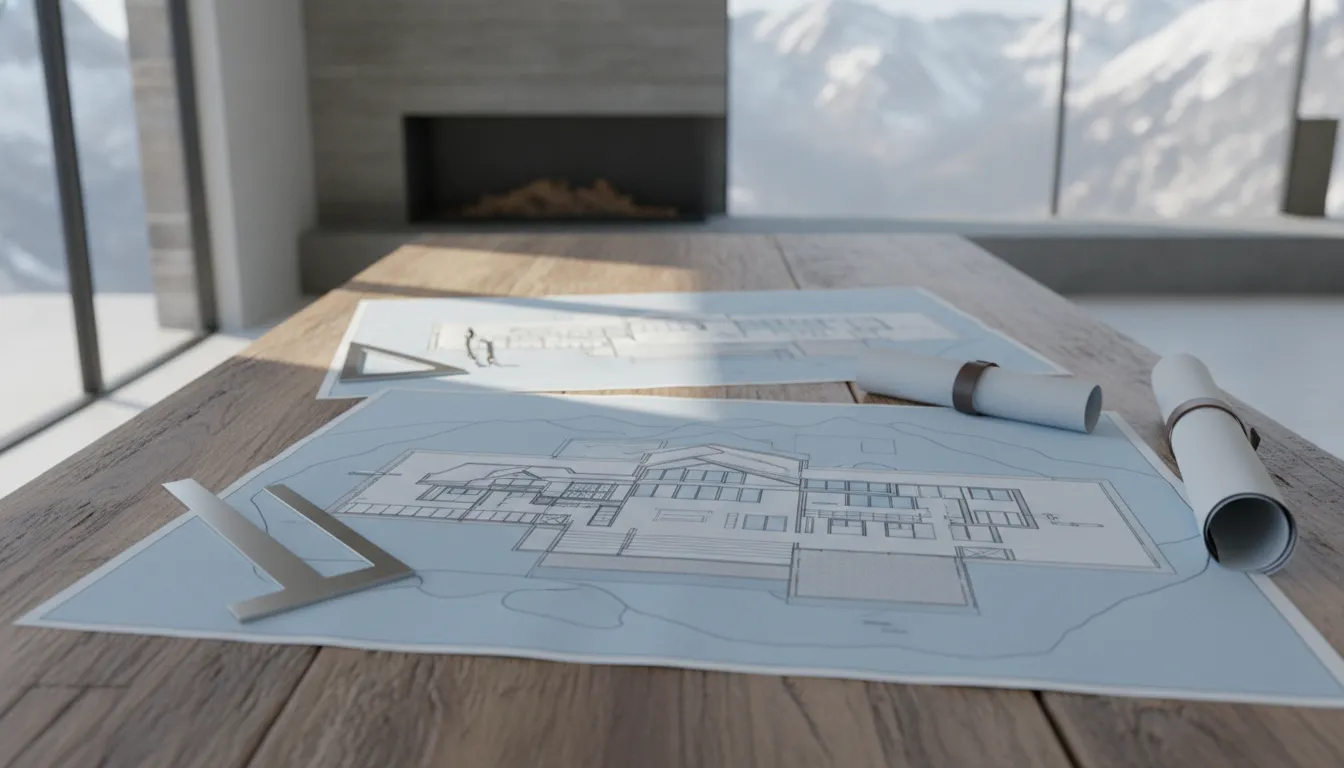
Second-home and investment-property construction commonly requires higher cash reserves, sometimes 12 to 18 or more months of principal. Interest, taxes, and insurance (PITI), depending on the loan size and property type. Lenders may also require a larger down payment than they would for a primary residence. The final expectation depends on the complete application, project structure, appraisal, borrower profile. And applicable program guidelines, so reserve planning should begin before you commit to a lot or construction contract.
Those reserves are separate from the funds needed for the down payment, closing costs, design work, furnishings, and potential construction contingencies. For a high-value project, maintaining liquidity can be as important as demonstrating net worth. A careful pre-approval review helps establish which assets can be documented and reserved without disrupting other financial commitments.
Documentation needs can vary based on whether the home is a personal second residence, an investment property, or a combination of personal use and rental activity. Investment-property files may require a clear explanation of intended use, projected rental assumptions, existing property obligations. And the borrower's ability to carry the home if income is delayed or unavailable. Self-employed buyers, business owners, and executives with complex compensation may need a more tailored income review. Specialized jumbo programs may consider 12 to 24 months of bank statements for some self-employed borrowers, subject to lender guidelines.
Many out-of-state buyers, with a typical audience that includes borrowers from California, New York, Washington, and Illinois, begin the process remotely. A responsive local lender can help coordinate documentation, construction details, and communication across time zones while keeping the financing aligned with a Summit County property's intended use. Before selecting a lot or builder, review the jumbo loan pre-approval process and discuss how the proposed residence will be occupied, financed, and maintained.
Program availability, reserves, down payments, documentation, rates, and terms vary by borrower, property, market conditions, and lender guidelines. CrossCountry Mortgage, LLC, NMLS #3029. Equal Housing Opportunity.
Before selecting a lot or finalizing plans, establish a financing framework. Your lender will typically review income, assets, liabilities, credit, liquidity, and the proposed project. A detailed budget should account for land, architecture, permits, site work, construction costs, contingencies, and carrying costs. Borrowers with business or variable income may need a more customized documentation strategy. Early review helps identify which assets can be used for the down payment, reserves, and construction-related expenses.
Some construction-to-permanent structures can coordinate land acquisition and construction financing in one transaction, which can simplify a custom build. The lender will evaluate the lot, plans, builder, budget, and expected completed value before final approval. If you already own the land, documented equity may be relevant to the required investment, subject to the applicable program guidelines. For a broader look at jumbo financing for luxury homes, review how high-value loan structures may differ from conventional financing.
Once construction begins, funds are generally released in draws rather than as one lump sum. The draw schedule should align with defined milestones, such as site preparation, foundation, framing, mechanical systems, and completion. Inspections normally occur before each release so the lender can confirm progress against the approved plans and budget. Some programs may provide a construction period of up to 24 months, which can give complex Park City projects additional scheduling flexibility. Ask how an interest reserve is calculated and whether it can be included in the loan amount. Managing that reserve alongside the draw schedule helps prevent avoidable cash-flow pressure during construction.
After the home is complete and required inspections, documentation, and appraisal conditions are satisfied, a construction-to-permanent loan may convert into the long-term mortgage. Depending on qualification, program availability, and your objectives, that could involve a fixed-rate structure or an ARM such as a 10/1, 7/1, or 5/1. These options have different payment and adjustment characteristics, so compare them against your expected ownership horizon and liquidity plan.
Rate-lock timing deserves its own conversation. A lock may be considered closer to conversion, while an extended-lock or float strategy may be relevant when the build timeline is longer. The right approach depends on market conditions, lender policy, expected completion, and your tolerance for rate movement. No lock guarantees a particular outcome, and terms should be confirmed in writing before you commit.
Luxury construction in Park City is a relationship-driven process, and the financing should be handled with the same level of local awareness as the design and build. A lender who regularly works in Summit County can help anticipate the property, appraisal, documentation. And timing questions that may arise when a custom home is being built in a specialized resort market.
That perspective is particularly valuable for out-of-state buyers. Approximately 70% of the luxury buyers served by Utah's Mortgage Pro come from markets such as California, New York, Washington, and Illinois. They may know the financing environment where they live, but Park City's land, construction, and resale dynamics require a more specific conversation. Rodrigo Ballon works with buyers who are evaluating homes and lots in Park City, Deer Valley. Promontory, and other Summit County communities, helping connect the financing plan to the property and construction strategy.
Local appraisal knowledge is one practical advantage. A custom home is not evaluated like an ordinary resale property, particularly when the design includes premium finishes, mountain access, or a highly specialized location. The lender and appraisal team need a clear understanding of the plans, specifications, site, and relevant local comparables. Early coordination can help identify questions before they affect the construction schedule.
Local builder relationships matter as well. Familiarity with builders and their draw processes can support clearer communication around budgets, inspections, payment releases, and projected milestones. Developments such as Deer Valley East Village and Promontory also carry their own planning and construction context. Making it useful to work with someone who understands how these projects fit into the broader Park City market.
Rodrigo Ballon can also help borrowers compare jumbo loan programs in Park City with a construction-to-permanent structure, lot financing, or alternative documentation options for complex income. Program terms, reserves, down payments, and eligibility vary by borrower, property, and lender guidelines. Utah's Mortgage Pro operates under CrossCountry Mortgage, LLC, NMLS #3029, and provides guidance subject to applicable lending requirements and Equal Housing standards.
A construction-to-permanent loan can combine the construction financing and the eventual mortgage into one coordinated structure. Funds are released in draws as the project reaches inspection milestones, then the loan converts to permanent financing when construction is complete. The structure, draw process, conversion terms, and lender requirements depend on the borrower, builder, property, and program.
Expect documentation covering your income, assets, liabilities, credit profile, lot or purchase contract, plans, specifications, budget, builder qualifications, and construction timeline. Self-employed borrowers may have bank-statement options, but the lender will still evaluate business history, available reserves, and the overall strength of the application. Requirements vary by lender and project complexity.
Potentially, provided the property and borrower meet the applicable second-home requirements. A lender may review intended use, projected occupancy, property access, appraisal support, down payment, income, and liquidity. Second-home construction generally calls for stronger reserves and a larger down payment than a primary residence. Requirements depend on the borrower and program guidelines.
Down payment expectations for jumbo construction loans typically range from 10% to 30%, depending on the loan amount, property type, and borrower profile. Custom builds may require more equity than a completed home purchase. Bank-statement programs for self-employed borrowers may offer lower down payment options within that range when the borrower and property meet guidelines.
A draw schedule releases construction funds in stages tied to project milestones, such as site preparation, foundation, framing, and completion. Each draw is typically preceded by an inspection to verify progress. The schedule helps both the lender and builder maintain budget discipline and can influence overall project timing, particularly when weather, permits, or change orders affect the planned sequence.