
Building a home in Park City involves more than choosing a lot and finalizing architectural plans. Financing must account for the property's projected value, construction budget, builder, draw schedule, and the possibility that the finished home will require jumbo financing. The earlier those pieces are evaluated together, the more clearly you can plan your liquidity and next steps.
A new construction loan park city borrowers may consider is a construction-to-permanent jumbo loan. It can provide funds during the build and then convert to long-term mortgage financing after completion. Construction funds are generally advanced in stages as work progresses. Conversion, rates, reserves, documentation, and eligibility depend on the borrower, property, project, market conditions, and lender guidelines. The Consumer Financial Protection Bureau explains that construction loans may either be paid off or converted, depending on the loan terms.
For buyers building in Deer Valley, Promontory, or The Colony, the first step is understanding how construction financing differs from a standard purchase mortgage. You can then evaluate how the loan fits your project's requirements.
Discuss your new construction loan Park City plans
Direct answer: A new construction loan in Park City provides temporary financing to fund a home. Funds are typically released in stages as the project progresses. Depending on the structure and lender terms, the construction financing may later convert into permanent mortgage financing. It does not function like a conventional purchase loan from the day you close.
With a standard purchase mortgage, the lender generally funds the purchase of an already completed property in one closing. A construction loan supports an unfinished project. The lender may approve a budget, plans, builder, and draw process, then advance funds as defined milestones are completed. The borrower may make payments based on the amount advanced during construction, while the final financing structure determines what happens when the home is finished. The Consumer Financial Protection Bureau explains construction-loan basics, including staged advances and the possibility of conversion or payoff at the end of the construction period.
For a custom residence in Park City, the distinction matters because the financing must account for both the project and the completed property. A construction-to-permanent arrangement may allow the balance to amortize as a standard mortgage after completion. A construction-only loan may instead require separate permanent financing, subject to the terms and underwriting available at that later stage. Draw schedules, inspections, builder requirements, reserves, documentation, and conversion terms vary by borrower, property, project, market conditions, and lender guidelines.
High-value custom builds in Park City, Deer Valley, Promontory, or other Summit County communities may require jumbo financing when the projected loan amount exceeds applicable conforming loan limits. Current limits must be verified at the time of application. Utah's Home Lender specializes in high-value Park City and Summit County properties, including resort homes and complex-income borrowers. While local diligence can include appraisal challenges, property type, HOA or community restrictions, and other Summit County considerations. For additional context, review jumbo versus conventional financing.
A construction-to-permanent jumbo loan can combine the financing used to build a Park City home with the longer-term mortgage that begins after completion. During construction, the lender typically releases funds in staged advances as work progresses. Once the home is finished and the conversion conditions are satisfied, the balance may become permanent financing that amortizes like a standard mortgage. The exact structure, draw process, documentation, and conversion terms depend on the borrower, project, property, market conditions, and lender guidelines.

In a one-time or combined structure, one lender handles both phases under a coordinated transaction. The construction portion funds approved project costs, while the permanent portion is established for the completed home. This may reduce the need for a second closing, and some lender descriptions characterize the process as requiring one primary set of application paperwork. It can be attractive when the plans, budget, builder, and expected financing need are well defined. That does not mean the terms are automatic, or that every change during construction will be treated the same way.
During the building phase, payments may be based on accrued interest and the amount advanced rather than the full approved balance. Construction-only loans commonly use several disbursements and interest-only payments until completion. That structure can affect cash flow, but interest-only payments do not reduce the principal balance. Construction loans may also carry different pricing and payment timing from a traditional purchase mortgage. Review the expected payment schedule, draw requirements, and any balloon or conversion provisions before choosing a structure. The Park City jumbo loan guide provides broader context on financing high-value properties.
A two-step close separates the initial construction loan from the later permanent mortgage. After the home is complete, the borrower may need to apply or requalify for that second loan. A change in income, assets, credit, debt, property value, project cost, or lender requirements could affect the later underwriting decision. For that reason, borrowers should ask early whether conversion is built into the original structure. What conditions trigger it, and whether a new appraisal, credit review, or closing is expected.
For a luxury build in Park City, the lender may also consider resort property characteristics, appraisal methodology, HOA or community restrictions, and Summit County requirements. Rodrigo Ballon of Utah's Home Lender operates under CrossCountry Mortgage, LLC, NMLS #3029, and can help evaluate the construction plan alongside the borrower's broader jumbo financing strategy. Eligibility, rates, down payment, reserves, builder review, inspections, and conversion terms vary and are subject to credit and property approval.
Direct answer: A Park City construction loan application typically brings together your financial documentation, control of the land or building site. Complete plans and specifications, a realistic project budget, builder information, and property-specific due diligence. The lender uses these materials to evaluate both your ability to repay and the feasibility of the finished home.
Start with the project itself. You may need to document ownership of the lot or another form of site control. Along with the scope of work, architectural plans, specifications, construction contract, and a detailed budget. The budget should help the underwriting team understand hard construction costs, design and permitting expenses, land value, and other project obligations. Change orders or evolving plans can affect the financing analysis, so it is important to present the project as accurately as possible at application.
Builder review is a meaningful part of a high-value construction file. The lender may assess the builder's experience, licensing, insurance, contract structure, financial capacity, and ability to complete a project of the proposed complexity. That review is not a substitute for your own professional diligence. Your architect, contractor, attorney, and other advisers may each identify risks that matter to the build.
An appraisal generally considers the proposed improvements and the marketability of the completed property. Park City resort properties can involve distinctive architecture, steep terrain, specialized amenities, and limited comparable sales. HOA or community rules in areas such as Deer Valley, Promontory, or The Colony may also affect design, use, access, construction activity, or approval requirements. Summit County considerations should be addressed early rather than discovered after underwriting is underway.
Expect to provide income, asset, liability, and credit documentation appropriate to your financial profile. A self-employed borrower, business owner, 1099 earner. Or executive with equity compensation may need a more detailed explanation of income and liquidity than a borrower with a straightforward salary. The lender may also evaluate available reserves and how construction costs will be funded, but there is no universal reserve or documentation threshold.
For a broader preparation checklist, review this Park City jumbo pre-approval guide before beginning the application conversation. Exact requirements for a new construction loan in Park City, including eligibility, appraisal, reserves. Builder review, and conversion terms, vary by borrower, property, project, market conditions, and lender guidelines. Rodrigo Ballon at Utah's Home Lender can help organize the questions and documentation for a property-specific discussion under CrossCountry Mortgage, LLC, NMLS #3029.
Construction funds are generally released in staged advances, with progress verification helping the lender confirm that the project is moving forward as planned. The draw process should be defined before closing, including who submits each request, which documents support it, how inspections are ordered, and how approved funds reach the builder. The exact schedule depends on the lender, project, borrower, and construction contract.
A cited lender example describes draw advances to the builder followed by conversion to a regular mortgage after completion. While another describes an inspection each time the builder requests a draw. A separate lender example references five draws throughout a project. These are illustrative practices from individual lenders, not a universal draw count or a policy of Utah's Home Lender. Park City Credit Union describes construction draw advances, and PCS Bank provides an example of draw inspections and scheduling.
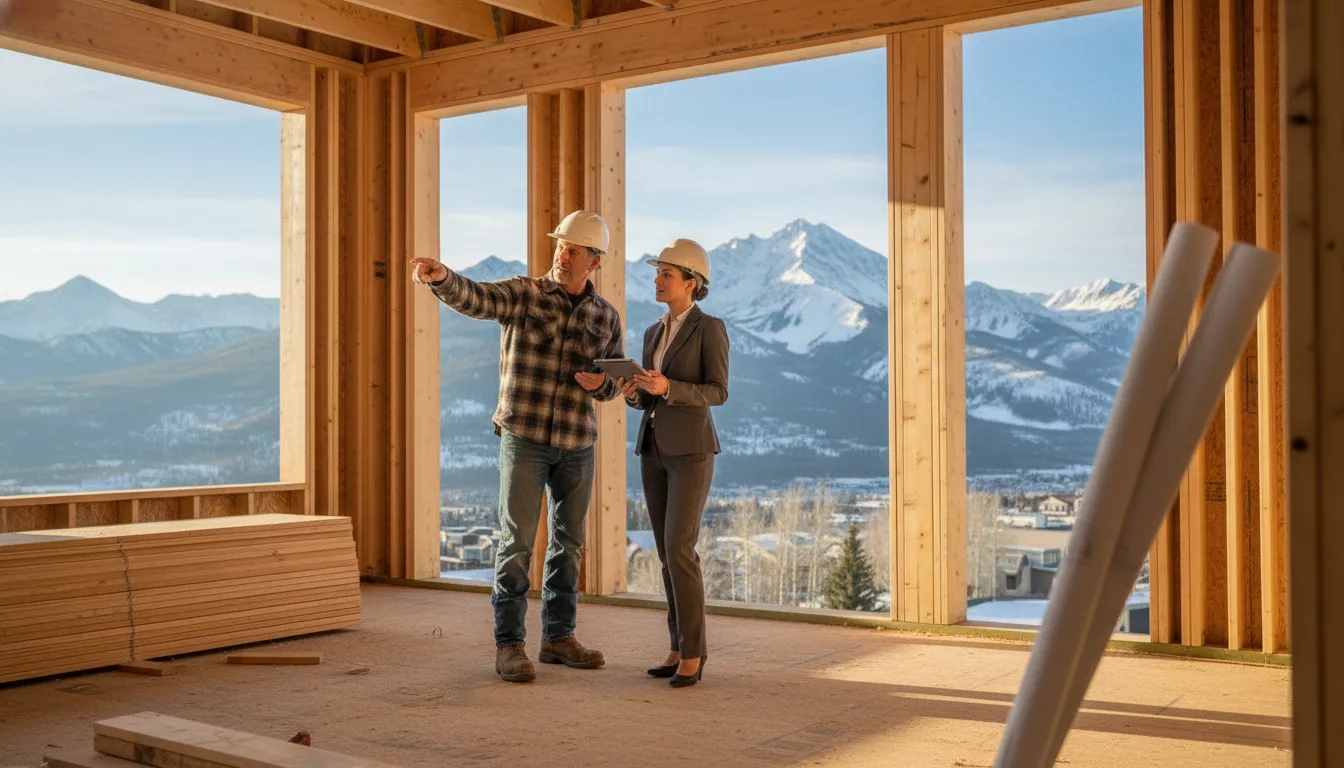
A well-organized request typically connects the work completed to the approved plans, budget, and construction timeline. Depending on lender guidelines, the builder may provide invoices, a cost breakdown, lien-related documentation, or other evidence of completed work. The lender or an appointed inspector may then verify progress before authorizing the next advance. Borrowers should understand whether inspections are required at every stage, who pays inspection fees, and how long review may take.
Change orders can affect the remaining budget, valuation, completion date, and available contingency. Before approving a material change, the borrower, builder, and lender should determine whether updated plans. An amended budget, a revised appraisal analysis, or additional borrower funds will be required. A contingency reserve can provide flexibility, but its amount and permitted use are lender-specific. Do not assume that an upgraded finish, site change, or expanded scope will automatically be financeable.
Coordination is especially important for a high-value Park City build, where property type, site conditions, community restrictions, appraisal considerations, and Summit County requirements may affect underwriting. A practical communication plan should identify one contact for the borrower, builder, lender, inspector, and closing team. Regular updates can surface budget variances or schedule changes early, but construction-to-permanent eligibility, draw timing. Inspections, reserves, documentation, and conversion terms remain subject to applicable lender guidelines and property approval.
The strongest comparison starts with the project, not a preferred loan label. A one-time construction-to-permanent structure may offer continuity when the plans, budget, builder, and expected financing need are well defined. A two-step structure may provide a separate construction phase and permanent mortgage, but it can also require you to requalify when the home is complete. Neither approach is universally better.
Ask exactly how conversion works. With construction-to-permanent financing, the balance may convert to permanent financing and amortize like a standard mortgage after completion. A construction-only loan may instead need to be paid off or replaced, depending on the lender's terms. The Consumer Financial Protection Bureau notes that if conversion is not automatic. The borrower may need to apply for a new loan, and available choices can depend on the lender and credit history at application. Review the CFPB's construction-loan explanation before comparing proposals.
Do not compare a quoted rate in isolation, especially when construction and permanent phases have different pricing or timing. Ask whether the permanent terms are established at the first closing, what can change before conversion, and whether a second closing or new underwriting review is required. Clarify lender fees, appraisal requirements, extension procedures, and what happens if construction takes longer than expected. Terms, rates, conversion conditions, and requalification requirements vary by lender, borrower, property, project, and market conditions.
Preserving liquidity can matter as much as the headline loan structure. Compare how each option treats reserves, cash contributions, change orders, contingency needs, and interest payments during construction. A firm plan may align well with a one-time structure, while a project with evolving specifications. Unusual site work, or several layers of approval may require a more detailed discussion of flexibility and risk. Draw procedures, inspections, builder requirements, and conversion terms are lender-specific, so obtain them in writing rather than assuming a general construction-loan practice applies.
| Question to compare | Why it matters |
|---|---|
| How does conversion work? | It clarifies whether permanent financing is built into the structure or requires a later application. |
| How are draws and inspections handled? | It helps the borrower and builder plan documentation, timing, and cash flow. |
| What happens if the project changes? | It identifies how change orders, delays, or budget shifts may affect approval and available funds. |
Finally, determine whether the completed property and requested financing fit jumbo or conforming guidelines. Properties above applicable conforming limits may require jumbo financing, but current limits and eligibility should be verified for the application. This jumbo versus conventional financing comparison can provide useful context, while the Park City jumbo loan guide explains the local luxury-market considerations.
For a build in Park City, Deer Valley, Promontory, or another Summit County community, local diligence can be decisive. Resort property types, appraisal challenges, HOA or community restrictions, and project-specific requirements deserve review before you commit to a structure. Utah's Home Lender combines local knowledge with CrossCountry Mortgage infrastructure to evaluate those details and discuss Park City jumbo loan options based on your plans and financial profile.
It can combine short-term financing for staged construction advances with permanent mortgage financing after the home is completed. The permanent balance may then amortize like a standard mortgage, subject to the lender's approval, program terms, and the property's final appraisal. Construction loans are generally used to fund building or rehabilitating a home and are often advanced as construction progresses (Consumer Financial Protection Bureau).
Expect a property-specific review of your financial profile, the land or site, plans and specifications, project budget, builder, appraisal, and available liquidity. Resort property types, HOA or community restrictions, and Summit County considerations may also affect underwriting. Exact documentation, reserves, builder review, and eligibility depend on the borrower, project, lender guidelines, and market conditions.
Not necessarily. A 20% down payment is not a universal requirement for every construction or jumbo scenario. The lender may evaluate the completed property's value, loan amount, borrower qualifications, reserves, project details, and other risk factors. Confirm the required equity contribution for your specific Park City build before relying on a financing assumption.
Construction financing is commonly funded through staged draws, and some structures use payments based on accrued interest during the building phase. Payment timing and calculation vary by lender and agreement. The CFPB notes that some construction-loan payments begin six to 24 months after the loan is made, so review the payment schedule and conversion terms before closing (CFPB).
Neither structure is universally better. A one-time construction-to-permanent loan may keep construction and permanent financing with one lender. While a two-step structure separates the initial construction loan from the later mortgage and may require requalification. Compare conversion terms, closing requirements, project flexibility, and the possibility of changing financial circumstances with your lender.
A custom build deserves a financing conversation that considers the property, project budget, construction timeline, builder, occupancy plan, income profile, liquidity, and long-term goals together. Utah's Home Lender, led by Rodrigo Ballon. Helps borrowers evaluate jumbo financing questions for Park City and Summit County properties with local insight and the institutional resources of CrossCountry Mortgage, LLC.
Discuss your Park City construction financing options
Construction-to-permanent jumbo eligibility, rates, terms, down payment, reserves, documentation, appraisal, draw schedule, builder review, and conversion provisions vary by borrower, property, project, market conditions, and lender guidelines. Information here is educational and is not a commitment to lend or a guarantee of approval, rates, terms, savings, or timing.
Utah's Home Lender operates under CrossCountry Mortgage, LLC, NMLS #3029. Equal Housing Lender. Licensed by applicable state regulatory authorities. Rates, terms, and availability are subject to change without notice. Not a commitment to lend.