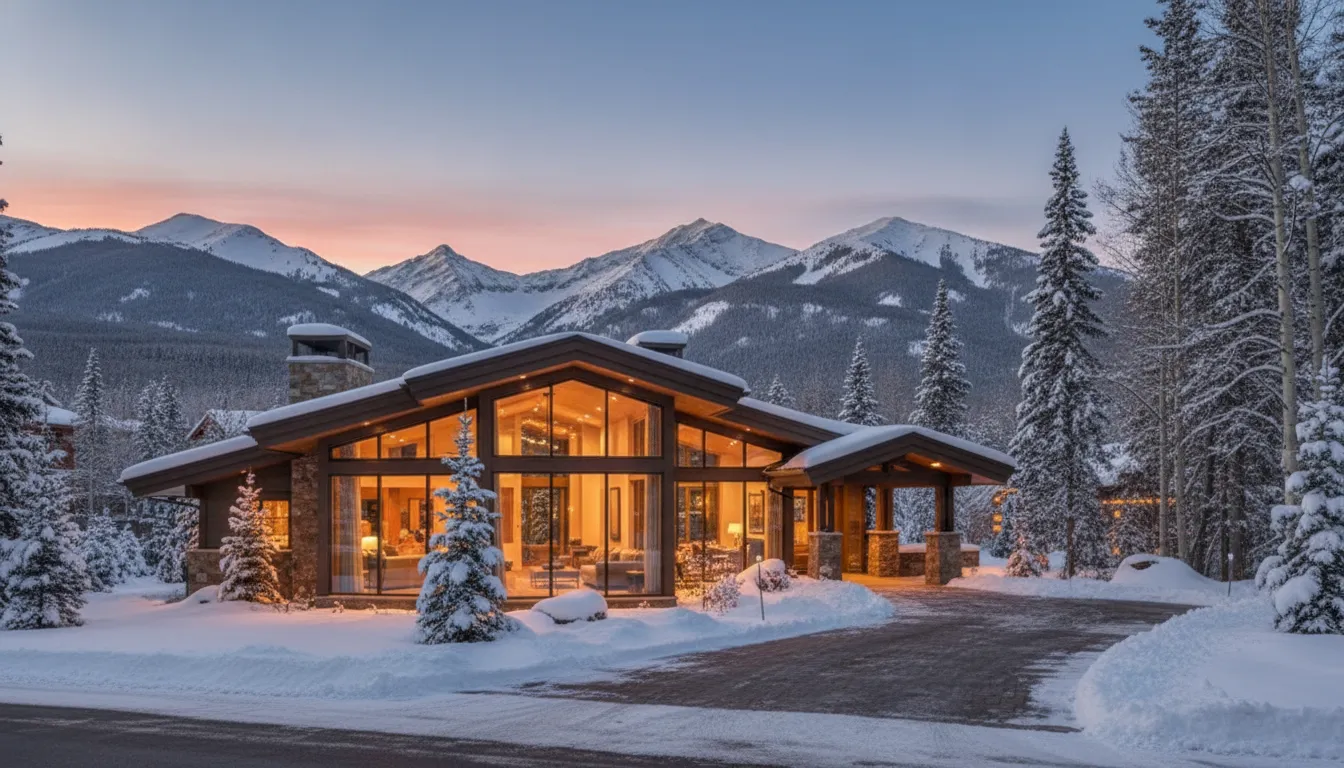
A home in Park City is more than just a vacation spot; it’s a significant financial investment. Making a smart choice means looking beyond the property itself and understanding the financing that underpins it. The right mortgage strategy can save you money and support your long-term goals. In a unique market with high property values, your approach to getting a Park City mortgage for second home is a critical part of your investment plan. This article will cover the key financial decisions you’ll face, helping you secure a loan that works for both your lifestyle and your portfolio.
Buying a second home in Park City is an exciting milestone, whether you’re dreaming of a ski-in/ski-out condo or a quiet mountain retreat. But when it comes to financing, the process looks a little different than it did for your primary home. Lenders view second homes through a unique lens, which affects everything from your interest rate to the type of loan you’ll need. The key is understanding how your property is classified, as this label determines the rules of the game.
In a high-value market like Park City, these distinctions are even more important. You’re not just buying a vacation spot; you’re making a significant financial investment. Lenders will take a closer look at your finances, and you’ll likely be looking at a different category of loan altogether. They see a second home as a greater risk, so they put stricter guidelines in place to protect their investment. Don’t worry, though. While the requirements are more stringent, a clear understanding of the process makes securing your dream home totally achievable. Let’s walk through what makes a second home mortgage in Park City unique.
First things first, let's get our terms straight. Your primary residence is the home you live in most of the year; it’s your main address for tax and legal purposes. A second home, on the other hand, is a property you occupy for part of the year, like a vacation home. You can only have one primary residence, and lenders need to know which category your new Park City property falls into.
Why does it matter? Lenders see your primary home as the safest bet because you’re most motivated to keep up with payments on the roof over your head. Because a second home is considered a luxury, it carries slightly more risk. This distinction is the foundation for how lenders will evaluate your loan application and what terms they’ll offer.
Adding another layer, it’s important to distinguish a second home from an investment property. While both are separate from your primary residence, their intended use is different. A second home is for your personal enjoyment. An investment property is one you intend to rent out for income. Lenders consider investment properties the riskiest of the three because your ability to pay the mortgage may depend on finding tenants.
This classification directly impacts your financing. You’ll generally find more favorable terms and lower interest rates for a second home than for an investment property. Be prepared to discuss your intentions for the property with your lender, as it’s a key factor in determining your eligibility and loan structure. Honesty here is crucial for a smooth and successful closing.
Given the property values in premier areas like Park City and Deer Valley, most second home purchases require a jumbo loan. A jumbo loan is a mortgage that exceeds the conforming loan limits set by Fannie Mae and Freddie Mac. In simpler terms, when you’re buying a high-value home, a standard mortgage just won’t cover it.
This is one of the biggest differences you’ll encounter when financing a home in a luxury resort town. The qualification criteria for jumbo loans are stricter, often requiring a higher credit score, a larger down payment, and more substantial cash reserves. Navigating the world of vacation home lending is much simpler when you work with a mortgage professional who specializes in the local Park City market and understands the nuances of these larger loans.
When you’re ready to finance that dream cabin in Deer Valley or a ski-in/ski-out condo at Canyons Village, it helps to know what lenders are looking for. Because a second home is considered a luxury rather than a necessity, the approval process is a bit more rigorous than for your primary residence. Think of it less as a hurdle and more as a checklist to ensure you're in a strong financial position. Let's walk through the key items on that list so you can feel confident and prepared.
It’s no surprise that your credit score is a big piece of the puzzle. For a second home, lenders will want to see a strong credit history, often requiring a higher score than for a primary home loan. This isn't just about getting approved; a great score can also help you secure more competitive interest rates, saving you money over the life of the loan. Lenders see a high credit score as a sign of reliability, which gives them confidence in your ability to manage two mortgages at once. If your score isn't quite where you want it to be, taking time to improve it before you apply is a smart move.
Get ready to talk about the down payment, which is typically larger for a second home. While you might secure a primary home loan with a small percentage down, lenders often require 10% or more for a second property. In a high-value market like Park City, this can be a significant amount, so it’s important to plan ahead. A larger down payment reduces the lender's risk and shows you have a serious financial stake in the property. This is a key part of the loan process, and having your funds ready will make everything go much more smoothly.
Your debt-to-income (DTI) ratio is another number lenders will look at closely. In simple terms, DTI is the percentage of your gross monthly income that goes toward paying your monthly debts, like your primary mortgage, car loans, and credit card payments. For a second home mortgage, lenders want to see a lower DTI to be sure you can comfortably handle an additional house payment without stretching your finances too thin. It’s all about demonstrating that you have plenty of income left over after all your obligations are met. Keeping your other debts low is a great way to strengthen your application.
Lenders will want to see that you have a solid financial cushion. This means having enough liquid cash reserves to cover several months of mortgage payments for both your primary and second homes. This safety net shows that you can handle your payments even if your income changes unexpectedly. Along with cash reserves, you’ll need to provide clear proof of a stable and sufficient income through documents like tax returns, pay stubs, and bank statements. Having these documents organized and ready to go will help create a transparent and efficient path to closing on your Park City home.
Once you’ve decided to buy a second home in Park City, the next step is figuring out the best way to finance it. The right mortgage depends on your financial situation, how long you plan to keep the property, and your comfort with market fluctuations. Because property values in Park City are high, you’ll likely be looking at jumbo loans, which have their own set of options. Let’s walk through the most common financing paths so you can feel confident in your choice.
A fixed-rate jumbo loan is a straightforward and popular option for second-home buyers. With this type of loan, your interest rate is locked in for the entire term, which means your principal and interest payment will never change. This predictability is a huge plus, making it easier to budget for your new property alongside your primary residence. While the initial rate might be slightly higher than an adjustable-rate loan, the stability provides peace of mind, especially if you plan to own your Park City retreat for many years. A fixed-rate mortgage ensures you won't face any surprises from changing interest markets down the road.
If you’re looking for a lower initial monthly payment, an adjustable-rate jumbo loan (ARM) could be a great fit. ARMs typically start with a fixed interest rate for a set period, often three, five, seven, or ten years. After this introductory period ends, the rate adjusts periodically based on market indexes. This option can be strategic if you plan to sell the home before the fixed period is over or if you anticipate your income increasing in the future. An ARM can be a smart financial tool, but it’s important to understand how your payment could change once the rate begins to float.
Your current home can be a powerful asset when financing a second one. If you have significant equity built up in your primary residence, you can tap into it through a home equity loan or a home equity line of credit (HELOC). This gives you access to cash that can be used for the down payment on your Park City property, or in some cases, to purchase it outright. Using your home’s equity can be a flexible and often lower-interest way to secure the funds you need. This approach allows you to leverage an existing asset to make your dream of a mountain getaway a reality.
The Park City real estate market is unique, and your financing should be too. Working with a lender who specializes in this area gives you a distinct advantage. Local experts understand the nuances of financing high-value properties, from ski-in/ski-out condos to sprawling mountain estates. They have access to specialized jumbo loan programs and can offer creative solutions tailored to your specific needs, whether you're self-employed or purchasing an investment property. Understanding how the process works with a local specialist can streamline your experience from pre-approval to closing, ensuring you get competitive rates and a loan that truly fits your goals.
Choosing between a fixed-rate mortgage and an adjustable-rate mortgage (ARM) is one of the most important decisions you’ll make when financing your Park City home. A fixed-rate loan locks in your interest rate for the entire loan term, giving you a predictable monthly payment. An ARM, on the other hand, typically offers a lower initial rate for a set period (like five or seven years) before adjusting based on market conditions.
There’s no one-size-fits-all answer here. The right choice depends entirely on your financial goals, your tolerance for risk, and how you plan to use your second home. To figure out which path is best for you, let’s look at three key factors: your ownership timeline, the current rate environment, and the unique dynamics of the Park City real estate market. Thinking through these points will help you make a confident and strategic decision for your mountain retreat.
First, think about your vision for this property. Do you see it as a long-term family getaway, a place you’ll enjoy for decades to come? If so, a fixed-rate mortgage often makes the most sense. It provides the stability of a consistent payment that won't change, no matter how interest rates fluctuate over the years. Locking in a rate gives you predictable costs for the long haul.
However, if you envision owning the home for a shorter period, perhaps five to ten years, an ARM could be a great fit. You can take advantage of the lower introductory interest rate and potentially sell the home before the rate ever adjusts. This strategy could lead to significant savings in the initial years of ownership, freeing up cash for other investments or home improvements.
The interest rate environment at the time you buy plays a huge role in this decision. When mortgage rates are historically low, securing a fixed-rate loan can feel like a major win. You get to lock in that excellent rate for up to 30 years. Conversely, when rates are on the higher side, an ARM becomes more appealing. Its lower initial rate can make your monthly payments more manageable and give you the flexibility to refinance if rates drop in the future.
While it’s helpful to check current mortgage rates to get a sense of the national landscape, remember that these are just benchmarks. Jumbo loan rates for luxury properties in a unique market like Park City can vary, so it’s important to get a quote based on your specific financial situation and the property you’re considering.
Financing a home in a world-class resort area like Park City or Deer Valley is different from buying in a typical suburban neighborhood. The local market has its own rhythm, and lenders who specialize here understand the nuances of valuing and financing high-end second homes. There are often specific lending programs for vacation properties that you might not find elsewhere.
Your choice between a fixed or adjustable rate can be influenced by these local trends. For instance, in a market with strong and steady appreciation, you might feel more comfortable with an ARM, knowing your equity is growing. This is where working with a local mortgage professional becomes invaluable. They can provide insight into how market conditions might affect your loan options and help you find a financing solution tailored to Park City.
Dreaming of a ski-in/ski-out condo in Deer Valley or a summer retreat near Old Town is exciting, but the purchase price is only the first chapter of the financial story. To make a smart and sustainable investment, you need to understand the full scope of what it costs to own a second home in Park City. Thinking about these expenses upfront prevents surprises down the road and helps you create a realistic budget that lets you enjoy your mountain getaway without financial stress.
From the initial down payment to the monthly HOA fees that keep the sidewalks clear of snow, each cost plays a role in your overall financial picture. It’s not just about affording the mortgage payment; it’s about comfortably managing the property taxes, insurance, maintenance, and potential rental management fees that come with it. By planning for these true costs, you can move forward with confidence, knowing you’ve made a decision that fits your lifestyle and financial goals. We can help you see the complete picture, a step our clients often share made their home-buying process feel smooth and predictable.
The largest upfront expense you'll face is the down payment. For a second home, lenders typically require more skin in the game than they do for a primary residence. You should plan for a down payment of at least 20%, though some lenders may require up to 30% because a second home is considered a slightly higher risk. On top of that, you'll have closing costs, which generally run between 2% and 5% of the loan amount. These fees cover essential services like the appraisal, title insurance, and loan origination. Factoring these costs into your initial budget is a critical step in the loan process.
Once you have the keys, your financial responsibilities shift to ongoing expenses. Property taxes and homeowner's insurance are two of the most significant. Property taxes in the Park City area are based on your home's assessed value, so a luxury property will naturally come with a higher tax bill. Similarly, homeowner's insurance may be more expensive for a second home, especially if it will be vacant for long periods or used as a rental. It’s wise to get quotes for both taxes and insurance on any property you’re seriously considering so you can accurately budget for these recurring costs.
Many of Park City’s most desirable neighborhoods and condo complexes are part of a Homeowners Association (HOA). These fees cover amenities like pools, fitness centers, landscaping, and essential services like snow removal and security. In luxury communities, HOA fees can be substantial, so be sure to ask for the details upfront. Beyond the HOA, you’ll also need a budget for general maintenance and repairs. A mountain climate can be tough on a home, so setting aside funds for things like roof inspections, deck staining, and furnace servicing will help you keep your property in top condition.
If you plan to offset costs by renting out your property, you need to do your homework. Park City has specific rules for short-term rentals, and they can vary by neighborhood. Understanding these regulations is crucial, as they can affect your potential rental income. You’ll also need to decide if you’ll manage the property yourself or hire a professional management company, which typically charges a percentage of your rental revenue. While these costs add up, the right financing can make all the difference. There are excellent loan programs available for investment properties, and we can help you find one that aligns with your goals.
Securing the right mortgage for your Park City home is one of the most important steps in your buying journey. While it might seem complex, especially with jumbo loans and second home requirements, a clear strategy makes all the difference. By focusing on a few key areas, you can position yourself for a smooth and successful financing experience. The process comes down to preparing your finances, getting pre-approved early, and partnering with the right local expert.
Lenders view a second home as a higher risk than a primary residence, so they often have stricter requirements. This means you’ll want to present the strongest financial picture possible. Lenders will look closely at your credit score, debt-to-income (DTI) ratio, and cash reserves. For a second home, you can expect to need a larger down payment, typically between 10% and 40%. Taking the time to pay down debt, save for the down payment, and ensure your credit is in excellent shape will put you in a powerful negotiating position and open up more favorable loan options.
In a competitive market like Park City, walking into a showing without a pre-approval letter is a non-starter. Getting pre-approved for your mortgage is essential for a second home purchase. It not only gives you a clear and realistic budget to work with but also shows sellers and real estate agents that you are a serious, qualified buyer. This single step can give you a significant edge when you find the perfect property. Starting the pre-approval process early allows you to address any potential issues and shop for your home with confidence, knowing your financing is already lined up.
Park City’s real estate market has its own unique rhythm and rules. That’s why it’s so important to work with a local lender who specializes in jumbo loans for this area. A local expert understands the specific challenges and opportunities, from property appraisals on ski-in/ski-out condos to the nuances of financing a luxury vacation home. They can help you avoid common pitfalls from the very beginning. A specialist with deep local expertise provides access to competitive rates and flexible financing solutions tailored to high-value properties, ensuring your loan process is transparent and efficient from start to finish.
Why is the down payment for a second home in Park City so much higher? Lenders view a second home as a luxury, not a necessity, which makes it a slightly higher risk for them. A larger down payment, often 20% or more, shows them you have a strong financial stake in the property and can comfortably manage two mortgages. Think of it as a way to demonstrate your financial stability and secure more favorable loan terms.
What if I want to rent out my Park City home occasionally? Does that make it an investment property? This is a great question because the distinction is important. Generally, if you plan to occupy the home for a portion of the year for personal enjoyment, it can still be classified as a second home. However, if the primary purpose is to generate rental income, lenders will likely categorize it as an investment property, which has different financing rules. It is best to be completely transparent about your intentions so we can find the right loan for your specific goals.
What documents should I gather for a jumbo loan pre-approval? To get pre-approved, you will need to provide a clear picture of your financial health. You should prepare to share documents like your last two years of tax returns, recent pay stubs, and a few months of bank and investment account statements. This information helps us verify your income, assets, and ability to handle the loan, allowing you to shop for your home with confidence.
How do I decide between a fixed-rate and an adjustable-rate loan for my situation? The best choice really depends on how long you plan to own the home. If you see this as a long-term family retreat you will keep for many years, a fixed-rate loan offers predictable payments and peace of mind. If you might sell within five to ten years, an adjustable-rate mortgage could save you money with its lower initial interest rate.
Can't any lender give me a jumbo loan? Why is a Park City specialist so important? While many lenders offer jumbo loans, a local specialist understands the unique dynamics of the Park City market. We know how to handle appraisals for ski-in/ski-out properties, are familiar with the HOA structures of different condo complexes, and have relationships with local professionals. This specialized knowledge helps the entire process run more smoothly and can prevent delays that out-of-area lenders might encounter.