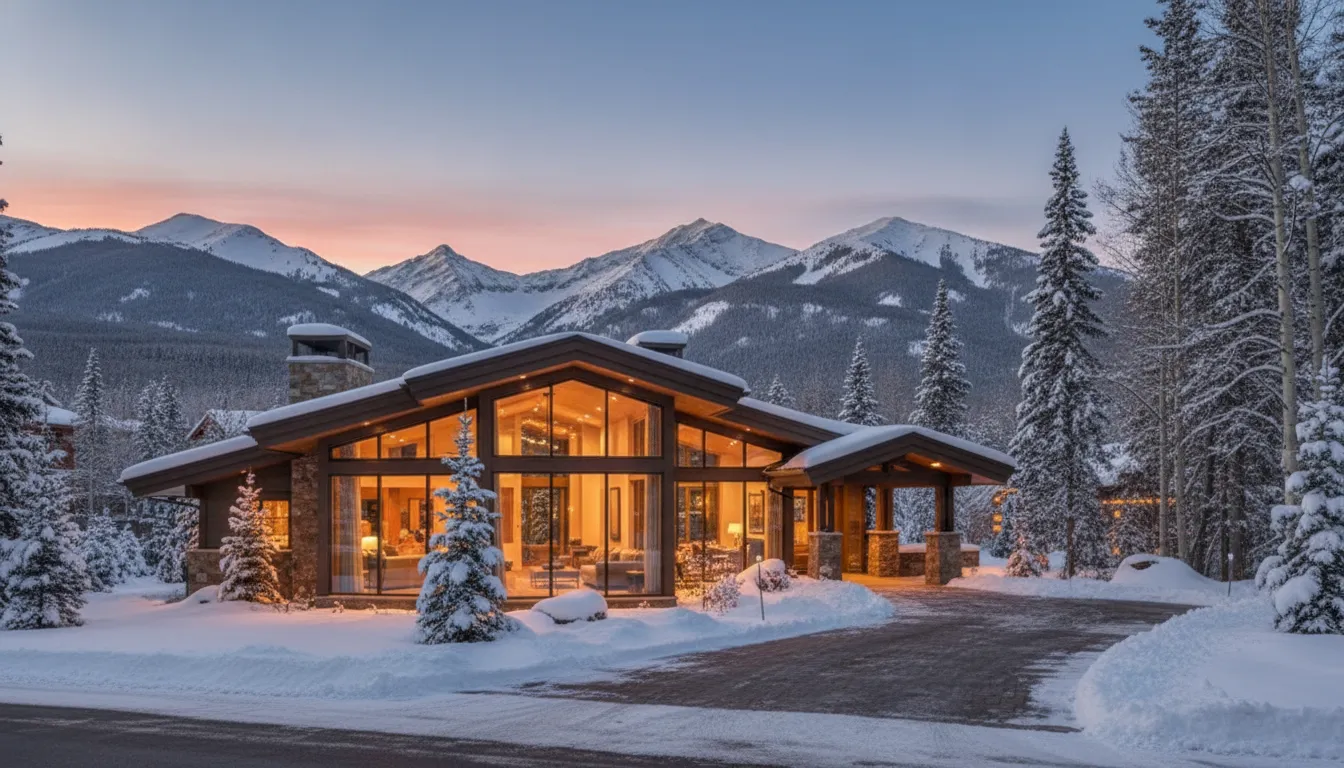


High student loan balances should not block Utah doctors from buying a luxury home in Summit County. Many medical experts in Park City find it hard to save for a down payment while paying off school debt. These custom loans offer a way to bridge that gap without waiting years to build cash.
A physician loan Utah is a specialized mortgage for medical professionals that allows for high loan limits with low down payment requirements. These programs permit loans up to $1.25 million with 3 percent down and up to $2 million with 10 percent down. They are ideal for doctors buying luxury homes in high-cost areas like Park City. Unlike standard jumbo loans, these products often exclude student loan debt from your debt-to-income ratio and do not require monthly mortgage insurance. According to University of Miami HR, these loans fit the unique financial profile of MDs, DOs, and DDS professionals. This flexibility helps doctors purchase primary residences early in their careers.
Many Utah doctors find that these unique terms provide the leverage needed for a luxury home purchase. Are you wondering how your medical degree impacts your borrowing power? Let us walk through the details. Contact Rodrigo Ballon at Utah's Mortgage Pro to discuss your specific situation and get pre-approved today.
A physician loan addresses the gap between a doctor's immediate cash position and their long-term earning trajectory. These programs help medical professionals buy luxury homes even with significant student debt by using underwriting methods that account for future income growth. In Utah, these loans offer a clear path to homeownership for those in high-demand medical fields.

Most conventional jumbo loans require a substantial down payment and a low debt-to-income ratio. Medical professionals often start their careers with high educational debt and limited liquid assets. A physician mortgage treats these realities differently. These programs are available to MDs, DOs, DMDs, and DDS professionals. Some lenders also extend eligibility to residents and fellows who have signed employment contracts.
One key advantage is how lenders evaluate student loans. Standard loans count total outstanding debt against your borrowing capacity. A physician mortgage can exclude student debt from debt-to-income calculations. This makes it significantly easier to qualify for a large loan and purchase a home while still in training or just beginning practice.
Utah doctors can access doctor-friendly jumbo mortgages designed for luxury home buyers with very low down payment requirements. You can often purchase a home with as little as 3 percent to 5 percent down. Even for large loans that would typically require 20 percent down through conventional channels. Some programs allow 10 percent down on loans up to $2 million.
Loan limits for these programs are structured to match the Utah luxury real estate market. You may qualify for a loan up to $3.5 million for your primary residence. This is especially valuable in areas like Summit County where median home prices remain elevated. These loans also eliminate the need for mortgage insurance, saving you hundreds of dollars each month on your housing payment.
The process is designed for professionals who relocate for a new position. Many physician loan programs allow you to close on a home up to 60 days before your official start date. A signed employment contract is sufficient documentation. This timeline helps you settle into your new community before your clinical responsibilities begin.
These loans are structured for primary residences and offer both fixed-rate and adjustable-rate terms. Whether you are a resident in Salt Lake City or a surgeon in Park City. These programs bridge the gap between your current liquidity and your demonstrated earning potential.
Physician loans offer several distinct advantages over conventional jumbo mortgages. Lower down payment requirements, the elimination of private mortgage insurance, flexible student loan treatment. And the ability to close before starting a new job make these programs particularly attractive for medical professionals purchasing luxury homes in Utah.
One of the most significant benefits is the ability to purchase a home with minimal upfront cash. Many lenders offer full financing for loans up to $1 million. For higher-value properties, you may need only 5 percent down for a $1.5 million loan or 10 percent for a $2 million home. These loan-to-value ratios are rare in the Summit County luxury jumbo market.
Most low-down-payment loans require private mortgage insurance (PMI). However, physician mortgage loans typically waive borrower-paid mortgage insurance. This saves you hundreds of dollars monthly and directs more of your payment toward principal from the very first month.
Medical school debt can make a standard debt-to-income ratio look unfavorable to conventional lenders. Physician loan Utah programs use a different evaluation method. Lenders recognize that your earning trajectory will improve over time. They often exclude student loan payments from your DTI ratio when those loans are in deferment or enrolled in a qualifying repayment plan. This flexibility in student loan treatment allows you to qualify for a significantly higher loan amount than conventional underwriting would permit.
This benefit is critical for residents and fellows who carry substantial educational debt but have documented future income through employment contracts. It allows home purchase early in your career rather than forcing you to wait until educational debt is retired.
Relocating to Utah for a hospital or practice position often requires fast action and coordination. A physician loan allows you to close on your mortgage before your new employment begins. Most programs permit closing up to 60 days before your employment start date. You can move into your home before you see your first patient.
Conventional loans typically require 30 days of pay stubs before closing. A physician loan requires only a signed employment contract detailing your start date and compensation. This benefit reduces the logistical stress of relocation and helps you establish roots in your new Utah community faster.
Utah medical professionals have access to multiple physician mortgage programs through national and regional lenders. These programs offer competitive terms including zero-down options up to $1 million. High loan limits up to $3.5 million, and specialized underwriting for medical professionals at every career stage.

Utah physician mortgage options span a range of loan amounts, down payment requirements, and special features. CrossCountry Mortgage, BMO Bank, and other institutions offer programs tailored to physicians at various career stages. Each lender establishes specific credit score minimums and reserve requirements.
| Lender | Max Loan Amount | Min Down Payment | Special Features |
|---|---|---|---|
| CrossCountry Mortgage | $2,000,000 | 0% (up to $1M) | No PMI required; institutional backing |
| BMO Bank | $2,000,000 | 0% (up to $1M) | 95% LTV up to $1.5M; 90% LTV to $2M |
| First Western Trust | $1,500,000 | Minimal | Rates often below market average |
| Huntington Bank | $2,000,000 | 0% (up to $1M) | Available for MD, DO, DMD, DDS, and DPM |
| KeyBank | $3,500,000 | 0% (up to $1M) | Higher limits for established physicians |
Most physician loans in Utah do not require borrower-paid mortgage insurance. This keeps monthly costs manageable even with minimal down payment. According to academic guidance on physician housing programs, these loans are generally reserved for primary residences. Borrowers may close on their home up to 60 days before their new employment contract begins.
Qualifying requires meeting certain benchmarks. Lenders typically look for a minimum credit score of 720 for optimal terms. You may also need to demonstrate reserves covering several months of mortgage payments. For professionals with complex income structures, bank statement loan programs for high-earning professionals provide an alternative documentation path.
Qualifying for a physician loan in Utah requires meeting eligibility criteria focused on your medical credentials, employment status, and financial profile. The process differs from conventional underwriting in ways that favor medical professionals at every career stage.
The first step is demonstrating your medical professional status. These loans are designed for MDs, DOs, DDS, and DMD practitioners. Some lenders also extend eligibility to DPMs and PhDs in clinical settings. You must be an active medical or dental professional to apply. A signed employment contract or current practice agreement is required to proceed.
A solid credit score remains important for securing optimal terms. Most Utah lenders look for a minimum score between 650 and 720, depending on the loan size and program. Lenders will evaluate your debt-to-income ratio, but unlike a standard jumbo mortgage in the Park City market, physician loan programs may exclude student debt from the calculation. This flexibility helps new doctors qualify even with significant educational borrowing.
You will need to provide proof of your medical credentials and income. This typically includes your medical license and a signed employment contract. A key advantage is the ability to close on a home before your new position begins. Keep in mind that a loan pre-approval is not a final commitment until the full underwriting review is complete.
Once qualified, you can choose between fixed-rate and adjustable-rate mortgages. Many Utah physicians select 30-year fixed-rate loans for payment stability. It is prudent to evaluate the long-term costs of different mortgage structures before making a selection. This ensures the loan aligns with your financial plan as your career progresses.
A physician loan is a specialized jumbo mortgage designed to accommodate the financial profile of medical professionals. While both loan types facilitate high-value home purchases, they differ significantly in down payment requirements, student loan treatment, mortgage insurance, and employment history rules.
Most conventional jumbo loans require a minimum down payment of 20 percent. This represents a significant barrier for doctors who are early in their careers or carrying educational debt. Physician loans offer a much lower barrier to entry. Some programs allow purchase with as little as 3 to 10 percent down for loans up to $2 million, consistent with guidance from the University of Miami physician housing research.
Physician loans also offer a distinct advantage regarding mortgage insurance. Conventional loans with less than 20 percent down require private mortgage insurance (PMI). Physician loan programs typically waive this cost, saving you hundreds of dollars monthly and allowing more of your payment to build equity.
Student debt is often the single largest obstacle to conventional loan approval. Most lenders view high educational debt as a risk factor in debt-to-income calculations. Physician loan programs take a more pragmatic view. They may exclude student loan payments from your DTI calculation when loans are deferred or in an eligible repayment plan. This flexibility is essential for residents and fellows in high-cost areas like Park City.
Employment history requirements also differ. A conventional jumbo loan generally requires two years of steady employment in the same field. A physician loan may allow you to close on a home up to 60 days before starting a new position, with only a signed contract as documentation. This supports smooth relocation to your new community.
Both loan types offer fixed-rate and adjustable-rate options. However, conventional jumbo loans can be more difficult to obtain for borrowers with non-standard income, including self-employed physicians. If your financial situation includes complex income sources, flexible jumbo mortgage programs for high-net-worth borrowers in Summit County may offer additional options.
While physician loans offer easier entry, they still require a strong credit profile and property appraisal. Consulting with a local mortgage specialist can help you determine which path best suits your current circumstances and long-term objectives in the Utah market.
Utah's Mortgage Pro, led by Rodrigo Ballon at CrossCountry Mortgage (NMLS #3029). Combines deep knowledge of the Park City luxury market with the institutional resources of a national lender. Medical professionals choose this team for their understanding of physician-specific financing, complex income scenarios, and local market dynamics.
The luxury real estate market in Park City and Deer Valley presents unique characteristics. Many properties are ski-in-ski-out residences or second homes with premium valuations. Home prices in these communities often range from $3.6 million to $14 million. Standard lenders may struggle with these high-value transactions. Utah's Mortgage Pro focuses on luxury jumbo mortgages tailored for Park City and Summit County buyers. The team operates from an office in Heber City, providing direct local access for Summit County clients.
Navigating HOA regulations, property tax considerations, and high-balance loan limits for Wasatch and Summit counties is part of daily operations. This local perspective helps streamline your transaction and minimize delays. Clear guidance on mortgage reserve requirements is provided upfront. Reserves typically range from four to six months of payments depending on loan size and program guidelines.
Many physicians in Utah maintain consulting practices, receive 1099 income, or have partnership distributions that create complex income profiles. Standard underwriting can be challenging for self-employed doctors or those with variable compensation. Utah's Mortgage Pro offers alternative documentation loan programs that use bank statements to verify income. This approach works well for medical professionals who have strong cash flow but significant business expenses on paper.
The goal is to identify a financing solution that aligns with your personal and professional trajectory. Whether you are a resident, fellow, or an established surgeon, these programs are available to MDs, DOs, and dentists who need more flexibility than conventional lending provides. Underwriting considers future earning potential to help you secure a home early in your career.
Working with Utah's Mortgage Pro delivers the best of both worlds: personalized service from a local specialist like Rodrigo Ballon combined with the resources of CrossCountry Mortgage (NMLS #3029). This partnership provides access to the capital and infrastructure needed for substantial jumbo loans. The team offers both fixed-rate and adjustable-rate mortgage options tailored to your financial objectives.
The approach is transparent and data-driven. No hidden fees or aggressive sales tactics. You receive clear communication from initial consultation through closing day. The team understands that evaluating mortgage trade-offs is an important part of financial planning for busy medical professionals. They provide the data and guidance you need to make an informed decision about your home purchase.
These loans often allow very low down payments. Some programs for luxury homes require only 3 percent to 10 percent down. For example, certain lenders permit a 3 percent down payment for loans up to $1.25 million. Others accept 5 percent down for $1.5 million or 10 percent for $2 million. These tiers are documented by University of Miami HR. These options help doctors preserve cash while acquiring a home.
No, most physician loans do not require borrower-paid mortgage insurance (PMI). This is a significant advantage because conventional loans typically require PMI when the down payment is less than 20 percent. According to the University of Miami physician housing guidelines, these mortgages generally waive borrower-paid PMI, reducing monthly costs.
Yes. Physician loans are specifically designed for medical professionals with significant educational debt. Many lenders exclude deferred student loans from your debt-to-income ratio. This flexible approach to student loan evaluation is one of the primary advantages of these programs. It allows doctors with high earning potential to qualify for larger loan amounts than conventional underwriting would permit.
Minimum credit score requirements typically range from 650 to 720, depending on the lender and the size of the loan. A higher score generally secures more favorable terms. Lenders will also evaluate your overall financial profile including reserves and debt-to-income ratio. Working with a local specialist can help you understand which programs match your credit profile.
Physician loans are generally limited to primary residences. Most lenders require that the property be your principal dwelling. If you are interested in financing a second home or investment property in Park City or Deer Valley. Alternative solutions such as conventional jumbo loans or portfolio products may be more appropriate. Contact Utah's Mortgage Pro to explore options for non-primary residence properties.
Many physician loan programs allow closing up to 60 days before your employment start date. You will need a signed employment contract that specifies your start date and compensation. This feature is particularly valuable for doctors relocating to Utah for a new position, as it allows you to settle into your home before your clinical responsibilities begin.
Taking the next step toward homeownership in Park City or Summit County starts with a conversation. Your medical career has positioned you for success, and the right financing can help you realize it sooner than you think.
Call Rodrigo Ballon at (435) 655-0310 or schedule a consultation online to discuss your specific situation. Every physician loan is personalized based on your credentials, employment status, financial profile, and property goals. Rodrigo and his team provide clear, compliant guidance without pressure or gimmicks.
CrossCountry Mortgage, NMLS #3029. Equal Housing Lender.