

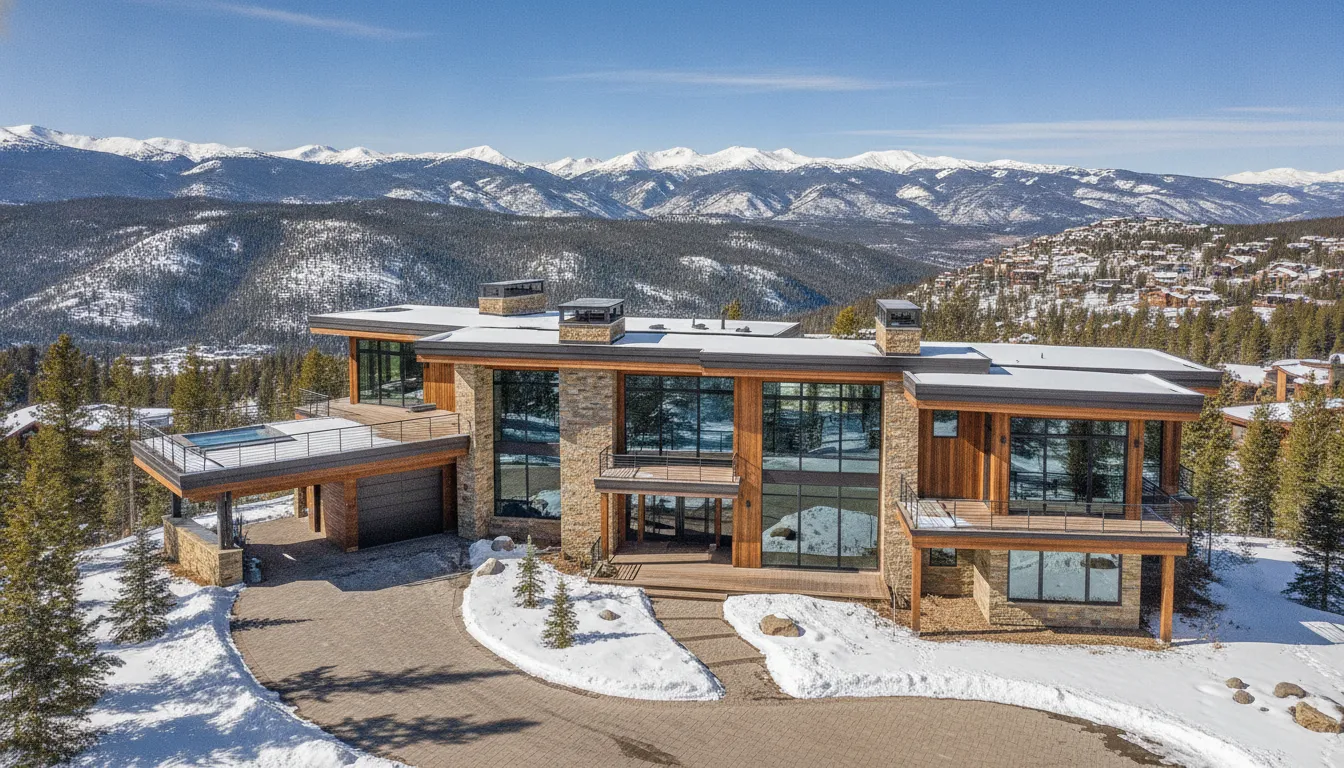
For a Park City purchase, the loan amount is only one part of the financing decision. The property location, unit count, borrower profile, and the applicable FHFA limit all help determine whether conventional financing may fit or whether a jumbo strategy deserves closer review.
Understanding summit county jumbo loan limits 2026 starts with the FHFA baseline: the 2026 conforming limit for a one-unit property in most of the United States is $832,750. While high-cost counties can receive higher limits under federal guidelines. Summit County is designated a high-cost area, but the applicable limit depends on the property and current county-level rules. So buyers should verify the figure before structuring an offer.
That distinction matters in communities such as Deer Valley, Promontory, and Old Town Park City, where purchase prices can exceed national conforming thresholds. The first step is separating the baseline limit from Summit County's high-cost limits, then assessing how the difference affects your down payment, reserves, and loan options.
For 2026, the conforming loan limit for a one-unit property in Summit County, Utah is $1,150,000, based on the FHFA CY2026 data. That figure is meaningfully higher than the standard one-unit limit of $832,750 that applies in most U.S. counties. For buyers in Park City and other Summit County communities. The higher local limit may allow more of a purchase to remain within conforming financing before a jumbo loan becomes necessary.
The Federal Housing Finance Agency sets a national baseline and permits higher limits in designated high-cost areas. The 2026 high-cost ceiling for a one-unit property is $1,249,125, or 150% of the $832,750 baseline. Summit County's limit falls below that ceiling while reflecting its high-cost designation. See the FHFA's 2026 conforming loan limit announcement for the federal framework and annual adjustment details.
| Property type | Loan limit |
|---|---|
| One-unit property | $1,150,000 |
| Two-unit property | $1,472,250 |
| Three-unit property | $1,779,600 |
| Four-unit property | $2,211,600 |
These limits apply to the loan amount, not the home's purchase price. A buyer's down payment, property type, occupancy, credit profile, reserves, and underwriting documentation still affect the financing structure. A purchase that exceeds the applicable limit may require a jumbo loan, while a purchase below it may still call for a different strategy. Because FHFA limits can change annually, confirm the applicable county figure and program requirements before making an offer or structuring a down payment.
Summit County is designated as a high-cost area because local home values are substantially above the national level used to establish standard conforming loan limits. For buyers researching summit county jumbo loan limits 2026, that designation matters because it allows a higher conforming limit than the national baseline, while still leaving many luxury properties in jumbo-loan territory.
The Federal Housing Finance Agency uses a statutory formula for high-cost counties. Where 115% of the local median home value exceeds the baseline conforming loan limit, the county may receive a higher limit. However, the increase is capped at 150% of the baseline limit. This structure is intended to preserve access to conforming financing in markets where typical home prices are significantly higher than the national baseline. Rather than treating every expensive property as automatically eligible for a conforming loan.
For 2026, the national one-unit baseline is $832,750. The corresponding high-cost ceiling is $1,249,125, or 150% of that baseline. Summit County's designation reflects the strength of its local housing values, particularly in communities where luxury residences and second homes can command prices well above national conforming thresholds. FHFA lists the applicable methodology and annual limits in its 2026 conforming loan limit announcement.
FHFA's annual adjustment is tied to changes in home prices. Its data showed average U.S. house prices increased 3.26% from the third quarter of 2024 to the third quarter of 2025. And the 2026 baseline conforming limit increased accordingly. That national adjustment does not eliminate the need to review county-level limits. It helps explain why the thresholds change from year to year, while Summit County's high-cost designation reflects the additional impact of local median values.
In practice, the designation creates more room for conforming financing, but it does not guarantee eligibility or make every Summit County purchase conforming. The applicable limit can depend on the property type, loan structure, borrower profile, and current lender guidelines. A careful review before making an offer can clarify where conforming financing ends and a jumbo strategy begins.
Answer: The summit county jumbo loan limits 2026 question turns on the county's applicable conforming loan limit and the property's unit count. For a one-unit property, a mortgage above $1,150,000 is generally considered jumbo financing, subject to the lender's underwriting and program guidelines.
A jumbo loan is a mortgage with an origination balance above the conforming loan limit established by the Federal Housing Finance Agency (FHFA). Fannie Mae and Freddie Mac are restricted by law from purchasing mortgages above the applicable conforming limit. Once the loan exceeds that threshold, it falls outside the standard conforming channel. FHFA explains the distinction between conforming and jumbo loans.
Conforming loan limits vary according to the number of units in the property. The $1,150,000 threshold applies to a one-unit residence, such as a typical single-family home or qualifying condominium. A two-, three-, or four-unit property has a different applicable conforming limit, so the same loan amount may be conforming for one property type and jumbo for another. The property classification should be confirmed before choosing a loan strategy.
Jumbo loans are not backed by Fannie Mae or Freddie Mac. Instead, they may be retained in the lender's portfolio or sold through the private secondary market. That structure gives lenders more discretion, but it also means underwriting can be more individualized. Borrowers may need stronger credit, larger cash reserves, more detailed income documentation, and a careful review of assets and liabilities.
For Summit County buyers, that distinction matters because luxury properties in areas such as Park City and Deer Valley can exceed conforming thresholds. A purchase price alone does not determine whether financing is jumbo; the requested loan amount, property type, and applicable county limit all matter. A personalized review can clarify the right limit and documentation path before you make an offer.
Luxury properties in Summit County often require financing that goes beyond standard conforming guidelines. Buyers in Promontory, Deer Valley, and Old Town Park City frequently encounter prices above national conforming limits. While ski-in/ski-out homes and well-appointed condos can also require a jumbo structure. These loans can support primary residences, second homes, and investment properties when the requested mortgage exceeds the applicable conforming limit. Review jumbo loan programs to see how available options may fit your purchase.
A fixed-rate jumbo loan offers consistent principal-and-interest payments for the life of the selected term. That predictability can be valuable for buyers who plan to hold a Park City property for many years or want a stable long-term housing expense.
An adjustable-rate mortgage, or ARM, may be worth evaluating when a buyer expects to own the property for a short-to-medium-term period. An ARM can begin with a fixed period before its rate adjusts according to the loan terms. Future payments may change, so the decision should account for the planned ownership horizon, liquidity, refinancing assumptions, and tolerance for payment variability. Rates and terms depend on borrower, property, market, and lender guidelines.
Down-payment planning is an important part of jumbo financing because requirements can differ from conforming products. Depending on the borrower, property, loan structure, and lender, a down payment in the 10% to 20% range may be typical, but it is not universal. A larger down payment may affect the loan amount, reserves, pricing, and overall qualification strategy, while preserving liquidity can matter for renovations, reserves, or other investments.
The right structure starts with the property and the complete financial profile, not just the purchase price. Reviewing cash, investment assets, income sources, and ownership plans early can help a buyer compare fixed-rate and ARM options with a clearer view of the tradeoffs.
Jumbo underwriting is designed around the full financial picture, not just the purchase price. Before applying, organize recent income records, asset statements, liabilities, and property details so your lender can evaluate the request efficiently. A strong preparation process also helps identify documentation gaps before you are competing for a Park City or Deer Valley property.
Many jumbo programs look for a credit score of 700 or higher, although the lender's requirements vary by program, loan size, property, and overall profile. Cash reserves are another important consideration. For loans up to $1.5 million, borrowers may commonly need six to 12 months of principal, interest, taxes, and insurance, often called PITI, in readily verifiable assets. Larger loan amounts may require more reserves.
Do not assume that the largest possible down payment is automatically the best strategy. Strategic down-payment planning can preserve liquidity for renovations, seasonal expenses, investment opportunities, or other obligations while aligning with program requirements. The appropriate structure depends on the property and your broader financial plan.
Traditional employees should be prepared to provide pay documentation, tax records, and evidence of available funds. Self-employed borrowers, business owners, 1099 earners, and technology executives with equity compensation may need a more tailored review. Bank statement programs can help document qualifying cash flow when tax returns do not fully reflect the borrower's usable income. Asset depletion may also be an option when substantial eligible assets are central to the repayment profile. These alternatives are subject to lender guidelines and do not guarantee approval. Specialized jumbo guidance can help clarify which records apply to your situation.
Pre-approval is crucial for Summit County luxury buyers because it gives the lending team time to review documentation, confirm a workable structure, and address questions before an offer. Proactive communication and detailed documentation support a smoother closing process. Rodrigo Ballon specializes in complex borrower scenarios through CrossCountry Mortgage, NMLS #3029. Discuss your property, income, assets, and financing goals early so the strategy can be tailored to the transaction. Equal Housing Opportunity.
When a Summit County purchase exceeds the applicable conforming threshold, the right financing strategy depends on more than the loan amount. Income structure, assets, intended use, time horizon, and the property itself can all shape the available options. A tailored review can help you compare programs without assuming that one jumbo product fits every Park City buyer.
Business owners and other self-employed borrowers may not present income in the same way as a traditional W-2 employee. A bank statement program may provide an alternative path for evaluating cash flow when tax returns do not fully reflect the borrower's current business income. These programs require careful review of deposits, business operations, reserves, and documentation. They may be relevant for borrowers purchasing a primary residence, second home, or investment property, subject to lender guidelines.
Some high-net-worth borrowers have substantial liquid assets but income that is variable, deferred, or difficult to document through conventional methods. Asset depletion programs may consider eligible assets as part of the income analysis. The lender will determine which assets qualify and how they are evaluated. This approach can be useful for buyers whose financial strength is more visible on a balance sheet than in a standard paycheck. Specialized jumbo programs, including bank statement and asset depletion options, can help when traditional income documentation is complex.
A jumbo adjustable-rate mortgage may be worth evaluating when you expect to own the property for a shorter or medium-term period. Rather than choosing a loan solely for a long-term hold. An ARM's initial structure, adjustment schedule, caps, qualification requirements, and future-rate risk should be reviewed carefully. Jumbo loans may offer ARM options that fit some short-to-medium-term ownership strategies, but the appropriate choice depends on your timeline and tolerance for payment changes.
Other niche scenarios may require equally careful analysis. For example, tech executives with stock options or other complex compensation may need guidance on how eligible compensation can be documented and considered. Rodrigo Ballon provides personalized jumbo loan guidance for borrowers navigating these structures. Review the jumbo loan programs overview, then discuss your property, assets, and income profile before selecting a path.
Summit County is a designated high-cost area, so its applicable limit is higher than the national baseline. The one-unit limit is $1,150,000, while limits vary for two-, three-, and four-unit properties. Confirm the property-specific figure and program rules before making an offer, because the limit depends on the number of units and the final loan structure.
A mortgage generally becomes jumbo when its original balance exceeds the applicable conforming limit for the property and county. For a one-unit Summit County property, that threshold is above $1,150,000. A loan amount below that figure may still require careful underwriting, and a loan above it is not automatically approved. Lenders evaluate the borrower, property, reserves, income, and overall transaction.
Not necessarily. Property use, occupancy, unit count, and lender guidelines can affect eligibility and pricing, even when the requested amount is within the county conforming limit. Luxury second homes and investment properties frequently require tailored financing, so buyers should review the property and intended use during pre-approval rather than rely on the limit alone.
Jumbo financing can require a careful review of the property, loan structure, and financial profile. A conversation before you make an offer can help you understand which options may fit your Park City purchase and what documentation to prepare. Schedule a consultation to discuss Summit County jumbo loan options with Rodrigo Ballon and take the next step with clear, personalized guidance.