

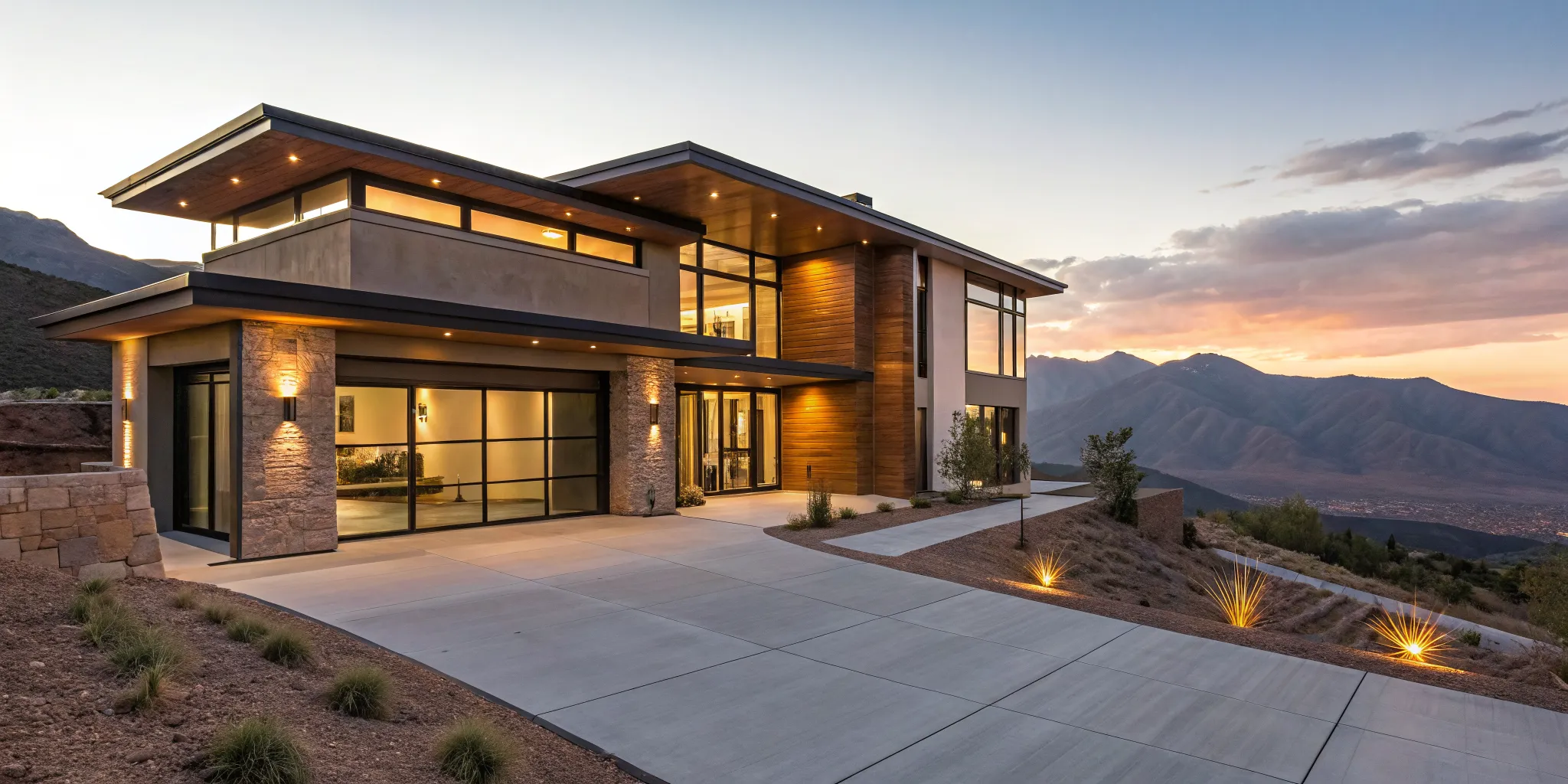
In a high-value market like Park City, financing a vacation home often means looking at jumbo loans. These loans come with their own specific guidelines, adding another layer to the application process. Lenders need to be confident not only in your ability to repay the loan but also in the property itself. They will look closely at your finances, the home’s location, and how you plan to use it. Our goal is to demystify this process for you. We will break down the key 'vacation home loan requirements' for luxury properties, so you know exactly what to expect when financing your dream home in the mountains.
Thinking about buying a getaway spot in Park City? A vacation home loan is the key to making it happen. Simply put, it’s a mortgage you get to purchase a second home that you plan to use for personal enjoyment throughout the year. While the idea is exciting, it’s important to know that lenders look at these loans a bit differently than the mortgage on your primary residence or a loan for a pure investment property. Understanding these distinctions from the start will help you prepare a strong application and set clear expectations for the process. Let’s break down what makes a vacation home loan unique.
Getting a loan for a vacation home is usually a bit more challenging than it was for your main home. Lenders view a second home as a higher risk. After all, if financial difficulties arise, a borrower is more likely to prioritize payments on their primary residence. Because of this, lenders have stricter qualification rules. You’ll likely need a higher credit score, often around 660 or more, compared to the 620 that might be acceptable for a primary home. You can also expect to make a larger down payment, typically at least 10% of the purchase price.
How you plan to use your property is the most important factor for a lender. A vacation home is intended primarily for your personal use and enjoyment. In contrast, an investment property is purchased mainly to generate rental income. This distinction is critical because lenders have different rules for each. For a vacation home, you might need a 10% to 20% down payment. For an investment property, lenders will almost always require a larger down payment, usually between 20% and 30%, and you can expect to see slightly higher interest rates. Be honest about your intentions, as misrepresenting the property’s use can cause serious problems down the line.
Buying a vacation home in Park City is an exciting goal, and understanding the financial side is the first step to making it a reality. When you apply for a second home loan, lenders look at your finances a little differently than they do for a primary residence. Because a vacation property is a luxury, not a necessity, the lending guidelines are often a bit stricter.
Lenders want to see that you can comfortably afford your primary home and your new mountain getaway without stretching your budget too thin. This means they’ll pay close attention to a few key areas of your financial profile. Don't let this intimidate you; think of it as a clear roadmap to follow. By knowing what lenders are looking for, you can prepare your application with confidence and get one step closer to owning your dream home in the mountains. Let’s walk through the three main things lenders will review: your credit score, your debt-to-income ratio, and your cash reserves.
Your credit score is one of the first things a lender will check. For a vacation home, lenders generally look for a higher credit score than they might for a primary residence. While you can sometimes qualify for a primary home loan with a score around 620, the bar is typically set higher for a second home, often starting around 660 or more.
Why the difference? Lenders view a second home as a higher risk. If you were to face financial hardship, the thinking goes, you would prioritize payments on your primary home. A strong credit score shows a history of responsible borrowing and gives the lender confidence that you can manage the additional financial commitment of a vacation property.
Next up is your debt-to-income (DTI) ratio. This is a simple percentage that shows how much of your monthly income goes toward paying your debts, including credit cards, car loans, and your primary mortgage. When you apply for a vacation home loan, lenders will calculate your DTI with the new mortgage payment included.
Generally, lenders prefer your total debt-to-income (DTI) ratio to be 45% or lower. This shows them that you have enough income to comfortably cover all your obligations without financial strain. If your DTI is a little high, paying down some smaller debts before you apply can be a great way to strengthen your application.
Finally, lenders want to see that you have stable income and sufficient savings, also known as cash reserves. It’s not just about affording the monthly payment; it’s about having a financial cushion. Lenders will want to verify that you have enough money in the bank to cover several months of mortgage payments on your new vacation home, on top of your primary residence.
The general rule of thumb is to have two to six months of payments set aside in cash reserves. This safety net proves your financial stability and shows you can handle the costs of a second home, even if unexpected expenses arise. Having these funds ready demonstrates that you are a low-risk borrower, ready for the responsibilities of owning a beautiful Park City property.
Let’s talk about one of the biggest questions on every buyer’s mind: the down payment. The amount you’ll need to put down for your Park City vacation home isn’t a one-size-fits-all number. It depends on the price of the home, the type of loan you get, and your personal financial picture. Lenders look at a second home as a bit more of a risk than your primary residence, so the requirements are often a little different.
Understanding these factors ahead of time helps you plan your budget and approach the loan application process with confidence. Knowing what to expect makes the entire experience smoother. We’ll walk through the typical down payment scenarios, how your credit score plays a role, and what to anticipate when you’re looking at high-value properties in the Park City market. This preparation ensures there are no surprises and helps you position yourself as a strong borrower from the very beginning. Getting clear on this number is the first step toward making your dream of a mountain retreat a reality.
When you’re budgeting for a vacation home, a good rule of thumb is to plan for a down payment of at least 10% of the purchase price. For a second home that you’ll primarily use for personal getaways, most lenders will want to see a down payment between 10% and 20%. This is a bit higher than the 3% you might see for some primary home loans.
If you plan to rent out the property for most of the year, it will likely be classified as an investment property. In that case, be prepared for a larger down payment, usually in the 20% to 30% range. Lenders require more skin in the game for investment properties, so understanding these down payment requirements is key.
Your credit score is another big piece of the puzzle. For a second home mortgage, lenders generally look for a credit score of at least 660. A strong credit history shows that you’re a reliable borrower, which can help you secure a loan with a lower down payment.
If your score is on the lower side or if you have a higher debt-to-income ratio, a lender might ask for a larger down payment, sometimes between 20% and 25%. Think of it as a way for the lender to balance the risk. Maintaining a good credit score not only improves your chances of approval but can also directly reduce the amount of cash you need to bring to the closing table for your second home mortgage.
Since many properties in Park City and Deer Valley are high-value, you’ll likely be looking at a jumbo loan. These are loans that exceed the conforming loan limits set by government-sponsored enterprises. It’s also important to remember that you can’t use FHA or VA loans for a second home, as those are designed for primary residences only.
For a jumbo loan, you can generally expect the interest rate to be slightly higher than a conventional loan for a primary home. The down payment for a jumbo loan on a second home is often 20% or more, but we can help you explore tailored financing solutions that may require as little as 10% down. Working with a local expert who understands the Park City market is essential to finding the best terms for your situation.
How you plan to use your Park City property is one of the most important factors in the loan process. Lenders need to know if you’re buying a personal retreat for your family or an income-generating rental. Your answer will shape everything from your interest rate to your down payment, so it’s important to understand the distinctions before you apply.
When you apply for a loan, lenders view a personal vacation home and a rental property through two very different lenses. It all comes down to risk. Lenders consider an investment property, which you intend to rent out, as a higher risk than a second home you'll use yourself. The thinking is that if financial trouble hits, a borrower is more likely to stop paying the mortgage on a rental before they'd default on their own home. To balance this risk, lenders usually require a larger down payment and charge higher interest rates for investment properties.
So, what separates a second home from an investment property in a lender's eyes? The distinction often comes down to the "14-day rental rule." For a property to qualify as a second home, you typically must live in it for more than 14 days per year or more than 10% of the days you rent it out, whichever is greater. This guideline is the standard that lenders use to classify your property and determine your loan type. Understanding this rule is essential, as it directly impacts the mortgage requirements you’ll need to meet.
Your vacation home can quickly become an investment property based on your rental plans. If you mention that you intend to rent out the home frequently, perhaps on a platform like Airbnb or VRBO, a lender will likely classify it as an investment property. This isn't a bad thing, but it changes the loan requirements. You should expect to provide a higher down payment, and you will likely pay a higher interest rate than you would for a second home loan. Being upfront about your intentions is always the best policy, as it ensures you get the right type of financing for your goals.
When you apply for a mortgage, lenders look at more than just your finances. They also take a close look at the property you want to buy. After all, the home serves as collateral for the loan, so they need to be sure it’s a solid asset. This is especially true when you’re financing a vacation home in a high-value market like Park City, where the properties are as unique as the landscape.
Lenders have a specific checklist they use to evaluate a property’s eligibility for a second home loan. They want to see that the home is a good investment, is easy to access, and fits their definition of a true vacation property, not a hidden rental business. Understanding what they’re looking for can help you choose a property that sails through the approval process. We’ll walk through the three main areas lenders focus on: the property’s location, its physical condition, and its type. Knowing these details ahead of time will make your journey to owning a Park City retreat that much smoother.
Lenders have a few rules about a vacation home’s location to ensure it’s genuinely a second home. First, the property usually needs to be a reasonable distance from your primary residence. While there isn’t a universal mileage requirement, the idea is to show that it’s a getaway spot, not a home you could easily commute from daily.
Second, the home must be suitable for year-round living, even if you only plan to use it seasonally. For a place like Park City, this means the property must be accessible and functional in every season, not just during peak ski months. Lenders want to know the property holds its value and could be lived in or sold at any time of year. Our team at Utah's Mortgage Pro understands the local landscape and can help you identify properties that meet these specific lending criteria.
A lender will always require a home appraisal to confirm the property’s market value and assess its condition. An appraiser will inspect the home to make sure it’s structurally sound and in good repair. If the property needs significant work, it could complicate your loan approval or require you to make repairs before closing.
Lenders also verify that you can get homeowners insurance. It’s smart to get insurance quotes early, as costs can vary. For example, a ski-in/ski-out property might have different insurance considerations than a home in town due to factors like heavy snowfall or wildfire risk in mountain areas. Understanding the home appraisal process can help you prepare for this important step and avoid any last-minute surprises with insurance costs.
Not every property qualifies for a conventional vacation home loan. Generally, the property must be a single-unit dwelling, like a single-family home, condo, or townhome. Lenders typically do not finance timeshares or fractional ownership properties under second home loan terms.
A key requirement is that you must have full control over the property. This means it can’t be part of a mandatory rental pool or have a management company that dictates who can use it and when. While you can choose to rent out your vacation home for short periods, you must have the exclusive right to occupy it. This is an important distinction in resort areas like Deer Valley and Canyons Village, so be sure to clarify the rules of any condo association before making an offer. You can find more answers to questions like these on our FAQs page.
Applying for a vacation home loan can feel like a paper chase, but being prepared makes all the difference. Gathering your financial documents ahead of time is one of the most powerful things you can do to ensure a smooth and speedy process. Think of it as creating a financial snapshot for lenders so they can see you’re a reliable borrower. When you work with us, we guide you through every step, but having these items ready will give you a major head start. The goal is to present a clear and complete picture of your finances, making it easy for lenders to give you a confident "yes." This preparation is especially important when seeking a jumbo loan for a high-value property in Park City, as the requirements are more detailed. By organizing your paperwork, you put yourself in the best possible position for a successful application and a faster path to owning your dream mountain retreat.
Lenders need to verify that you have a steady and reliable income to comfortably cover your new mortgage payments on top of your existing financial responsibilities. They will look at your total household income and compare it to your current debts to understand your financial health. To do this, you’ll generally need to provide documents like your most recent pay stubs, W-2s from the past two years, and sometimes a letter from your employer verifying your position and salary. This information helps us see the full picture and is a standard part of the loan process. A strong, documented income history is fundamental to showing you can handle the loan.
Your tax returns and bank statements provide a broader view of your financial history and stability. Be prepared to collect your personal and business tax returns from the last two years. These documents give lenders a comprehensive look at your income streams over time. You will also need to provide recent bank statements, typically from the last two to three months, for all of your accounts. This shows you have the necessary funds for your down payment and closing costs. It’s also a good idea to have information ready about any other properties you own, as this contributes to your overall financial profile and demonstrates your experience as a property owner.
If you're self-employed, the documentation process is slightly different but completely manageable. Lenders will want to see a consistent and stable income history, so you’ll need to provide more detailed paperwork. This usually includes two years of both personal and business tax returns, along with a year-to-date profit and loss statement for your business. Lenders also want to see that you have plenty of cash reserves. Having at least six months of savings is a great start, but having 12 months of reserves can make your application even stronger. You can find answers to more specific questions on our FAQs page, which addresses many common scenarios for entrepreneurs and business owners.
Once you’ve submitted your application and received pre-approval, it’s crucial to keep your financial situation as stable as possible. Lenders perform a final verification of your credit and finances just before closing, and any sudden changes could put your loan at risk. After you get pre-approved, try not to change jobs, take on new debt, or make large purchases until your loan closes. This means holding off on buying a new car, opening new credit cards, or making any large cash deposits that can’t be easily explained. The key is to maintain the financial profile you presented in your application until you have the keys to your new vacation home in hand.
Once you start looking at financing, you’ll notice that interest rates for vacation homes are a little different from those for a primary residence. Lenders view second homes as a slightly higher risk, since a borrower is more likely to default on a vacation property than their main home during tough financial times. This difference in risk is reflected in the rates and terms you’ll be offered.
However, a higher rate isn’t a deal-breaker. With a strong application and the right mortgage partner, you can secure a competitive rate for your Park City getaway. Understanding what to expect will help you plan your budget and approach the application process with confidence. Let’s break down what goes into determining your interest rate.
It’s standard for vacation home mortgage rates to be slightly higher, often by about 0.5% to 1%, compared to a loan for a primary home. Lenders see a second home as a luxury, not a necessity. Because of this, they factor in a bit of extra risk. Think of it from their perspective: if someone faces financial hardship, they’ll prioritize the mortgage on the house they live in every day. This small rate increase is simply how the lending industry accounts for that possibility, ensuring they can continue offering these types of loans.
You aren’t limited to just one type of loan for your vacation home. You can typically choose between a fixed-rate mortgage or an adjustable-rate mortgage (ARM). A fixed-rate loan locks in your interest rate for the entire life of the loan, giving you a predictable monthly payment. An ARM, on the other hand, usually starts with a lower rate for an initial period (say, five or seven years) and then adjusts based on market trends. The best choice depends on your financial goals and how long you plan to own the property. You can explore different mortgage rates to see which structure aligns with your vision.
Your personal financial health is the most important factor in securing a great interest rate. Lenders will look closely at your credit score, and for a vacation home, they typically want to see a score of at least 660. They’ll also analyze your debt-to-income (DTI) ratio, which compares your monthly debt payments to your gross monthly income. Generally, lenders prefer your total DTI, including the new mortgage payment, to be 45% or less. A strong credit history and a low DTI signal to lenders that you are a reliable borrower, which can help you qualify for the most competitive rates available.
Buying a vacation home in Park City is an exciting milestone, but a few common missteps can complicate the process. Being aware of these potential pitfalls ahead of time will help you secure your dream mountain retreat with confidence and clarity. Let’s walk through the four biggest mistakes I see buyers make and how you can easily avoid them.
The purchase price is just the starting line. It’s easy to get caught up in the excitement of finding the perfect ski-in/ski-out condo, but you need a clear picture of all the expenses. Beyond your monthly mortgage payment, you'll need to budget for ongoing costs like property taxes, homeowners insurance, and HOA fees, which are common in Park City communities. Don't forget utilities, seasonal maintenance like snow removal, and furnishing your new space. If you plan to rent it out, you might also have property management fees. Tallying these up beforehand ensures your vacation home remains a joy, not a financial burden.
While it’s tempting to stretch for a home with that perfect mountain view, it’s crucial to stay within a budget that feels comfortable for you. A good rule of thumb is to keep your total monthly debt payments, including your new mortgage, from exceeding 45% of your monthly income. This helps ensure you have plenty of financial breathing room. A vacation home should be a place for relaxation, and that’s much easier to do when you aren’t worried about making the payments. We can work together to find a loan amount that aligns perfectly with your long-term financial goals.
In a competitive real estate market like Park City, walking into a showing without a mortgage pre-approval is like showing up to a ski race without your skis. Before you even start looking at homes, it’s essential to get a pre-approval letter. This simple step shows sellers you are a serious, qualified buyer and gives you a concrete understanding of what you can afford. It puts you in a much stronger negotiating position and prevents the disappointment of falling in love with a property that’s just out of reach. Our team can guide you through a quick and seamless pre-approval process.
Honesty is always the best policy, especially when it comes to your loan application. Be upfront with your lender about how you plan to use the property. If you intend to rent it out frequently on platforms like Airbnb, your lender will likely classify it as an investment property, not a second home. This distinction is important because investment properties typically require a larger down payment and have slightly different interest rates. Trying to hide your rental plans can cause major problems down the road. A clear conversation about your goals allows us to find the right financing solution for your specific situation.
Taking the leap to buy a vacation home in a place as beautiful as Park City is incredibly exciting. Before you start picturing yourself on the slopes or enjoying the Sundance Film Festival, it’s wise to get your finances in order. The loan process for a second home is a little different, but with the right preparation, you can move forward with confidence.
Getting a loan for a vacation home is usually a bit tougher than for your main home. Lenders see it as a higher risk, so they have stricter requirements. To put your best foot forward, focus on a few key areas. Lenders will want to see that your total monthly debt payments, including the new mortgage, are no more than 45% of your monthly income. You’ll also likely need a credit score of at least 660. Finally, be prepared for the down payment. While it varies, you should expect to put down at least 10% of the home's price, especially for the high-value properties found in Park City.
When you’re buying in a unique market like Park City, it’s smart to work with a local mortgage expert. A local professional understands the nuances of financing everything from a ski-in/ski-out condo in Deer Valley to a luxury estate in Promontory. They have established relationships with local real estate agents and appraisers and can guide you through the specific requirements for jumbo loans in the area. At Utah's Mortgage Pro, Rodrigo Ballon specializes in just that. He can help you compare your options and find competitive rates tailored to your financial situation, ensuring a smooth and transparent process from pre-approval to closing.
What's the biggest difference between getting a loan for my primary home versus a vacation home? The main difference comes down to how lenders view risk. They see a vacation home as a luxury, not a necessity, so they assume you would prioritize payments on your primary residence if you ever faced financial trouble. Because of this, you can expect stricter qualification rules for a second home, including a higher credit score requirement and a larger down payment.
Can I rent out my Park City vacation home on Airbnb or VRBO? Yes, you can, but it's important to be transparent with your lender about your plans. If you intend to rent the property for more than 14 days a year, it will likely be classified as an investment property. This changes the loan requirements, usually meaning a higher down payment and a slightly different interest rate. Being upfront ensures we find the right loan for your goals from the start.
How much do I really need to put down for a luxury home in Park City? For a high-value property that requires a jumbo loan, lenders typically look for a down payment of 20% or more. However, this isn't a rigid rule. We have access to tailored financing solutions that can sometimes allow for a down payment as low as 10%, even on a luxury home. Your personal financial situation will be the biggest factor, so it's best to have a conversation about your specific circumstances.
My credit score is good, but not perfect. Can I still get a vacation home loan? Absolutely. While a higher credit score always helps, a perfect score isn't necessary. Lenders look at your entire financial profile, not just one number. If your score is on the lower end of the typical range, we can often balance it with other strengths in your application, such as a larger down payment, a low debt-to-income ratio, or significant cash reserves.
Why is it better to use a local Park City mortgage expert instead of my regular bank? A local expert brings an understanding of the Park City market that a national lender simply can't match. We know the specific requirements for financing unique properties like ski-in/ski-out condos and understand the local appraisal landscape. This insider knowledge helps us anticipate challenges and find creative solutions, ensuring a much smoother and more efficient process from application to closing.