

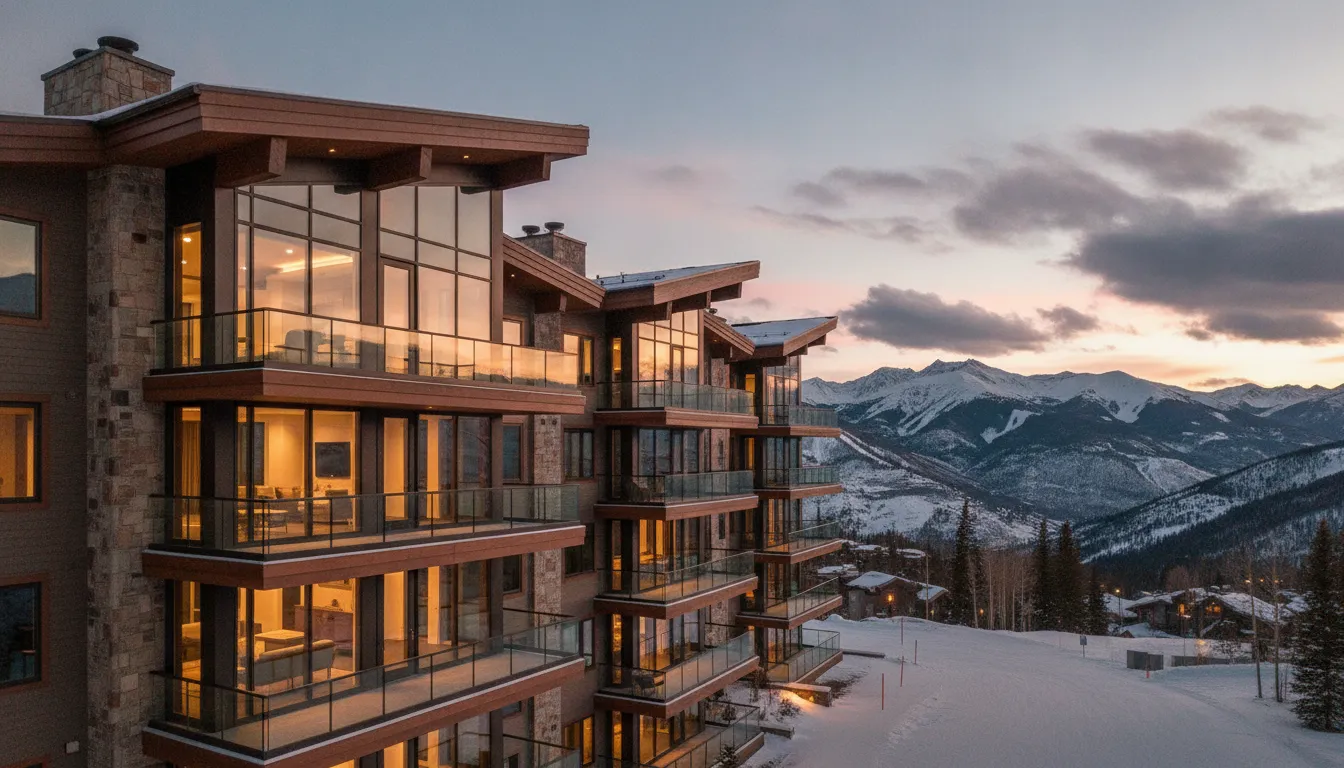
Buying a luxury condo in Canyons Village opens the door to world-class skiing and mountain living, but the mortgage process is different from a standard home purchase. Utahs Home Lender, led by Rodrigo Ballon at CrossCountry Mortgage, specializes in navigating these complex requirements. Contact Rodrigo today to discuss your resort financing options.
Warrantable vs non-warrantable condo financing distinguishes properties that meet Fannie Mae and Freddie Mac standards from those that do not. Warrantable condos qualify for conventional, FHA, and VA loans with standard rates and lower down payments. Non-warrantable condos require specialized portfolio lending with custom terms. The classification depends on owner-occupancy rates, commercial space limits, and HOA financial health rather than the property's condition or value.
Understanding this distinction is essential before you start touring Canyons Village properties. The difference can change your interest rate, down payment, and closing timeline. Here is what you need to know.
A warrantable condo meets Fannie Mae and Freddie Mac project eligibility requirements, making it eligible for conventional mortgage financing with competitive rates and lower down payments. Buyers can use standard loan products, the closing process follows a predictable timeline, and the pool of willing lenders is larger.
When a condominium project is classified as warrantable, it meets the eligibility requirements established by government-sponsored enterprises (GSEs) like Fannie Mae and Freddie Mac. This classification determines whether a buyer can use conventional financing, FHA loans, or VA loans to purchase a unit. For Canyons Village buyers, understanding this designation is the first step when evaluating any luxury condo purchase.
The Fannie Mae Selling Guide outlines several specific criteria that a condominium project must satisfy to qualify as warrantable:
When a condo meets these standards, lenders can originate loans that qualify for sale on the secondary mortgage market. This typically means lower interest rates, lower down payment requirements, and more straightforward documentation. The risk profile is well understood, so the process moves efficiently from application to closing. For buyers considering a warrantable condo in Park City or Deer Valley, this is the most accessible financing route available. Utahs Home Lender helps buyers verify project eligibility early so there are no surprises at closing.
If you are evaluating a property and want to verify its warrantable status. Ask the listing agent or the HOA for the project's Fannie Mae or Freddie Mac eligibility documentation. Many resort communities in Summit County maintain these records as part of their standard sales process. Understanding the warrantable vs non-warrantable condo financing distinction early in your search can save weeks of frustration.
A condo is classified as non-warrantable when it fails one or more GSE project standards. Common triggers include high investor concentration, excessive commercial space, condotel operating models, insufficient HOA reserves, pending litigation, or single-entity ownership concentration. Non-warrantable status does not make the property un-financeable, it simply shifts the financing path to specialized portfolio lenders.
Non-warrantable condos are common in resort communities like Canyons Village, and the reasons are structural rather than reflecting any flaw in the property itself. The project simply does not fit the standardized eligibility boxes that Fannie Mae and Freddie Mac require. Here are the most common triggers in Summit County:
The resort features that make Canyons Village condos desirable, rental income potential, mixed-use convenience, and hotel-style amenities, are exactly the features that trigger non-warrantable classification. This does not mean you cannot buy. It means you need a lender like Utahs Home Lender who understands portfolio lending and has access to alternative documentation programs designed for these properties. Portfolio loans, bank statement programs, and asset depletion mortgages all provide viable paths to closing on non-warrantable condos in Canyons Village.
Non-warrantable condos in Canyons Village are financed through portfolio loans held by the originating lender or through alternative documentation programs such as bank statement loans and asset depletion mortgages. These loans typically require a 20% to 30% down payment, 6 to 12 months of cash reserves, and strong credit. Closing timelines may extend to 45 to 60 days.
When a Canyons Village condo is classified as non-warrantable, conventional financing through Fannie Mae or Freddie Mac is off the table. However, this does not mean the property is un-financeable. It means buyers need to work with a lender who understands portfolio lending and has access to specialized programs for these unique properties. Rodrigo Ballon at Utahs Home Lender offers precisely these solutions for luxury resort buyers.
Portfolio loans are the most common vehicle for non-warrantable condo financing. Unlike conventional loans sold to the secondary market, portfolio loans are held by the originating lender on its own books. This gives the lender flexibility to evaluate the borrower's individual financial strength rather than relying on rigid project-level criteria. For a qualified buyer, a portfolio loan can be structured with competitive terms that reflect creditworthiness rather than GSE eligibility.
Many Canyons Village buyers are self-employed business owners, tech executives, or finance professionals with complex income structures. For these borrowers, Utahs Home Lender offers two powerful solutions:
Because non-warrantable loans carry more risk for the lender, they typically require a larger down payment of 20% to 30% or more. Cash reserves are also higher, often 6 to 12 months of payments. Stronger credit scores are expected as well. The closing timeline may extend to 45 to 60 days to accommodate additional underwriting. Having a specialist who understands both the local market and the full range of portfolio lending options is the difference between a smooth transaction and a deal that falls through. Read our complete guide to non-warrantable condo loans in Park City for more detail.
Canyons Village condos frequently fall into the non-warrantable category because of the resort's structural characteristics: high investor concentration from second-home buyers. Mixed-use buildings with ground-floor retail, condotel operating models, and high property values that require jumbo loans before warrantability is even assessed.
Canyons Village is one of Park City's most desirable resort destinations, with world-class skiing, luxury hotels, and high-end condominiums commanding premium prices. But the very features that make these properties attractive often push them into non-warrantable territory.
The primary factor is investor concentration. Many Canyons Village condos are purchased as second homes or investment properties placed into rental programs when the owner is not using them. When more than 50% of the units in a project are non-owner-occupied, the project fails the GSE occupancy requirement. This is extremely common in resort communities where rental income is part of the ownership proposition. For buyers focused on short-term rental income, our DSCR loan guide for Park City STR investors explains an alternative financing path.
Mixed-use development is another frequent trigger. Many Canyons Village buildings feature retail shops, restaurants, and ski services on the ground floor with residences above. When commercial space exceeds 35% of total square footage, the project becomes non-warrantable regardless of its financial health. Condotel classifications, where units operate as part of a hotel with shared front desk and nightly rental availability, are automatically ineligible for conventional financing.
Jumbo loan sizing adds a second layer of complexity. Summit County's conforming loan limit currently stands at $1,149,825, and many luxury condos in Canyons Village exceed this threshold. This means buyers need jumbo financing even before the warrantability question is addressed. This two-layer challenge, jumbo loan sizing on top of non-warrantable project status. Is precisely the niche where a specialist like Rodrigo Ballon at Utahs Home Lender adds maximum value. Rodrigo works with a network of portfolio lenders who understand the Park City and Canyons Village market and can structure creative solutions for these distinctive properties. Compare your options with our guide to conventional vs jumbo loans.
The core difference between warrantable and non-warrantable condo financing comes down to whether the project meets GSE eligibility standards. Warrantable condos qualify for conventional, FHA, and VA loans with lower rates and down payments. Non-warrantable condos require portfolio loans with larger down payments, higher reserves, and flexible documentation. The property's location, condition, and value do not determine the classification.
When you finance a condominium, the way lenders classify the building determines your loan options. A warrantable condo qualifies for standard agency programs because it meets rules set by Fannie Mae and Freddie Mac, making loans easy for banks to sell on the secondary market. Non-warrantable condos do not fit these standards, so banks must hold these loans on their own books or sell them to private investors. This fundamental structural difference drives every other term.
To help you plan your purchase, here is a breakdown of how the two categories compare across every major financing factor:
| Factor | Warrantable Condo | Non-Warrantable Condo |
|---|---|---|
| Loan Types Available | Conventional, FHA, VA | Portfolio, Specialty Programs |
| Interest Rate | Lower, market-competitive | Rate premium applies |
| Down Payment | Typically 5% to 15% | Typically 20% to 30%+ |
| Cash Reserve Requirement | Standard (2 to 6 months) | Higher (6 to 12 months) |
| Owner-Occupancy Rule | 50%+ owner-occupied required | May be waived with portfolio lender |
| Documentation | Standard W-2, tax returns, pay stubs | Flexible: bank statements, asset depletion |
| Closing Timeline | Standard 30 to 45 days | Extended 45 to 60+ days |
For most buyers, the warrantable vs non-warrantable condo financing decision is not a choice but a discovery. You find out which category applies when you evaluate a specific property. The key is starting that conversation early with a lender who understands both paths. Utahs Home Lender pre-vets project eligibility so buyers know their options before making an offer. Review our jumbo loan down payment guide for Park City to understand the full financial picture.
A warrantable condo meets Fannie Mae and Freddie Mac project eligibility requirements, making it eligible for conventional, FHA, and VA financing with standard rates and lower down payments. A non-warrantable condo does not meet these standards, typically due to high investor concentration, excessive commercial space, condotel operations, or insufficient HOA reserves. Non-warrantable condos require specialized portfolio loans instead of standard mortgage products.
No. Conventional loans sold to Fannie Mae or Freddie Mac require the underlying project to meet warrantable standards. Non-warrantable condos must be financed through portfolio loans, bank statement programs, asset depletion mortgages, or other alternative lending products held by the originating lender.
Non-warrantable condos in Canyons Village are typically financed through portfolio loans held by the originating lender. Alternative documentation programs such as bank statement loans (for self-employed borrowers) and asset depletion mortgages (for high-net-worth buyers) are also available. These loans generally require a 20% to 30% down payment, 6 to 12 months of cash reserves, and a strong credit profile. Utahs Home Lender specializes in matching Canyons Village buyers with the right portfolio lending solution.
Non-warrantable condos can take longer to sell because the pool of eligible buyers is smaller when conventional financing is not available. However, in high-demand resort markets like Canyons Village, the desirability of the location often compensates for the financing limitations. Sellers can make their property more marketable by working with lenders like Utahs Home Lender who specialize in non-warrantable financing.
While exact figures vary by building, a significant percentage of condos in Canyons Village fall into the non-warrantable category due to the resort's high investor concentration. Mixed-use building designs, condotel operating models, and premium price points that push loan amounts above Summit County's conforming limit of $1,149,825. Buyers should verify the warrantability status of any specific property before making an offer.
Yes. Non-warrantable condo loans typically carry a rate premium compared to warrantable conventional loans because the lender retains the loan on its own books rather than selling it to the secondary market. The exact premium depends on the borrower's credit profile, down payment size, and the specific portfolio lender. Working with a specialist who has access to multiple portfolio lenders can help secure the most competitive rate available.
Navigating the warrantable vs non-warrantable condo financing landscape in Canyons Village requires expertise that most general mortgage lenders simply do not have. Rodrigo Ballon at Utahs Home Lender, operating under CrossCountry Mortgage (NMLS #3029), has spent years developing relationships with portfolio lenders and alternative financing programs that serve the unique needs of luxury resort buyers in Park City. Deer Valley, and Summit County.
Whether you are looking at a warrantable condo at the base of the lifts or a non-warrantable condotel with a strong rental history. Rodrigo can evaluate your specific situation and identify the right financing path. The goal is not just to get you approved but to get you the most favorable terms available for your unique property and financial profile.
Schedule a free consultation with Utahs Home Lender today to discuss your Canyons Village condo purchase and explore your personalized financing options.