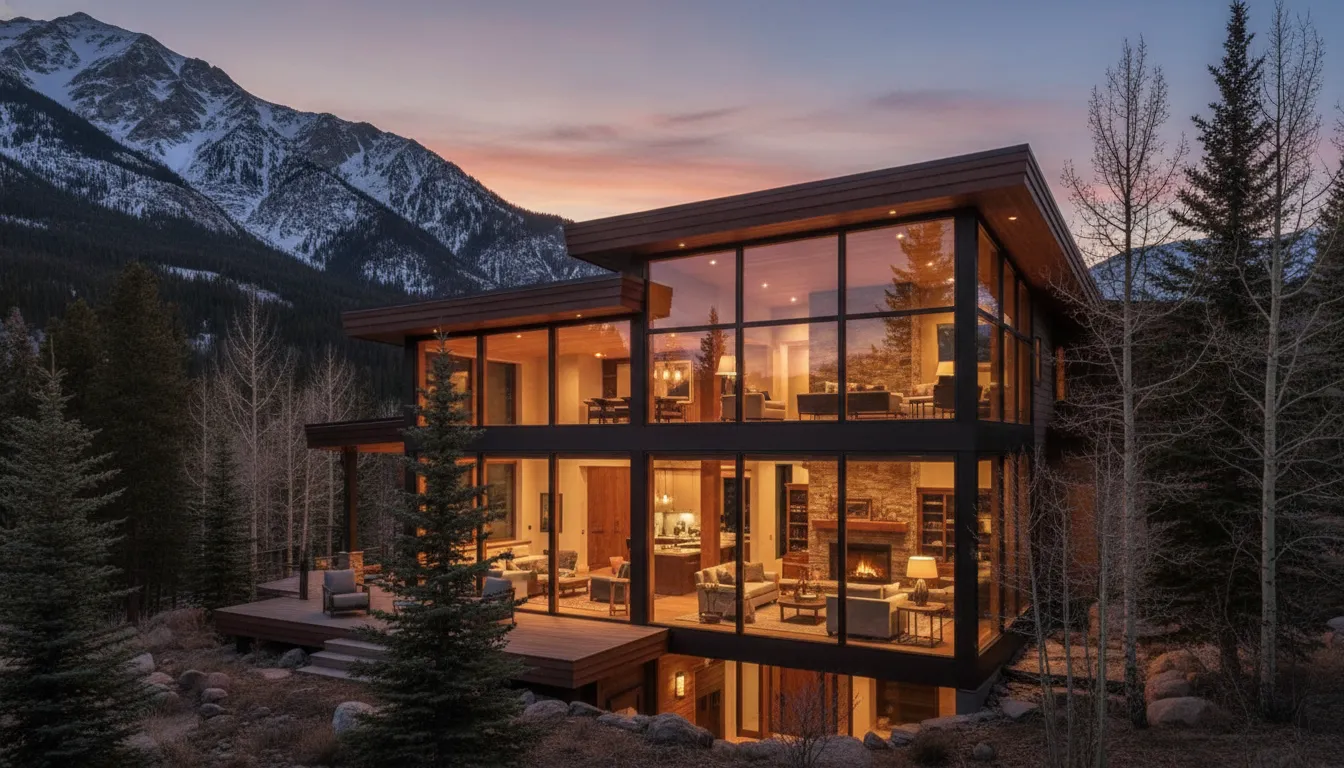


Deciding how much to put down on a conventional loan is one of the most consequential choices you will make in the homebuying process. The conventional loan down payment you choose affects not only your upfront cash but also your monthly payment, your interest rate, and whether you carry private mortgage insurance. For buyers financing luxury properties in Park City, Deer Valley, and the surrounding Summit and Wasatch County markets, the decision is even more layered: down payment interacts with conforming loan limits and jumbo thresholds, and for many high-net-worth buyers it is as much a liquidity strategy as a qualification requirement.
Whether you are deciding between a 3%, 10%, or 20% conventional loan down payment, a personalized consultation with Rodrigo Ballon at CrossCountry Mortgage can help you weigh the trade-offs for your exact property and financial profile. Request your consultation through the contact page.
A conventional loan is a mortgage that is not insured or guaranteed by a federal agency such as the FHA or VA. It may be backed by government-sponsored enterprises like Fannie Mae and Freddie Mac, but the loan itself is offered through private lenders. The down payment is the portion of the home price you pay upfront in cash; the remainder is financed through the mortgage.
Conventional loans are prized for their flexibility. Depending on your credit profile and the specific program, you may qualify with as little as 3% down, or you may choose to put down 20% or more. That flexibility is also what makes the down-payment decision complex, because the "right" amount depends on your cash position, your monthly budget, and how long you plan to stay in the home.
For most borrowers, the minimum conventional loan down payment is 3% of the purchase price. A 3% down payment on a $400,000 home, for example, would be $12,000. Some programs, such as Fannie Mae's HomeReady and Freddie Mac's Home Possible, are designed for lower- or moderate-income buyers and can work with that 3% figure, while certain lender-specific products may require 3.5% or 5%. For first-time homebuyers, 3%-down options are commonly available.
That said, the minimum is not always the best choice. A 3% down payment means you finance 97% of the home, which typically triggers private mortgage insurance and a higher loan-to-value ratio. For buyers in high-priced markets like Summit and Wasatch Counties, where purchase prices often exceed national averages, the absolute cash amount of even a 3% down payment can be substantial, so the minimum is worth evaluating against your broader financial goals rather than treating it as the automatic default.
The most common rule of thumb is that putting down at least 20% lets you avoid private mortgage insurance (PMI). PMI protects the lender, not you, in the event you default. When your down payment is below 20%, most lenders require PMI to offset the added risk of a higher loan-to-value ratio. The 20% threshold is not a legal requirement, but it is a practical guideline that most lenders follow.
PMI is typically calculated as a percentage of your loan amount (often roughly 0.3% to 1.5% of the loan balance per year) and is added to your monthly payment. Because PMI is not a fixed, guaranteed figure, we avoid publishing specific estimates; the precise cost varies by lender, credit score, loan amount, and other factors. The important takeaway is that a smaller down payment generally means carrying PMI until you build enough equity, which affects your true monthly cost beyond just the down payment itself.
When you put down less than 20%, you will typically pay PMI on a monthly basis. The exact amount is influenced by your loan-to-value ratio, your credit score, and the size of the loan, which is why we recommend reviewing your specific scenario with a lender rather than relying on a generic figure. Once your loan-to-value ratio reaches 80% or your equity reaches 20% of the original home value, you can usually request that PMI be removed.
For a more aggressive repayment path, some borrowers make additional principal payments to reach that equity threshold sooner and eliminate PMI early. The trade-off is that accelerating principal reduces the cash you have available for other goals, a decision that matters more for buyers who are also weighing liquidity, investment opportunities, and second-home financing.

Conventional loan down payment requirements are only part of the equation. The other half is the conforming loan limit, the maximum loan amount that Fannie Mae and Freddie Mac will purchase in a given market. In high-cost areas, the Federal Housing Finance Agency sets higher limits. Summit and Wasatch Counties are high-cost markets, which raises the ceiling for conforming conventional loans before a borrower crosses into jumbo-loan territory.
This matters for your down payment because the loan limit determines whether a property can be financed with a conventional conforming loan or requires a jumbo loan. When a purchase price exceeds the conforming limit, only a portion of the financing is conforming; the balance is jumbo, and jumbo loans often carry different down-payment expectations and underwriting standards. Understanding where your target property falls relative to the limit is essential before you commit to a specific down-payment strategy. A knowledgeable local lender will look at your purchase price, the loan limit for Summit and Wasatch Counties, and your cash position together.
For high-net-worth and high-income buyers, the down payment is frequently a strategic liquidity decision rather than a simple qualification gate. Putting more cash down lowers your monthly payment and may improve your rate, but it also ties up capital that could be used for other purposes, whether an investment property, a renovation, or maintaining reserves. Conversely, a smaller conventional loan down payment preserves liquidity but adds PMI and a larger loan balance.
Conventional loans remain a viable option for many luxury buyers when they align with property limits and liquidity goals. The right decision depends on your income structure, your long-term plans for the property, and whether this is a primary residence, a second home, or an investment. Because the trade-offs are personal, working through them with an experienced mortgage advisor who understands the local luxury market can make the difference between a good decision and the best one.
The most common comparison is between conventional and FHA loans. An FHA loan typically requires a 3.5% minimum down payment and is insured by the Federal Housing Administration, which can make it more accessible for borrowers with lower credit. Conventional loans, by contrast, often allow a 3% down payment for qualified borrowers, and the credit threshold can be more flexible depending on the lender and program.
FHA loans carry an upfront mortgage insurance premium and an annual mortgage insurance premium for the life of the loan in many cases, whereas conventional PMI can often be removed once you reach 20% equity. For buyers who expect to build equity quickly or who want maximum long-term flexibility on insurance, a conventional loan is frequently the more attractive path. If you are also weighing options, our guide to FHA loans compares low-down-payment and approval considerations across loan types.
Because a conventional loan down payment decision is rarely made in isolation, it pays to understand how it interacts with the broader lending landscape. The difference between jumbo and conventional loan limits is directly relevant once purchase prices approach the conforming ceiling, and our conventional loan overview outlines qualifying basics for Utah borrowers. Reading these alongside this guide gives you a complete picture of how down payment, limits, and loan type work together.
There is no single correct conventional loan down payment. The best figure balances your cash position, your monthly budget, your tolerance for PMI, and the loan limits that apply to your market. By working through the minimums, the PMI trade-offs, and the local Summit and Wasatch County loan limits, you can approach the decision with clarity instead of guesswork.
To talk through your property, your financial profile, and the conventional or jumbo loan options most likely to fit your goals, schedule a consultation with Rodrigo Ballon through the contact page.
Yes. Many conventional programs allow a 3% minimum down payment for qualified borrowers. Putting down less than 20% typically means you will carry private mortgage insurance (PMI), and your loan-to-value ratio will be higher.
No. The 20% figure is a common guideline to avoid PMI, not a requirement. You can put down as little as 3% with qualifying conventional programs, though a smaller down payment usually adds PMI and a higher loan balance.
It depends on your financial goals. A 20% down payment avoids PMI and lowers your monthly payment, while a smaller down payment preserves cash. The right amount balances your liquidity, your budget, and the conforming loan limits in your market.
When your down payment is below 20%, lenders typically require PMI. Once your equity reaches about 20% of the home value, you can usually request that PMI be removed, which lowers your monthly cost.
Utah's Home Lender, led by Rodrigo Ballon, offers mortgage guidance for luxury buyers across Summit and Wasatch Counties. CrossCountry Mortgage, LLC, is an Equal Housing Lender. CrossCountry Mortgage NMLS #3029. Rates, loan limits, down payments, PMI, credit requirements, reserves, documentation, and program availability vary by borrower, property, market conditions, and lender guidelines. Nothing on this page is a commitment to lend or a guarantee of approval, rates, or terms.