

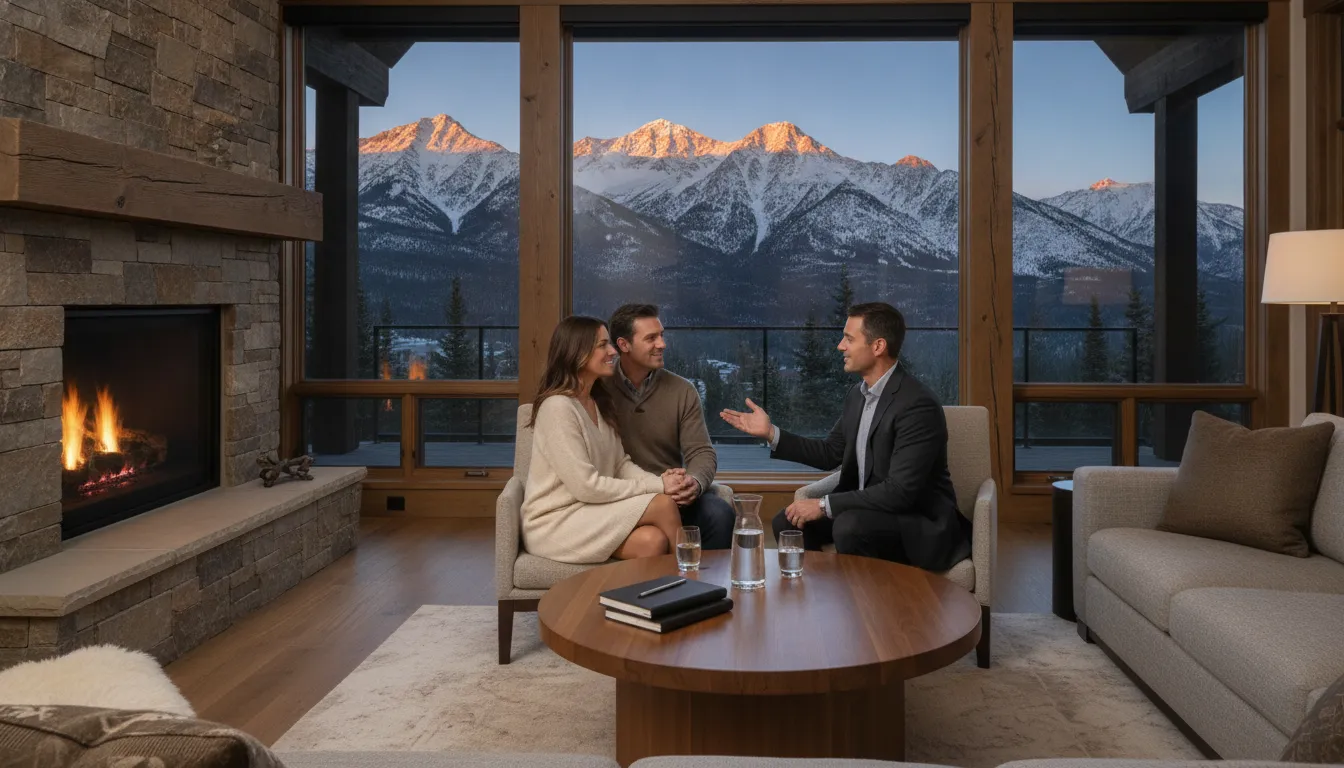
Buying a luxury mountain home in Park City requires more than a standard bank pre-approval. High-net-worth buyers in Summit County often have complex income that typical lenders cannot process.
Specialized second home mortgage lenders provide the tailored jumbo loans and flexible underwriting needed to secure high-value properties in resort markets like Park City. According to occupancy guidelines set by Fannie Mae, a second home must be a one-unit dwelling suitable for year-round use that remains under your exclusive control. Because these properties do not bring in rent, expert lenders look closely at your cash reserves, tax returns, and debt ratios. A local mortgage expert helps you navigate this path, as home prices in Summit County often exceed conforming limits and require jumbo loans. An expert team guides you through each detail so you can secure your luxury property and close on time.
How do you find the right match for your transaction? We will guide you through the process of choosing a partner who can manage your mortgage needs. Below, our guide to choosing a second home mortgage lender walks through what to evaluate. The programs that matter for high-value properties, and the questions worth asking before you commit.
Talk to a second home mortgage lender in Park City or Summit County before you compare offers.
Buying a second home in a luxury resort market needs the right financing partner. When you search for second home mortgage lenders, you need more than just a firm that can pre-approve a loan. You need a guide who knows how to manage hard property rules and high-value loan limits. The right second home mortgage lender will help you compare all your financing options for second homes. This helps you make a smart financial move.
A great second home mortgage lender helps you plan your path. High-end resort real estate has its own local trends and property types. Standard lenders often struggle with ski condos or mountain estates because of strict rules. To avoid delays, you should choose a team that works with these properties every day. This skill makes a big difference in how fast you can close on your home.
Lenders must follow strict guidelines when they finance a second home. Under standard guidelines, like those set by Fannie Mae, a second home must be a one-unit dwelling. It must be fit for year-round use, and you must live in the home for some of the year. In addition, you must have exclusive control over the property. This means it cannot be a rental property or a timeshare arrangement. A skilled second home mortgage lender will walk you through these rules early in the process.
You should also expect different down payment and cash reserve rules. Lenders view second homes as higher risk than primary homes. Because of this, they will look closely at your personal finances and assets. A skilled second home mortgage lender will help you prepare your paperwork. This step prevents late issues once your loan goes to underwriting.
In high-cost areas like Park City, home prices often go past standard loan limits. The Federal Housing Finance Agency sets the conforming limit in Summit County at $1,149,825. If your dream home costs more than this, you will need a jumbo loan. Big retail banks often have rigid rules and slow approval times for jumbo loans. Instead, look for a lender with deep skill in Park City second home loans. They can offer flexible underwriting and help you work through the process with ease.
Jumbo financing needs a custom approach. Luxury buyers often have complex income, such as stock options or business revenue. Local mortgage experts have access to a wider range of investor programs than big banks. They can find a program that fits your specific income setup. This choice is key when you buy a high-end property in a resort town.
The right partner does more than pull your credit. They look at your whole financial profile to find the best program. Self-employed buyers and business owners often have complex income. A great local lender can offer alternative document programs, like bank statement loans, to fit your needs. They also know local resort market conditions. This local knowledge helps them close loans on time. When you compare lenders, look at their local track record, response times, and program access.
Choosing a local mortgage expert also means you get better communication. During a real estate deal, time matters most. Big banks often route your file through large, distant call centers. This can lead to missed deadlines and lost deals. A local expert gives you direct, personal service. They keep you and your agent up to date at every step.
| Feature | Local Specialized Lender | Big Retail Bank |
|---|---|---|
| Local market knowledge | Deep insight into local resort home markets, ski condos, and mountain estates. | General national focus with little knowledge of resort properties. |
| Jumbo program access | Wide variety of private investor loans and customizable programs. | Rigid, narrow guidelines with fewer options for high-value loans. |
| Alternative documentation | Flexible options like bank statement loans for self-employed buyers. | Standard W-2 tax forms needed with very few exceptions. |
| Responsiveness | Direct access to your loan officer with fast, proactive updates. | Slow communication through distant call centers and generic help desks. |
| Consultative service | Personalized plans built to support your long-term wealth strategy. | Transactional, volume-based service with standard pre-built templates. |
CrossCountry Mortgage, LLC is an Equal Housing Lender (NMLS #3029).
Buying a second home in a luxury resort market like Park City is a great step. But getting a loan for a second home is different than buying a first home. Since second homes carry more risk, second home mortgage lenders look at your files with a closer eye. To secure your loan, you must meet strict rules for your down payment, debt, reserves, and income files.
When you look at financing options for second homes, the first thing you will notice is the down payment. Lenders often ask for at least 10% to 20% down for a second home. This amount is more than what you need for a main home. If you want a jumbo loan for a luxury home in Summit County, you may need to put down even more.
Lenders also want to see that you have plenty of cash left over after you close, which is called cash reserves. Financing a second home often involves different reserve rules and document standards compared to first homes. You may need to show that you have six to twelve months of mortgage payments saved in liquid accounts. This cash cushion makes sure you can handle both payments if your income changes.
Your debt-to-income (DTI) ratio compares your monthly debt payments to your gross monthly income. For loan files checked through standard systems like Desktop Underwriter, the highest DTI ratio allowed is 50%. You can learn more about how this ratio works from the Consumer Financial Protection Bureau. Keeping your DTI well below this cap will help you get the best terms.
Your credit score plays a big role in your approval, and lenders want to see a strong history for high-value loans. Most second home mortgage lenders look for a score of 720 or higher. A high credit score shows that you manage debt well and helps offset the risk of owning two homes. It also helps you secure a lower interest rate on your loan.
Lenders will check how you plan to use the property to ensure it is not a rental. To qualify as a second home, you must occupy the house for part of the year and have full control over it. It cannot be used as a full-time rental or a timeshare.
If you rent the house out for most of the year, lenders will treat it as an investment property. These investment loans have different rules. For example, they often need higher rates and larger down payments.
At last, you must provide clear files to show your income. This step can be complex for luxury buyers in Utah who are self-employed or have irregular income. Working with a local expert who understands Park City second home loans can make this process smooth. A skilled lender can help you sort your tax returns and bank statements to present a strong case.

Buying a high-value second home in a mountain resort market like Park City is a major money move. Many homes in Summit County are luxury estates or ski-in cabins with premium price tags. Standard loans often fail to cover these high costs. To secure your dream retreat, you must know the rules of jumbo financing. You need an expert who can guide you through large property deals.
Standard loans have strict limits set by the federal government. In most parts of the country, these limits are low. For high-cost resort areas, the limits are higher but still have a cap. The Federal Housing Finance Agency sets these caps each year. For 2026, the Summit County conforming loan limit is $1,149,825. If your loan amount goes even one dollar above this limit, you must use a jumbo loan.
Because Park City luxury home prices are so high, most buyers quickly pass this conforming mark. A simple ski condo or a scenic cabin can easily cost more than two million dollars. This means a standard loan will not work for your home. You must work with specialized second home mortgage lenders who have direct access to jumbo funds. A local expert can help you choose your path.
Luxury home buyers are rarely simple wage earners. Many have complex income streams that do not fit into standard boxes. You might be a self-employed business owner, a 1099 contractor, or a tech executive who gets stock-based pay. Some buyers are finance experts with irregular income from investments. Retail banks often struggle to read these tax returns and assets. They may deny your loan simply because they do not know how to find your true cash flow.
Specialized underwriting is needed to solve this problem. A skilled jumbo lender does not just look at a standard pay stub. They know how to review bank statements, asset sheets, and tax filings to prove your strength. They can use other documentation paths to secure your loan. This tailored care ensures that your high-net-worth status works for you, not against you.
Jumbo loans do not follow the same rules as standard mortgages. Every lender has its own risk rules and reserve demands. For a second home, these rules can be even more strict. You may need to show large cash reserves to cover several months of payments. A local expert knows which banks offer the most flexible terms for resort homes. They can find programs with lower down payments or lower reserve rules that fit your plans.
They also help you find competitive rates. You can explore jumbo loan rates for second homes to see how they fit your budget. With a local guide, you can review different loan programs to find the right fit. Rodrigo Ballon at CrossCountry Mortgage (NMLS #3029) provides personalized jumbo-loan services to help you secure your Park City home. This local focus ensures a smooth closing so you can enjoy your mountain escape.
When you buy a home that is not your main house, you must choose between a second home loan and an investment property loan. While both programs help you buy real estate, they have very different rules. Lenders view second homes as lower risk than rental properties, which leads to better rates and terms. But to get these benefits, you must meet strict occupancy rules. Knowing these differences helps you select the best path for your real estate goals.
To qualify for a second home loan, the property must be a one-unit home that you can live in year-round. Standard rules from the Federal Housing Finance Agency require you to live in the home for some part of the year. You must also keep full control over the property. This means you cannot buy a timeshare or sign a full-time lease with a tenant. If your main goal is to earn regular rent, you need an investment loan instead. The Internal Revenue Service splits these homes into two groups based on how many days you rent them out. If you rent the home for more than fourteen days a year, the tax rules change. This shift can affect how you write off your mortgage interest. True investment properties are bought to make steady cash flow, so lenders look at the home's rental income. For a second home, lenders only check if your own income can cover the bills.
Lenders use different rules to grade your risk for each loan type. When you apply for a second home loan, you will face unique rules for cash reserves and paperwork. Lenders often want to see that you have extra cash, called reserves, to cover several months of payments. You may need to show larger cash reserves and a bigger down payment for an investment property. Lenders do this because borrowers are more likely to default on a rental property if times get tough. If you plan to buy a high-value property in a resort market like Park City, the loan size often exceeds the conforming limit. In Summit County, the conforming limit is $1,149,825. Any loan above this limit will require specialized jumbo-loan services, which have their own cash reserve rules.
Choosing between these loans can be tough when you buy a high-value luxury home. Working with a team that knows the local market can save you time and money. A skilled broker can explain all the financing options for second homes. They will help you find a program that fits your financial profile. This local help ensures you stay in line with all occupancy laws while you buy your dream resort home.
Buying a second home in a mountain resort town needs the right mortgage partner. Before you select one of the many second home mortgage lenders, you must talk to them. A good lender helps you understand the rules and get a loan that fits your goals.
To find the best partner when you buy, ask these key questions during your first meeting. A good interview will help you compare different options.
Qualifying for a second home loan is not the same as buying a main home. Lenders check your debt-to-income ratio and other home loans. When you sign a standard second home rider, you agree to keep full control of the property.
This means you must live in the home for part of the year. You cannot lease it out all year or put it in a timeshare. These clear rules help protect your loan status.
Working with a local expert helps you find the right financing options for second homes. A good broker can match a loan program to your exact financial needs. They can guide you through each step and handle the complex underwriting process. This personal touch makes buying your mountain home simple and stress-free.
Get started with a second home mortgage lender and discuss your Park City financing plan today.
No, second home rates are usually slightly higher than primary home rates. Lenders charge more because they see a second home as a higher risk. If you face hard times, you will likely pay your first home loan first. A strong credit score and a larger down payment can help you secure the best rate.
Lenders check your credit score, your monthly income, and your debts. For loans processed with automated tools, the highest allowed debt-to-income ratio is 50 percent. This is the limit set by the Fannie Mae Selling Guide. You will also need to show cash reserves to prove you can pay both loans.
Yes, you can use a jumbo loan for a second home. This is very common in high-cost areas where luxury homes cost more than standard loan limits. You will need a strong credit score and a larger down payment. Lenders also look for plenty of cash reserves to cover several months of payments.
The best lender is one that has deep local market knowledge and offers flexible loan programs. Look for a team that understands luxury markets and complex income types. They should give you clear options and guide you from pre-approval to close. Good communication and fast service are key.
Waiting to get your financing can lead to losing your dream home in a fast resort market. Starting your search early helps you secure the best options before someone else buys the property. If you delay, rising costs or new rules could change your budget. You do not have to navigate the mortgage market alone. Working with an expert who knows Park City second home loans ensures you get clear help with jumbo limits and complex income. This smart approach makes your home buying process smooth, quick, and stress-free. CrossCountry Mortgage, LLC is an Equal Housing Lender, NMLS #3029.
Ready to plan your purchase? Please contact Utah's Home Lender today to schedule a free consultation and discuss your loan options.