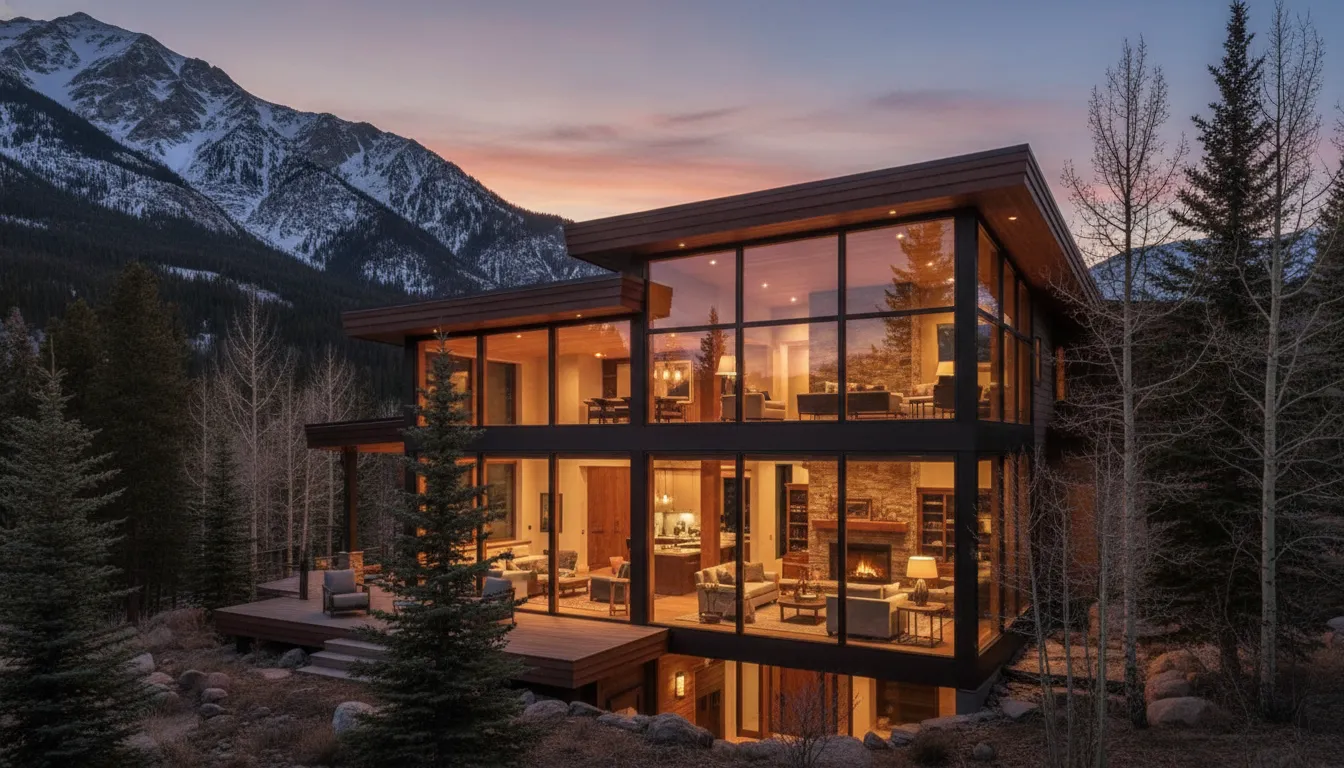


Buying a retreat in Park City, Deer Valley, Canyons Village, or Promontory is rarely as simple as choosing a property and submitting a standard mortgage application. Luxury second-home buyers may be self-employed business owners, technology executives with stock compensation, 1099 professionals, or investors who want to preserve liquidity while acquiring a meaningful Utah residence. Their income, assets, property type, and intended use can all shape the financing strategy.
Talk with a specialist about a home loan for second home options
A home loan for second home purchases typically requires documented capacity to carry both residences. Appropriate credit and debt-to-income results, sufficient liquid reserves, and a property that meets second-home occupancy guidelines. For higher-value resort properties, conventional financing may not be enough, so jumbo, alternative-documentation, asset-depletion, or other specialized programs may warrant review. Program availability, rates, down-payment requirements, and eligibility vary by borrower, property, market conditions, and lender guidelines.
A thoughtful pre-approval is especially important before making an offer in a competitive resort market. It can help clarify how bonus income, business ownership, restricted stock, existing obligations, reserves, and the property's intended use will be evaluated. It also gives your lending team an opportunity to identify questions around condominium operations, rental-pool agreements, appraisal support, or unusual property features before they become late-stage obstacles. The process begins with understanding how lenders distinguish a second home from a primary residence or investment property, and how that classification affects the loan from the outset.
A home loan for a second home finances a property you will occupy in addition to your primary residence. Unlike an investment-property loan, it is built around your personal use of the home, whether that means spending ski season in Deer Valley. Taking extended summer stays near Park City, or maintaining a private retreat in another market. The occupancy classification affects how the lender evaluates the property, your finances, and the terms available for the loan.
For luxury buyers, the distinction is especially important. A ski-in/ski-out condominium, mountain residence, or home in Promontory may have substantial value, but the property still needs to fit the lender's definition of a second home. Fannie Mae describes a second home as a property occupied by the borrower in addition to the borrower's principal residence. The property must also be suitable for year-round occupancy, even if you plan to use it only during holidays or selected seasons. See the Fannie Mae occupancy types guidance for the formal framework.
The home must be reachable by you, but it does not have to be close to your primary residence or limited to one particular geographic area. That flexibility can accommodate a buyer whose principal residence is in California, Seattle, New York, or elsewhere and who wants a resort property in Summit County. The practical question is whether the home is a genuine residence you can access and occupy, rather than a property acquired solely for income production.
Exclusive control is another defining consideration. The borrower must retain control of the property, and the home generally cannot be subject to a mandatory rental pool or a management agreement that controls its occupancy. A resort property with hotel-style operations or required rental participation may therefore need to be evaluated under a different financing structure. Personal use and rental plans should be discussed before you make an offer, especially when buying a professionally managed condo.
Once the property qualifies as a second home, the loan process resembles other residential financing. The lender reviews income, assets, liabilities, credit, the property's appraisal, and the requested loan amount. In the luxury market, the financing may fall within a jumbo structure, and complex income such as business ownership or equity compensation can require a tailored review. A conversation with experienced second home mortgage lenders can help clarify the occupancy classification before you structure the purchase.
Lenders generally evaluate a second-home application more conservatively than a primary-residence application because the property is an additional financial obligation. For a high-value home in Park City, Deer Valley, or Promontory, qualification is not based on income alone. Credit quality, recurring obligations, liquid assets, and the way your income is documented all matter.
Second-home financing may require a higher credit score than comparable primary-residence financing. A strong credit profile gives the lender more confidence that you can continue making payments if the property is used less often than planned or other expenses increase.
Your debt-to-income ratio, or DTI, is also central to the review. Lenders may look for a lower DTI than they would for a primary residence. The calculation can include the proposed second-home payment, the existing mortgage on your primary residence, property taxes, insurance, and homeowners association dues. Those carrying costs can be meaningful in luxury resort communities, particularly for a condominium or a property with extensive amenities. Before making an offer, it is useful to model the complete monthly obligation rather than considering only principal and interest.
Reserves are the liquid assets you retain after closing. They help demonstrate that you can manage both homes through market changes, maintenance needs, and periods of uneven income. Your lender may review cash accounts, investment assets, and other eligible sources, subject to program rules and documentation requirements. A larger purchase price does not automatically create a problem, but it does make the relationship between the down payment, monthly payment, and post-closing liquidity more important.
Self-employed borrowers, business owners, 1099 earners, and executives with complex compensation should expect detailed income analysis. Traditional underwriting often requires two years of personal and business tax returns, along with supporting documentation that helps explain business income, distributions, and recurring obligations. Tax returns may not fully reflect the cash flow or assets available to a high-net-worth borrower, so the right documentation strategy should be considered early.
Depending on the borrower and program, alternative documentation may be available. Bank-statement programs can evaluate qualifying deposits rather than relying solely on conventional tax-return income, while asset-depletion programs may recognize eligible liquid assets as a source of qualifying income. These options are not automatic approvals, and availability depends on lender guidelines, asset type, property, and the overall application.
Pre-approval is the practical first step. It clarifies a realistic search range and identifies documentation gaps before you pursue a ski-in/ski-out residence or resort condominium. For a deeper preparation checklist, review how to qualify for a second home mortgage, then discuss your income structure and liquidity with a lender familiar with Summit County properties.
The right financing structure depends on the property price, your income profile, available reserves, and how you plan to use the home. A conventional loan may fit a moderately priced second home, while a Park City ski residence, Deer Valley condo, or Promontory property may call for a jumbo strategy. Borrowers with substantial assets or less conventional income may also need a program designed around their broader financial picture rather than a standard paystub-and-tax-return review.
| Program | Best for | Typical considerations |
|---|---|---|
| Conventional second home loan | Buyers purchasing a second home that falls within applicable conforming loan limits and meets standard occupancy guidelines. | Underwriting generally reviews credit, debt-to-income ratio, down payment, reserves, and documentation for both the primary and second residences. The property must qualify as a second home, not an investment property. |
| Jumbo loan | Luxury and resort buyers financing an amount above standard conforming limits, including high-value homes in Park City and Summit County. | May involve more extensive financial review, stronger liquidity, and property-specific analysis. Jumbo loans are frequently used for luxury properties in resort areas because they exceed conventional conforming limits. |
| Interest-only jumbo | Some borrowers seeking temporary payment flexibility in a luxury second-home financing strategy. | Interest-only structures may be available for certain jumbo scenarios, but they are not a universal fit. The payment structure, future principal repayment, reserves, and long-term plan require careful review. |
| Bank-statement or alternative-documentation loan | Self-employed business owners, entrepreneurs, and other borrowers whose cash flow is not fully represented by conventional income documentation. | Alternative documentation may not rely solely on traditional tax returns. Deposits, business structure, liquidity, credit, and program-specific documentation still matter. |
| Asset depletion program | High-net-worth borrowers with significant liquid assets but limited traditional monthly income. | Eligible liquid assets may be converted into qualifying income under program guidelines. The source, type, seasoning, and remaining balance of assets can affect the analysis. |
Regardless of the program, occupancy remains central. A second home is generally a property you occupy in addition to your primary residence, and it must be suitable for year-round occupancy. Fannie Mae also requires the borrower to have exclusive control, which can make a rental pool or mandatory management agreement incompatible with second-home financing. Review the occupancy guidance before treating a resort purchase as a private second home: Fannie Mae occupancy types.
For a high-value home loan for a second home, comparing programs before making an offer can clarify which assets and income documents will matter most. A consultation can also distinguish a private second home from an investment property and identify a structure that fits the property, borrower, and intended use. Rates, terms, down payment requirements, reserves, and approval criteria vary by lender and borrower.
For many second home purchases, a down payment in the 10% to 20% range is a useful starting point for planning. It is general guidance, not a commitment or an approval standard. The amount a lender may require can vary with the loan program, property type, loan size, credit profile, reserves, and the lender's current underwriting guidelines. A conventional second home in a standard market may be evaluated differently from a high-value ski property in Park City or Deer Valley.
The right question is not simply, "What is the smallest down payment available?" A larger contribution may reduce the loan amount. Improve the relationship between the loan and the property's value, or help position the overall application. However, putting every available dollar into the purchase can leave less liquidity for taxes, insurance, furnishings, maintenance, travel, and unexpected property costs. Strategic planning weighs the payment against the reserves you need to retain after closing.
Luxury and resort properties often require a more individualized review. A jumbo loan may be appropriate when the requested financing exceeds conventional limits, but jumbo underwriting can apply different requirements for down payment, credit, income, assets, and reserves. Resort condos, unique construction, seasonal access, and homeowners association obligations may also affect how the property is assessed.
For certain HUD-approved secondary residence loans, the maximum mortgage amount is capped at 85% of the lesser of the property's appraised value or sales price. That provision can imply at least 15% equity in the applicable circumstances, but it should not be treated as a universal rule for every second home loan. The details depend on the specific program and borrower. You can review more planning considerations in this guide to second home down payment requirements.
Reserves are liquid assets that remain after closing. Lenders may request them to demonstrate that you can manage the new housing payment and ongoing obligations while maintaining your primary residence. For a high-value second home, the reserve discussion may include both mortgage payments and recurring costs such as property taxes, insurance, association dues, utilities, and maintenance.
That makes down payment planning a balance-sheet decision, not just a purchase-price calculation. A borrower with substantial assets may prefer a larger down payment for a particular objective, while another may prioritize liquidity for business interests, investments, or future property improvements. Buyers with complex income, including business ownership or compensation tied to assets, should organize the full financial picture early. A consultation can help compare scenarios without assuming a guaranteed rate, term, approval, or required contribution.
A luxury second home in Park City, Deer Valley, Canyons Village, or Promontory involves more than choosing a property and requesting a mortgage. Resort real estate often combines high purchase prices, distinctive construction, condominium ownership structures, association rules, and seasonal demand. The financing strategy needs to account for those details before you make an offer.
Jumbo loans are frequently used for luxury resort properties because the requested loan amount exceeds standard conforming limits. That can make a jumbo loan for a second home an important part of the conversation. It is especially relevant for a ski-in/ski-out residence, a larger home in Promontory, or a premium condo near Deer Valley or Canyons Village. Program availability, underwriting requirements, reserves, down payment, and pricing vary by borrower, property, and lender guidelines.
Appraising a distinctive resort property can be challenging when nearby sales are limited or the homes being compared differ substantially in views. Access, finishes, amenities, and location within the resort. A ski-in/ski-out home may not be directly comparable to a residence a short drive away. A luxury condominium may also involve shared amenities, association fees, or project characteristics that influence its marketability.
That does not mean an appraisal issue is inevitable. It does mean the property should be evaluated thoughtfully, with accurate information about its features and the surrounding market. Early coordination can help identify questions about the property type, comparable sales, access, and any project documentation before they create avoidable delays. Local knowledge of Park City and Summit County luxury neighborhoods is especially useful when the value story is more nuanced than a standard suburban appraisal.
Beyond the down payment and lender charges, resort purchases can carry additional costs specific to the property. These may include homeowners association charges, transfer or project fees, inspections suited to mountain construction, and other transaction expenses. The exact items depend on the property and contract, so they should be reviewed as part of the full budget rather than treated as an afterthought.
A strategic financing review considers the cash needed at closing, the liquidity you want to preserve, and the ongoing costs of owning the home. Rodrigo Ballon combines local luxury-market perspective with CrossCountry Mortgage's institutional resources to help borrowers examine those tradeoffs. Explore the available jumbo loan programs before narrowing your search or structuring an offer.
Be precise about how you plan to use the residence. A vacation-oriented second home is generally purchased for the borrower's personal use, while an investment property is acquired primarily to generate rental income. That distinction can significantly affect loan terms, documentation, underwriting, and how the property may be used. A rental pool or management arrangement may be inconsistent with second-home requirements, so review those agreements before moving forward.
With the right classification and a property-specific review, buyers can pursue financing that reflects both the resort market and their broader financial position. Professional guidance is particularly valuable for borrowers with complex income, substantial assets, or a planned mix of personal use and occasional rental activity.
How you plan to use a property should be settled before you choose financing. A private retreat used by you and your family may fit a second-home loan. While a property purchased primarily to generate rental income is generally evaluated as an investment property. That distinction can affect underwriting, documentation, reserves, and the loan programs available to you.
For a true second home, the borrower generally must retain exclusive control of the property. In practical terms, that can rule out a mandatory rental pool or a management agreement that gives another party control over occupancy and rental activity. Fannie Mae's occupancy guidance also describes a second home as a property occupied by the borrower for part of the year, suitable for year-round occupancy, and reachable by the borrower.
That matters in resort communities such as Park City, Deer Valley, and Canyons Village, where a building or development may have established rental arrangements. Before making an offer, review the governing documents and ask whether owners are required to participate in a rental program. Subject to management restrictions, or limited in their personal use. If the property is structured around consistent guest income, presenting it as a private second home could create an occupancy mismatch.
If rental income is central to your plan, discuss an investment-property structure instead. The financing may reflect the property's intended income-producing use rather than personal occupancy. That does not automatically make one approach better. It means the loan should match the facts of how you expect to own and operate the property. Be candid about planned rentals from the beginning, especially if you are considering short-term stays, seasonal use, or a professional manager.
Tax treatment is another part of the analysis, but it should not be reduced to a simple promise that mortgage interest will be deductible. Depending on how the home is used, how often it is rented, and your individual tax circumstances, different rules may apply. The IRS discusses mortgage interest and second residences in Publication 936. Tax Topic 415 addresses rental income and expenses for vacation homes. A qualified tax professional can help you evaluate the treatment of interest, rental income, expenses, and personal-use days before you commit to a strategy.
For a high-value second home, align the purchase contract, property documents, occupancy plans, loan structure, and tax advice. That coordinated review is especially important when a private retreat may later become a rental or when a resort property's rules limit how you can use it.
Talk to a second home mortgage lender before finalizing your purchase plan
Qualification can be more detailed because the lender evaluates your existing housing obligation alongside the proposed property. Expect review of credit, debt-to-income ratio, liquid reserves, income documentation, and the property itself. Self-employed borrowers may need extensive income records. While borrowers with substantial assets or complex compensation may be able to discuss alternative documentation or asset-depletion options, subject to program guidelines.
There is no single down payment that applies to every borrower or property. Requirements vary by lender, loan size, occupancy, credit profile, reserves, and program. A larger down payment may improve the overall financing structure, but preserving appropriate liquidity can also matter for a luxury purchase. Review the tradeoffs before making an offer rather than assuming a standard percentage.
Often, yes, if the property and intended use meet the program's second-home requirements. A qualifying second home generally must be suitable for year-round occupancy, reachable by the borrower, and under the borrower's exclusive control. It generally cannot be subject to a rental pool or management agreement. These standards can be especially important for condos and resort properties in Deer Valley, Canyons Village, and Promontory. See Fannie Mae's occupancy guidance.
A second home is intended for your personal use for part of the year, while an investment property is purchased primarily to generate rental income. If a property will be placed in a rental pool or operated under a management agreement, it may not fit second-home occupancy rules. Clarify your intended use at the beginning, because misclassifying the property can affect eligibility, documentation, and loan structure.
A second home in Park City, Deer Valley, Canyons Village, or Promontory can involve property details, income sources, reserves, and financing goals that deserve a tailored review. A conversation can help you organize the relevant questions and evaluate loan options for your financial profile without assuming that one program fits every borrower or property.
Talk to Rodrigo Ballon about a home loan for a second home
Contact Utah's Mortgage Pro through CrossCountry Mortgage, NMLS #3029, to discuss your property and potential next steps. Loan program availability, rates, terms, down payment requirements, reserves, documentation, and eligibility vary by borrower, property, market conditions, and applicable guidelines. Equal Housing Opportunity.