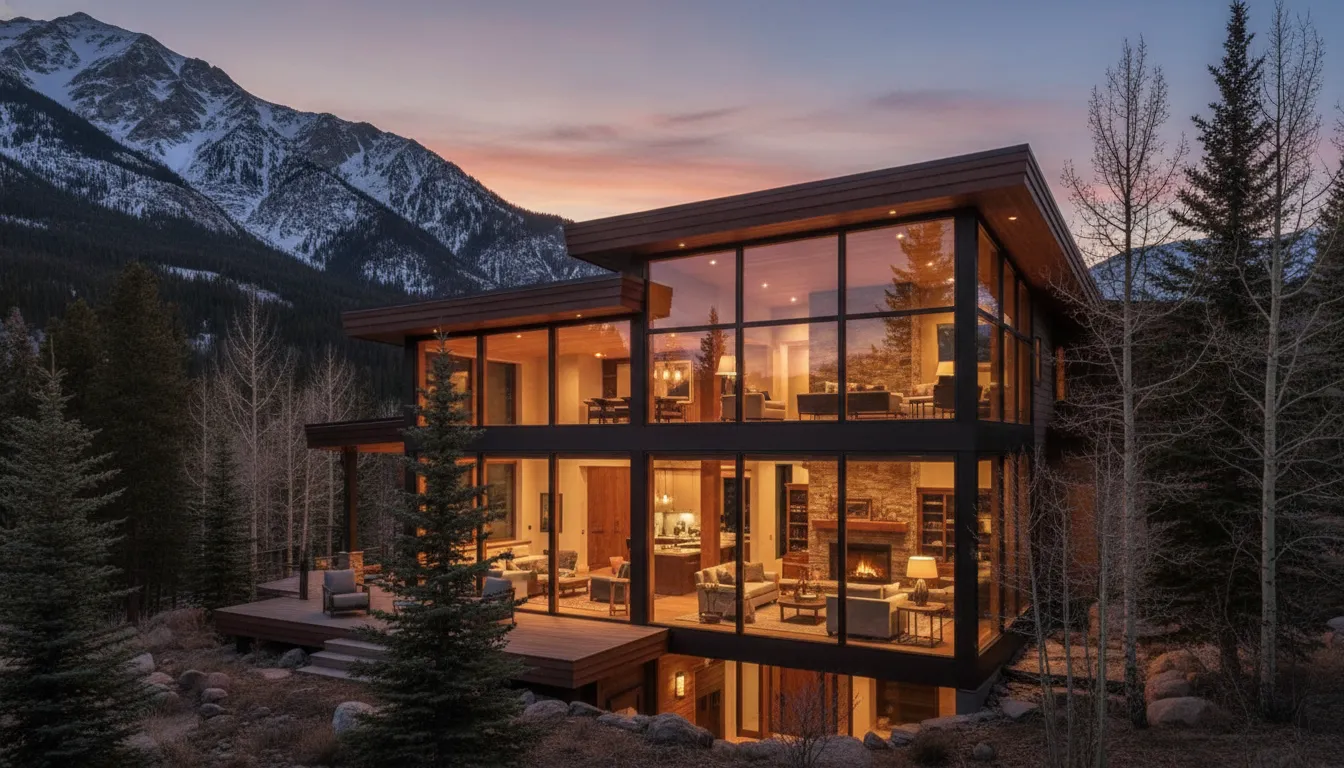


Over sixty percent of luxury home sales in Park City close with all-cash offers. For many wealthy buyers, however, using strategic financing is a smarter way to preserve liquid capital. Securing the right home loan allows you to maintain investment flexibility while acquiring a premium mountain retreat.
A mortgage loan for second home purchases usually requires a down payment of 10% to 20% of the home price. Lenders often look for a credit score of 680 or higher and a low debt-to-income ratio to offset the added risk. You must also show enough liquid assets to cover up to twelve months of payments for both homes. Because second homes carry a higher default risk than primary homes, lenders usually charge slightly higher interest rates. In high-value areas like Park City, buyers often exceed conforming limits, meaning you will need a specialized jumbo loan program. The Internal Revenue Service allows you to deduct mortgage interest on a second home under specific rules.
Schedule a free consultation to review your mortgage loan for second home options with a Park City specialist.
While approval rules can be strict, the path to securing your mountain getaway is highly structured. Learning How a Mortgage Loan for a Second Home Works is the first step toward making a successful purchase in this busy resort market. The path begins with...
Buying a vacation home in a resort market like Park City is a major step. Still, getting a mortgage for a second home has different rules. Lenders view these homes in a different way because you do not live there full-time. When you secure a mortgage loan for second home purchases, underwriters want to verify that you will occupy the home yourself.
A second-home loan is for a property you own and use in addition to your main home. This type of loan is only for properties you do not rent out full-time. If you plan to rent the property most of the year, lenders will call it an investment property. That change alters your down payment, interest rates, and approval rules.
Under standard rules, your second home must be a reasonable distance from your primary residence. Lenders want to see that you intend to use the property for vacations or weekend getaways. If the home is too close to your current house, the bank may suspect you plan to rent it out. This would disqualify you from second-home loan rates.
In premium resort areas like Park City and Deer Valley, the local market adds unique factors to your loan. Many luxury homes in Summit County carry high prices that exceed standard conforming limits. This means your mortgage loan for second home needs will often require a jumbo loan. While cash sales are common in our local luxury market, smart buyers often use financing to keep their cash liquid. This approach gives you strategic leverage while you buy your mountain retreat.
Lenders also look closely at the property itself. For example, a ski-in, ski-out condo with shared features may have strict homeowners association rules. Lenders evaluate these fees and rules during the underwriting process. They must ensure the property meets all safety and financial rules before they approve the loan.
Your second home can also offer distinct tax benefits. Under IRS guidelines, a second home can be a qualified home for tax purposes. This status allows you to deduct your mortgage interest. However, you must meet specific rules to claim this benefit. Deducting this interest depends on whether you rent out the home or use it only for personal reasons during the tax year.
If you rent out the home, the IRS has strict rules on how many days you can do so. Exceeding these days turns the property into a rental business. You must keep detailed logs of your personal use and rental days. Consult a tax expert to ensure you follow all the rules. This step helps you get the most out of your benefits while avoiding audit risks.
Buyers often mix up a second home and an investment property. But to a bank, they are very different risks. When you apply for a mortgage loan for a second home, you must show you will live there part of the year. If you buy a property just to rent it out, lenders view it as a business.
To get a loan for a vacation spot, you must show your intent is personal. Lenders will check the distance from your main home to make sure you do not plan to rent it. According to Bankrate, this distance must make sense for vacation or work use. If the property is too close to your current home, the bank will treat it as an investment. This change shifts your loan terms.
Tax treatment also changes depending on how you use the home. Under IRS guidelines, a second home can be a qualified home for tax purposes. This means you may deduct your mortgage interest if you meet specific rules. If you rent it out, your interest deduction depends on how many days you stay there yourself. This rule is key for buyers purchasing a vacation home who want to offset costs.
If you need help to qualify for the loan, the rules for rental income differ. For an investment property, banks let you use projected rent to help cover your debt. With a second home mortgage loan, most lenders will not let you use projected rent to qualify. But some special loan programs may allow it if you plan to rent the home on a limited basis.
Lenders also charge different interest rates and down payments for these two types of properties. Since an investment property carries more risk of default, banks charge higher interest rates. They also require a larger down payment to protect their investment. Knowing these key differences will help you choose the right loan path.
| Feature | Second Home | Investment Property |
|---|---|---|
| Primary Occupancy | Lived in by owner for part of the year | Rented to tenants most of the time |
| Tax Treatment | Mortgage interest may be deductible | Interest is treated as a business cost |
| Down Payment | Usually starts at 10% to 20% | Usually starts at 15% to 25% |
| Distance Rules | Must be a reasonable distance from primary | No distance limit from primary home |
| Using Rental Income | Rarely allowed for qualifying | Often allowed to help qualify for the loan |
| Mortgage Rates | Often slightly higher than primary rates | Usually much higher than primary rates |
Buying a second home in a luxury area like Park City is an exciting step. But getting a mortgage loan for a second home is different than financing your main home. Because lenders face more risk, they set stricter rules for down payments, credit, and cash. You must meet these standards to secure your new mortgage.
Your credit profile is the first thing a lender will check. Lenders often require a higher credit score for second home mortgages because these borrowers are seen as carrying more financial risk (Bankrate). Most programs look for a score of 720 or higher, though some rules can vary.
Along with a strong score, you will need a larger upfront payment. You will usually need a down payment of at least 10% to 20% of the purchase price (NerdWallet). If you buy a luxury home, checking your down payment options can help you keep your cash.
Your monthly debt-to-income (DTI) ratio is also a key factor. Lenders check your DTI ratio to ensure you have enough income to cover all your monthly debt obligations (Rocket Mortgage). This check must cover the cost of both your main home and your new vacation home. By reviewing all your monthly bills, lenders verify that you can afford both properties.
You will also need to show proof of cash reserves. Lenders often want to see cash reserves in the bank to cover a certain number of months of payments (Bankrate). This cash must sit in a liquid account, like a savings or brokerage account. You can review the details on jumbo loan cash reserve requirements to prepare your funds.
Beyond the loan payment, you must account for ongoing costs. All home costs, such as taxes, insurance, and HOA fees, must be counted in your monthly debt load (Rocket Mortgage). In areas like Deer Valley or Promontory, these fees and local taxes can be very high. Lenders will add these costs to your monthly debts to make sure you can afford the home over time.
Tax treatment is another key detail when buying a second property. The Internal Revenue Service has specific rules on whether you can deduct mortgage interest. This deduction depends on how many days you live in the home and if you rent it out. Knowing these tax rules helps you plan your financial budget.
Interest rates on second homes are often slightly higher than those on primary homes. Lenders face more risk when they finance a property that you do not live in full time. If you face a financial pinch, you are more likely to protect your primary home and stop paying the loan on a vacation property. This extra risk is why lenders charge more.
Lenders base the price of your loan on risk. Because a vacation home is a luxury, it is the first thing people let go if they have money trouble. For this reason, applying for a mortgage loan for second home purchases means you must meet tougher rules. Lenders often add a rate markup to cover this extra risk.
While rates are slightly higher, you can still find ways to manage the cost. You might deduct your interest payments. Under IRS rules for second homes, this tax deduction can help lower your overall housing costs. This makes financing a smart choice for keeping your cash free for other luxury projects.
Many key factors shape the rate a lender will offer you. Your credit score plays a major role. If you have a high score, you show that you can handle multiple debts at once.
Your loan-to-value ratio also shifts the rate. Putting more cash down lowers the risk for the lender, which can help you secure a much better rate. Your debt-to-income ratio also plays a part in this risk math.
You can choose between fixed-rate loans and adjustable-rate mortgages (ARMs). A fixed-rate loan offers stability over time because your payment stays the same for the life of the loan. This is a safe choice if you plan to keep the home for many years. You can learn more about fixed-rate mortgages for second homes to see how they fit your long-term plan.
An adjustable-rate mortgage may give you a lower rate at the start of the loan. This works if you plan to sell soon. But the rate can change after the first few years, which means your monthly cost could rise later. Your choice depends on your risk tolerance.
Buying a second home in Summit County is a major milestone. From ski-in, ski-out chalets in Deer Valley to modern cabins in Promontory, these high-end resort properties have premium prices. In many cases, these home prices exceed standard lending limits. This means your jumbo loan requirements for a second home will apply, shift how lenders view your file.
Every year, federal regulators set limits on conventional loans. For 2025, the conforming loan limit in Summit County is 1,149,825 dollars. If your loan stays below this amount, you can apply for conventional second-home options. But if your mortgage loan for second home exceeds this limit, you must use a jumbo loan.
When you cross this boundary, the underwriting rules change. Because Fannie Mae and Freddie Mac do not back these larger debts, lenders take on more risk. You will face more scrutiny about your cash reserves and credit score. Even the tax interest deductions on your second home might change under IRS Publication 936 rules.
Luxury resort properties in premium markets like Park City often price far above conforming limits. In fact, many homes in Deer Valley or Canyons Village sell for multiple millions of dollars. For these properties, conventional financing is simply not an option. Buyers must use specialized jumbo loan programs to secure the funding they need.
Financing a resort home differs from buying a primary residence. Many local luxury sales are cash deals, but smart buyers often use loans for strategic leverage. By borrowing at competitive jumbo rates, you can keep your assets in other investments. This move keeps your cash liquid while you enjoy your mountain home.
Because jumbo loans are not bound by conforming rules, lenders can offer more flexible terms. For example, if you have a complex income stream, standard tax returns might not show your true financial strength. High-net-worth buyers can use creative tools to qualify for these luxury mortgages.
One powerful option is an asset-depletion strategy. Under this program, lenders use your stock portfolios, retirement accounts, or savings to work out an extra monthly income. Doing so adds a steady stream of qualifying cash flow to your file. This approach helps you qualify without relying solely on standard salary paperwork. Using your wealth as leverage allows you to buy high-value Summit County real estate on your own terms.
Self-employed buyers often face unique challenges when seeking a mortgage loan for a second home. While their businesses may be thriving, their tax returns may show a lower net income because of tax write-offs. This is common for high-net-worth business owners looking to buy in resort areas.

Many self-employed buyers find that standard home loan guidelines do not fit their financial profiles. Standard underwriting needs tax returns and profit-and-loss statements to verify that your income is stable. Under traditional guidelines, tax write-offs that lower your taxable income can also lower the amount you can borrow. This can prevent you from buying the second home you want.
Before choosing a loan, self-employed buyers should consider how tax laws affect second homes. Under IRS rules, you can deduct mortgage interest on a second home if it meets certain rules. The rules depend on how much you rent out the property or keep it for personal use.
If standard paperwork does not work, other programs are available. Bank statement loan programs let you qualify using 12 to 24 months of business bank deposits instead of tax returns. Under these programs, lenders look at your actual cash flow rather than your taxable net income. This approach makes it easier for self-employed buyers to show their true buying power. It is an effective way to get a mortgage loan for a second home without changing how you file your taxes.
These programs are highly useful when buyers need to meet jumbo loan requirements for a second home. In luxury markets like Park City, home prices often exceed conventional limits. When property values exceed conforming limits, buyers must navigate jumbo loan limits in Utah. Bank statement loans can bridge this gap by offering flexible financing solutions for high-value properties.
When applying for a bank statement loan, you will often need to show:
For high-net-worth buyers who do not have a standard monthly salary, asset depletion is another helpful option. This strategy lets lenders use the value of your financial assets to add to your income. Under asset depletion strategies, your liquid wealth is converted into a monthly income stream to help you qualify. Lenders look at your stocks, retirement accounts, and savings to figure this stream. This allows you to secure a jumbo second-home mortgage without needing to show large tax-return earnings. It is a smart way to use your existing wealth to buy a second home while keeping your cash liquid.
Many people believe they must put twenty percent down to buy a second home. This is a common myth. While down payment rules for a second property are often higher than those for a primary home, you have other options. In many cases, you can get a mortgage loan for second home buyers with ten to fifteen percent down.
Most buyers think a twenty percent down payment is a hard rule. Under standard guidelines, you can secure conventional second home loans with as little as ten percent down.
This lower down payment lets you keep more cash in your bank account. But a lower down payment might mean you must pay for private mortgage insurance. It can also raise your monthly cost. Still, you do not always need a huge upfront sum.
If you look at high-end homes, your financing needs might change. In Summit County, the conforming loan limit is high, but many luxury homes in Park City still exceed these limits. Buying above this limit means you will need a jumbo loan, which needs special care for high-value home loans.
Jumbo loans often have different rules. For a larger loan, lenders might ask for twenty percent down to reduce their risk. In some cases, you can still find jumbo options with fifteen percent down. You can read about different down payment options to see what fits your goals.
In the Park City luxury market, cash is very common. More than sixty percent of local luxury home sales are all-cash deals. But even wealthy buyers often choose to get a mortgage. Using a mortgage loan for second home purchases lets you keep your cash free for other investments.
It is a strategic move to maintain your liquidity. Tax rules also play a part. You may be able to deduct the interest on your loan under IRS Publication 936 guidelines. You should talk with a financial expert to see if this works for you.
Contact Rodrigo Ballon to schedule a free consultation and discuss your second home financing strategy before you make an offer.
No, you do not always need a twenty percent down payment to buy a second home. Many lenders let you put down ten to fifteen percent if you have strong credit. A report by NerdWallet shows that most second home loans need at least ten percent down. Strong cash reserves help you get the best terms.
Yes, rates on second homes are often slightly higher than those for primary homes. Lenders charge more because they see a second loan as a higher risk. You can choose a fixed rate or an adjustable rate loan. As noted by Rocket Mortgage, your choice should match how long you plan to own the home.
Most lenders look for a distance of at least fifty miles between your homes. This gap helps prove that you will use the house for fun rather than as a rental property. A guide from Bankrate notes that lenders check this to confirm the home is a true vacation spot.
It can be harder to qualify for a second home loan because lenders face more risk. You will need higher credit scores, low debt, and more money in the bank. As reported by Bankrate, lenders look for cash reserves that can cover several months of payments for both of your homes.
Delaying your luxury mortgage can cost you the perfect mountain home in a highly competitive resort market where other affluent cash buyers move fast. Starting your pre-approval process today gives you a vital head start to secure strategic leverage and keep your personal financial assets completely liquid. Rodrigo Ballon at CrossCountry Mortgage (NMLS #3029, Equal Housing Opportunity) offers the expert guidance and specialized jumbo loan programs you need to close on time.
Book your free consultation with Rodrigo Ballon today to analyze the local Park City market and find the best opportunities. Our expert team can review your unique financial goals to secure the right luxury loan program for your purchase.